Foil packet fish comes off the fire tender, steamy, and full of bright lemony juices that soak into every bite of the vegetables underneath. The fish stays moist because it cooks in its own little sealed environment, and the butter melts into the garlic and herbs instead of dripping away into the coals. When the packets open, the fillets flake cleanly with a fork and the zucchini and peppers pick up just enough of the same seasoning to taste like part of the main event, not an afterthought.
The part that makes this method work is the seal. A tight packet traps heat and steam, which is what keeps lean fish from drying out before the vegetables are done. Heavy-duty foil matters here, especially over a campfire, because thin foil tears when you flip or move it. I also like slicing the vegetables thin enough to cook in the same window as the fish; if they’re too thick, the fish finishes before the vegetables soften.
Below you’ll find the timing cues that matter most, the fish varieties that hold up best, and a few smart swaps if you’re cooking away from a campfire. The details are simple, but they’re the difference between a packet that opens up juicy and one that comes out patchy or overdone.
The fish stayed perfectly flaky and the zucchini cooked through without turning mushy. I loved how the lemon and butter kept everything juicy, and cleanup was basically nonexistent.
Save these campfire foil packet fish packets for nights when you want flaky fish, buttery lemon juices, and almost no cleanup.
The Seal Is What Keeps the Fish Tender, Not the Butter
Foil packet fish fails when air sneaks in. If the packet isn’t sealed tightly, the steam escapes and the fillet dries out before the center is done. The goal is to build a little pressurized cooking chamber, with the fish sitting in a mix of butter, lemon, and vegetable moisture that keeps the texture delicate.
That’s also why the fish needs to be arranged in a single layer and the vegetables cut to a similar thickness. Crowding creates uneven cooking, with some parts steaming and others staying firm. Salmon handles a little more margin than tilapia, but the same rule holds either way: even thickness gives you even doneness.
- Heavy-duty aluminum foil — Regular foil can split when you move the packets on a grate. Heavy-duty foil gives you a stronger seal and less chance of a leak over the fire.
- Fish fillets — Salmon is the most forgiving and stays moist, while tilapia cooks faster and needs the shortest timing window. Trout sits in the middle with a clean, mild flavor that works well with lemon and dill.
- Lemon — The slices do more than add brightness. They release juice as they heat, which seasons the packet from the top down. Thin slices work better than thick wedges because they soften faster and perfume the fish more evenly.
- Zucchini and bell pepper — These vegetables hold their shape and cook in the same time range as the fish if sliced thin. If you swap in something denser, like carrots or potatoes, they won’t finish in time unless you pre-cook them first.
- Butter, garlic, and herbs — Butter carries the garlic and herbs across the fish and vegetables. Olive oil works in a pinch, but it won’t give you the same rich finish when the packet opens.
Building the Packet So Everything Finishes at the Same Time
Layer the Fish Under the Lemon
Set each fillet on its own sheet of foil and season it before adding the vegetables. The butter should sit right on top of the fish so it melts downward and bastes the fillet as it cooks. If you bury the fish under a pile of vegetables, it steams unevenly and can end up overcooked before the vegetables are tender.
Seal for Steam, Not for Tightly Cramped Space
Fold the foil over the ingredients and crimp the edges well, leaving a little space inside for hot steam to circulate. You want a sealed packet, not a compressed one. If you press everything flat against the foil, the juices have nowhere to move and the fish can stick to the wrap.
Cook Over Medium Heat and Watch for Flake
Place the packets over medium heat for 15 to 20 minutes, depending on the thickness of the fillets. Thin tilapia will usually be ready first, while salmon may need the full time. Open one packet carefully and check for fish that flakes easily with a fork and looks opaque through the center; if the center still looks translucent, reseal and cook a few minutes longer.
Open Carefully and Serve Right Away
The steam inside the packet is hot enough to burn, so open the top edge away from your face and hands. Serve the fish while it’s still in the foil if you want to keep the juices together, or slide everything onto plates and spoon the buttery lemon liquid over the top. This is the moment when the vegetables taste their best, before the steam fades and the fish starts to dry out.
How to Change This Packet When You’re Cooking Off the Grid
Dairy-Free Packet Fish
Swap the butter for olive oil or a plant-based butter. Olive oil gives you a lighter finish and keeps the packet from tasting rich and saucy, while vegan butter brings you closer to the original buttery texture. If you use oil, add an extra squeeze of lemon at the end to replace some of the roundness butter normally gives.
Low-Carb Vegetable Swap
Use asparagus, sliced mushrooms, or thin ribbons of zucchini instead of bell pepper if you want a lower-carb packet. Keep the pieces thin so they cook in the same window as the fish. Denser vegetables like cauliflower or carrots need par-cooking first, or the fish will be done before they are.
Oven or Grill Pan Instead of Campfire
Bake the sealed packets on a sheet pan at 400°F or cook them on a covered grill over medium heat. The packets still need the same timing cues, but the oven gives you more even heat and less risk of scorching. On a grill, keep them away from direct flame or the foil can burn before the fish cooks through.
Storage and Reheating
- Refrigerator: Store leftovers in an airtight container for up to 2 days. The fish stays safe to eat longer, but the texture softens fast once it’s been cooked in a steam packet.
- Freezer: I don’t recommend freezing the cooked packets. The vegetables turn watery and the fish loses that tender flake when it thaws.
- Reheating: Warm leftovers gently in a covered skillet over low heat or in a 300°F oven just until heated through. High heat dries the fish out fast, so don’t blast it in the microwave unless you’re fine with a tougher texture.
Questions I Get Asked About This Recipe
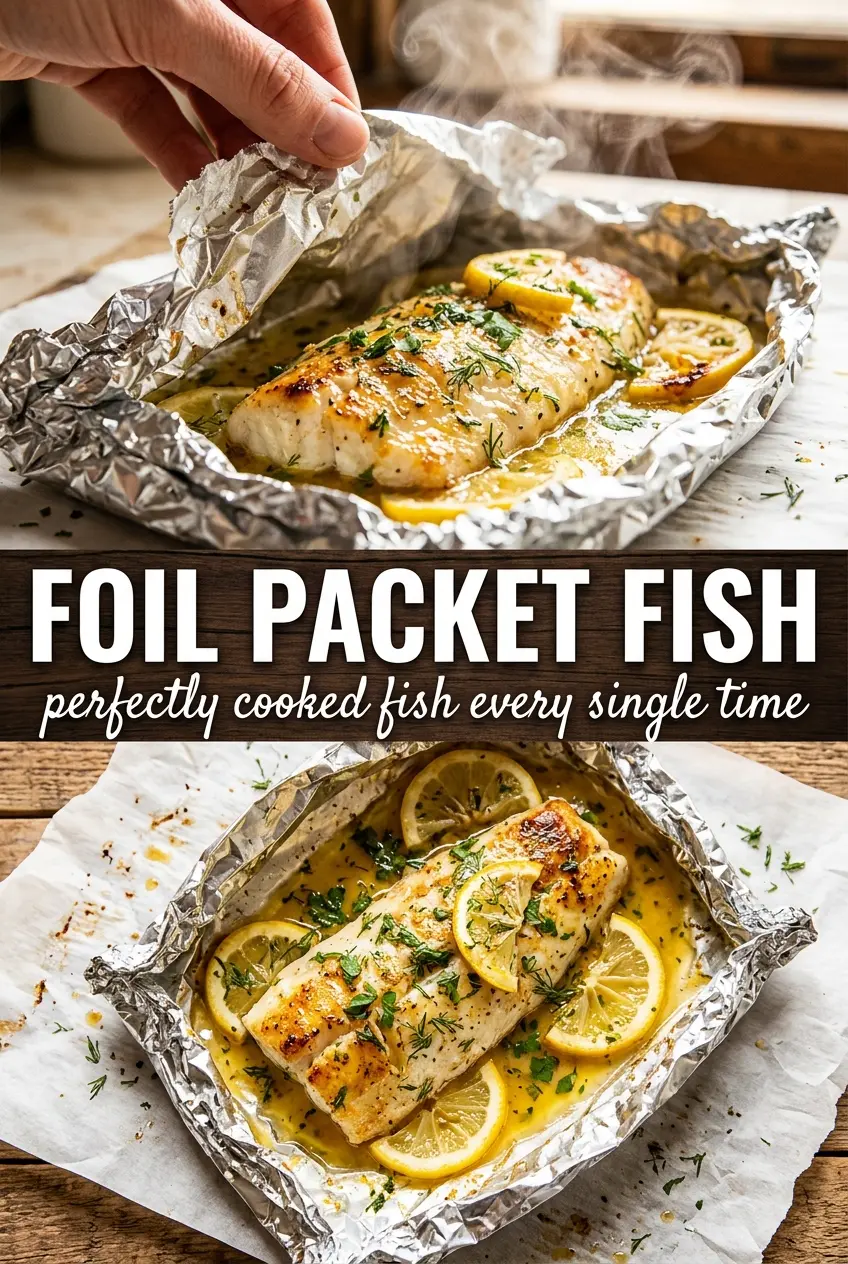
Foil Packet Fish
Ingredients
Equipment
Method
- Lay each fish fillet on a sheet of heavy-duty aluminum foil.
- Top each fillet with minced garlic, dill or parsley, salt, and black pepper, then add a pat of butter.
- Arrange lemon slices over the fish and surround with sliced zucchini and bell pepper.
- Fold the foil into sealed packets, keeping the edges crimped closed so steam stays inside.
- Place packets on a campfire grate over medium heat for 15-20 minutes, until the fish flakes easily with a fork.
- Carefully open the foil packets and serve immediately, letting the steam escape.