Golden campfire bread has a way of disappearing fast. The outside turns crusty and bronzed over the coals, while the inside stays soft and fluffy enough to tear apart with your hands. Wrapped around a roasting stick, it bakes into a simple little loaf with a toasted edge and a warm, tender center that tastes far better than the handful of ingredients would suggest.
The trick is keeping the dough slightly enriched with butter and milk so it bakes up soft instead of dry. A little sugar helps the crust color quickly over the fire, which matters because this bread cooks in minutes, not half an hour. The dough also needs to be mixed just until it comes together; overworking it makes it tough, and campfire bread should feel light once you slide it off the stick.
Below, I’ll show you how to get the dough to stay put on the stick, how to keep the outside from scorching before the center cooks, and the easiest ways to serve it once it comes off the fire.
The dough wrapped around the stick stayed put, and the bread came off with a crisp outside and a soft center. We ate the whole batch with honey before the fire even burned down.
Save this fluffy campfire bread for the next time you want golden stick bread with a soft center and a crusty edge.
The Dough Needs to Stay Loose Enough to Wrap, Not Tight Enough to Fight You
Campfire bread fails when the dough turns stiff before it ever hits the fire. A dry dough cracks as you wrap it around the stick and bakes up dense instead of fluffy. This version uses enough milk and butter to keep the dough pliable, which makes it easy to roll into ropes and keeps the crumb tender after roasting.
The other big mistake is overmixing. Once the dough comes together, stop kneading as soon as it looks smooth enough to hold its shape. You want structure, not elasticity. If the dough snaps back hard when you roll it, let it rest for a few minutes so the gluten relaxes before shaping.
What the Butter, Milk, and Sugar Are Really Doing Here
- All-purpose flour — This gives the bread enough strength to stay wrapped around the stick without tearing. Bread flour makes the dough chewier than you want here, so all-purpose is the right balance.
- Baking powder — This is what gives the bread its lift over the fire. Since you’re not waiting on yeast, the dough can go straight from mixing to roasting and still bake up soft inside.
- Butter — Melted butter adds richness and helps the dough brown. If you swap in oil, the bread will still work, but it loses some of that classic campfire flavor and a bit of the tender bite.
- Milk — Milk keeps the dough soft and adds enough moisture to make the center fluffy. Water will work in a pinch, but the bread will taste leaner and dry out faster over the coals.
- Sugar — The small amount of sugar isn’t for sweetness alone. It helps the crust color faster, which matters when the bread only has a short time near the fire.
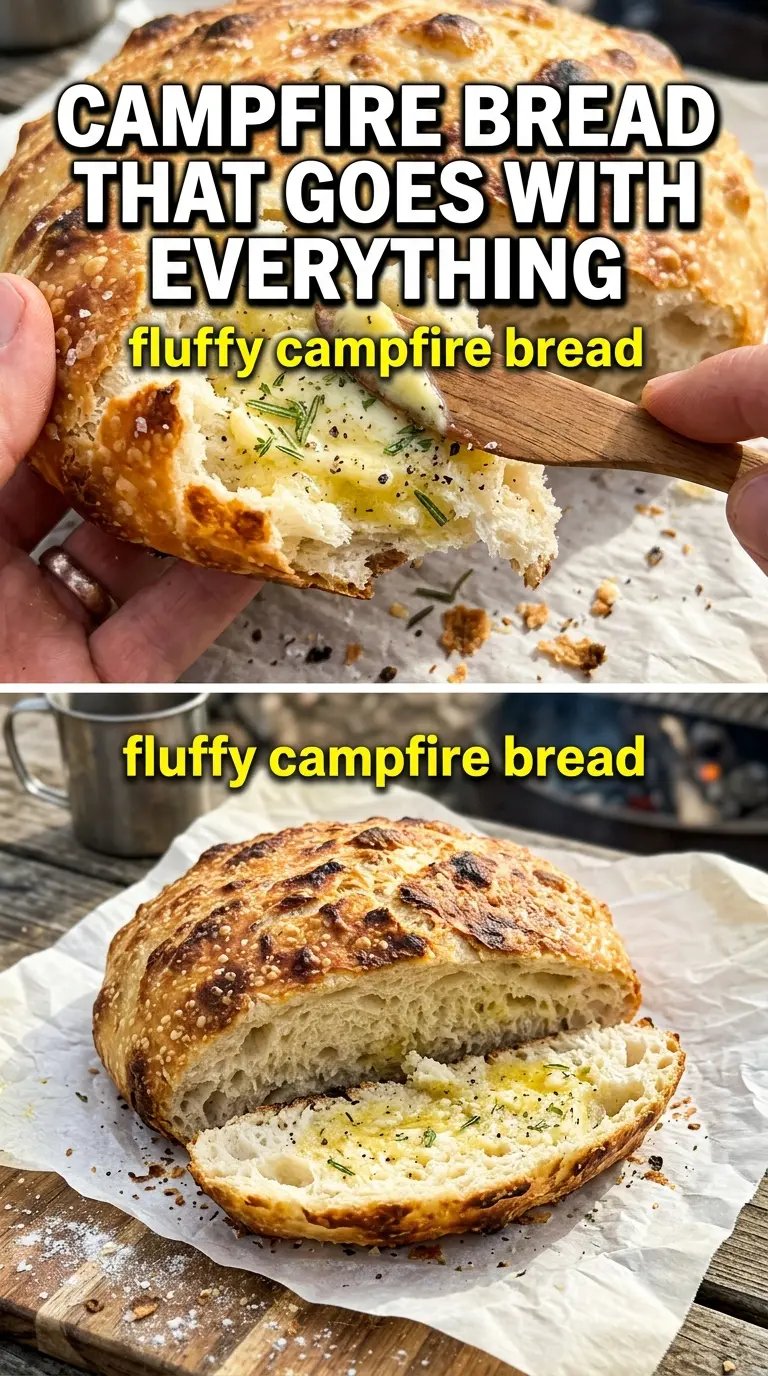
How to Roast the Bread Evenly Without Burning the Outside
Mixing the Dough Quickly
Put the flour, baking powder, salt, and sugar in a zip-top bag, then add the melted butter and milk. Seal the bag and knead just until the dough comes together and no dry flour remains. It should feel soft and a little tacky, not wet and soupy. If it seems too sticky to handle, dust the outside with a touch of flour rather than adding too much and drying it out.
Shaping the Ropes
Divide the dough into 8 portions and roll each one into a rope long enough to spiral around the roasting stick. Wrap it snugly, but don’t press so hard that the layers fuse into one thick mass. Thin, even coils cook more consistently than a bulky wrap, and they let heat reach the center before the exterior darkens too much. Leave a little space at the very end of the stick so the dough doesn’t slide while it bakes.
Roasting Over the Coals
Hold the dough over hot coals, not licking flames. Flames blacken the outside before the inside has time to set, while coals give you steady heat and a better crust. Rotate constantly so one side doesn’t slump or scorch, and watch for a deep golden color with dry, set edges. The bread is done when it feels firm to the touch and sounds lightly hollow when tapped.
Sliding Off and Serving
Let the bread cool for a minute before pulling it off the stick. If you rush this part, the soft center can stretch and tear. Slide it gently onto a plate or napkin, then serve warm with butter, jam, or honey. The bread is best right away, while the crust still has a little bite and the inside is pillowy.
How to Adapt This Campfire Bread for Different Campsites and Eaters
Dairy-Free Campfire Bread
Swap the butter for neutral oil or melted dairy-free butter and use an unsweetened non-dairy milk. You’ll still get a soft interior and decent browning, though the flavor will be a little less rich than the original.
Honey-Boosted Version
Replace half the sugar with honey for a slightly deeper flavor and a touch more browning. The dough will be a bit softer, so dust your hands lightly with flour when shaping the ropes.
Savory Campfire Bread
Cut the sugar down to 1 tablespoon and add a pinch of garlic powder or dried herbs. The bread will roast up with less sweetness and pairs well with soups, chili, or grilled sausage.
Storage and Reheating
- Refrigerator: Store leftovers in an airtight container for up to 2 days. The crust softens as it sits, but the bread still tastes good warmed back up.
- Freezer: It freezes fairly well once fully cooled. Wrap tightly and freeze for up to 1 month, then thaw at room temperature before reheating.
- Reheating: Warm in a low oven or over gentle heat until heated through. A microwave makes the bread rubbery, so use dry heat if you want to bring back some of the crust.
Questions I Get Asked About This Recipe
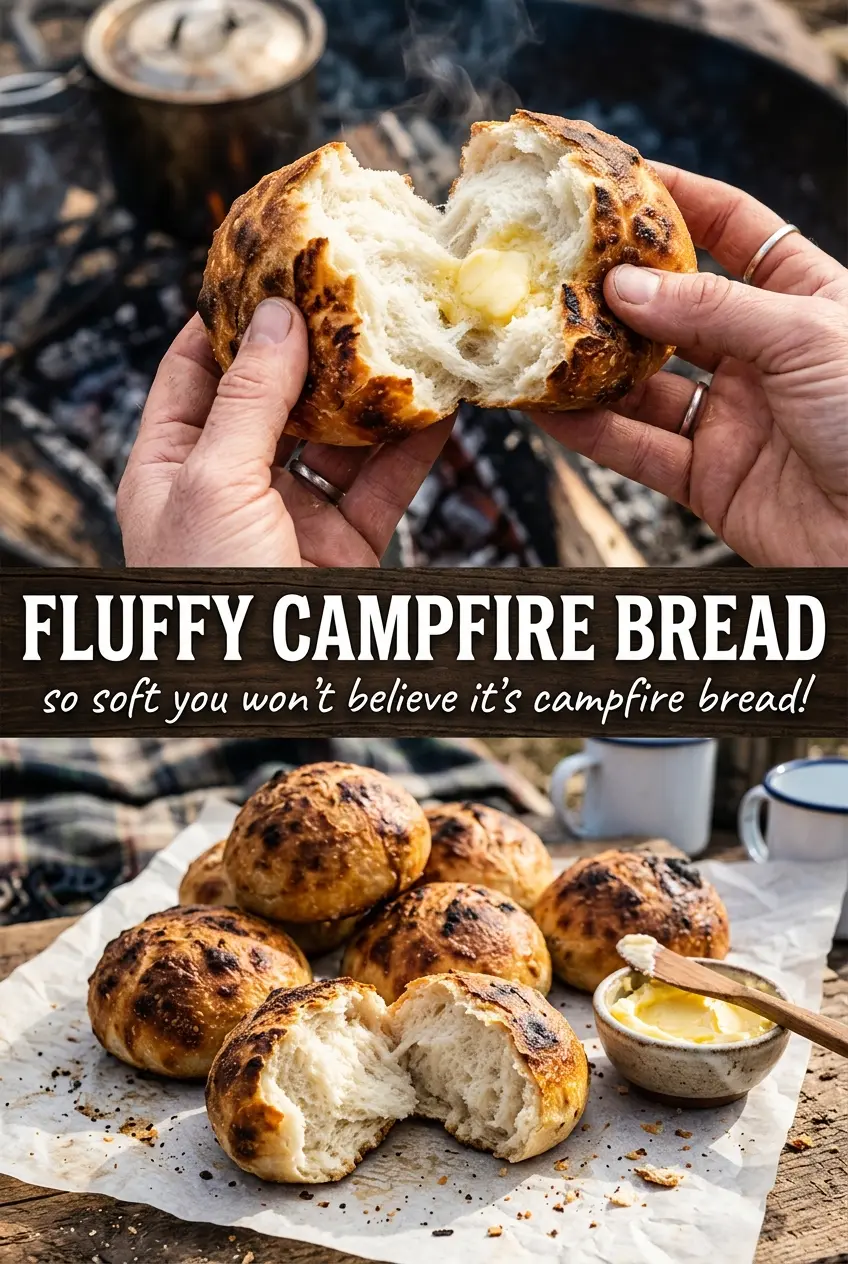
Fluffy Campfire Bread
Ingredients
Equipment
Method
- Mix all-purpose flour, baking powder, salt, and sugar in a large zip-top bag until evenly combined. The mixture should look uniform with no dry pockets.
- Add melted butter and milk to the bag, seal, and knead until a soft dough forms. Keep kneading until the dough is cohesive and stretchy.
- Divide the dough into 8 portions of equal size. Each portion should be large enough to wrap into a thick spiral.
- Roll each portion into a long rope, then wrap it around the end of a roasting stick. Leave the dough spiral snug so it roasts evenly.
- Hold the stick bread over campfire coals and rotate constantly for 10-12 minutes until golden brown. Keep turning so the crust forms evenly and the interior cooks through.
- Slide the fluffy campfire bread off the stick and serve warm. Add butter, jam, or honey while hot.