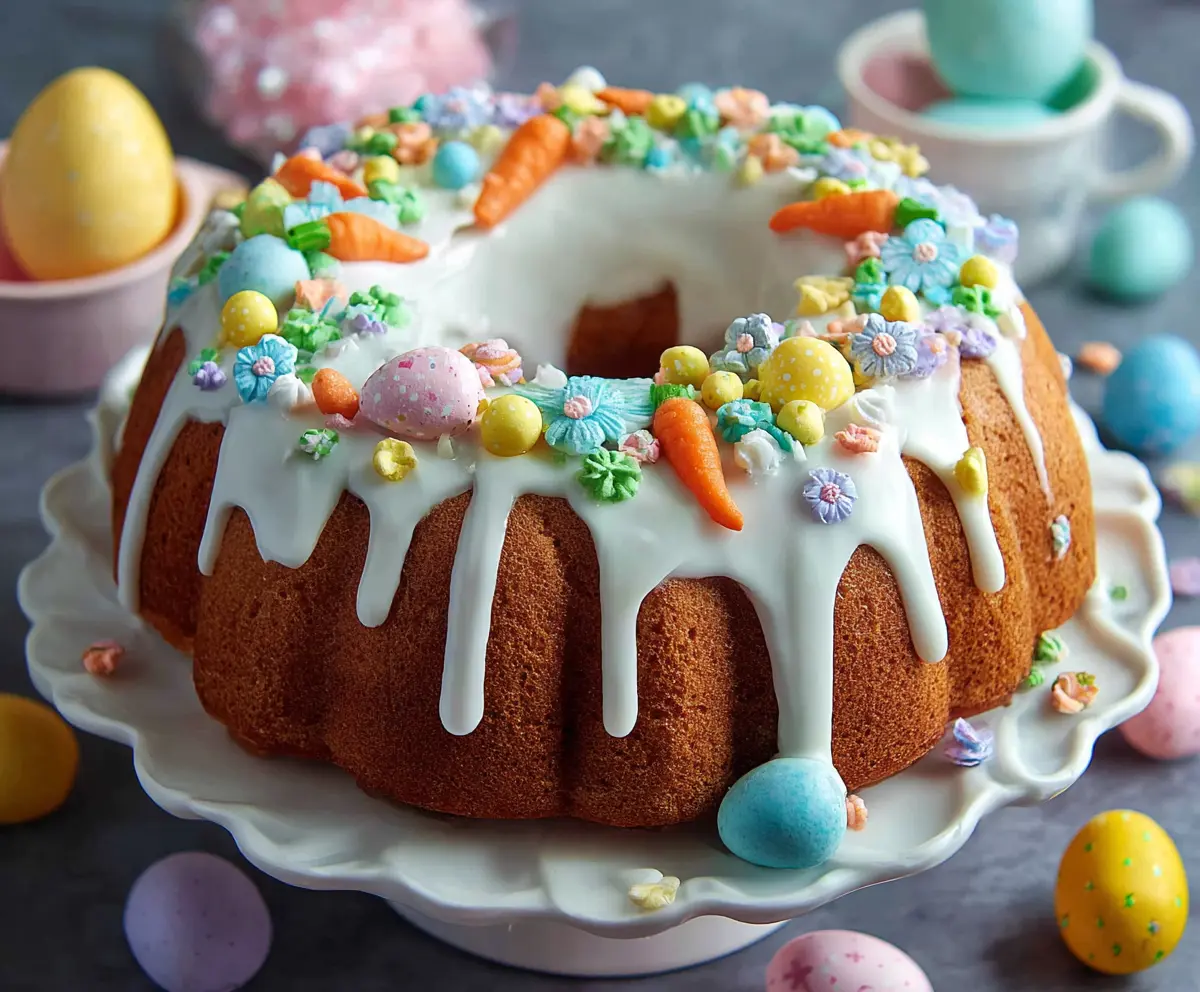
This colorful Easter Bundt Cake is a treat for the eyes and the tummy! With a super moist vanilla flavor and a sprinkle of fun pastel colors, it’s perfect for celebrations.
Every bite is like a mini party! I love serving this cake with whipped cream on the side—it’s just an excuse to enjoy more, right? 😊
Key Ingredients & Substitutions
All-Purpose Flour: This is the base of your cake. If you’re looking for a gluten-free option, almond flour or a gluten-free flour blend can work. Just note that the texture might change slightly!
Unsalted Butter: I prefer unsalted butter for better control over salt levels. If you need a dairy-free option, you can substitute with coconut oil or a vegan butter alternative.
Buttermilk: This adds moisture and tang. If you don’t have buttermilk on hand, mix 1 cup of milk with 1 tbsp of vinegar or lemon juice and let it sit for 5 minutes to sour. It works just as well!
Granulated Sugar: Standard sugar gives sweetness. For a healthier option, try using coconut sugar or honey (reduce the liquid in the recipe if using honey).
Candy Decorations: While the colorful candy eggs are fun, feel free to get creative! Consider using fruit pieces or nuts if you’re looking for a more natural topping. Everyone loves a personal touch!
How Do I Ensure My Bundt Cake Comes Out Perfectly?
Getting a Bundt cake out of the pan can be tricky, but with the right steps, it can be a breeze! First, make sure to thoroughly grease and flour your Bundt pan. This prevents sticking and ensures a smooth release.
- Use a pastry brush to spread the butter and then add flour, shaking out the excess.
- Once baked, let the cake cool in the pan for about 15 minutes. This helps it set and loosen slightly.
- When inverting, gently shake the pan to loosen the cake. If it doesn’t come out right away, tap the sides or use a knife around the edges.
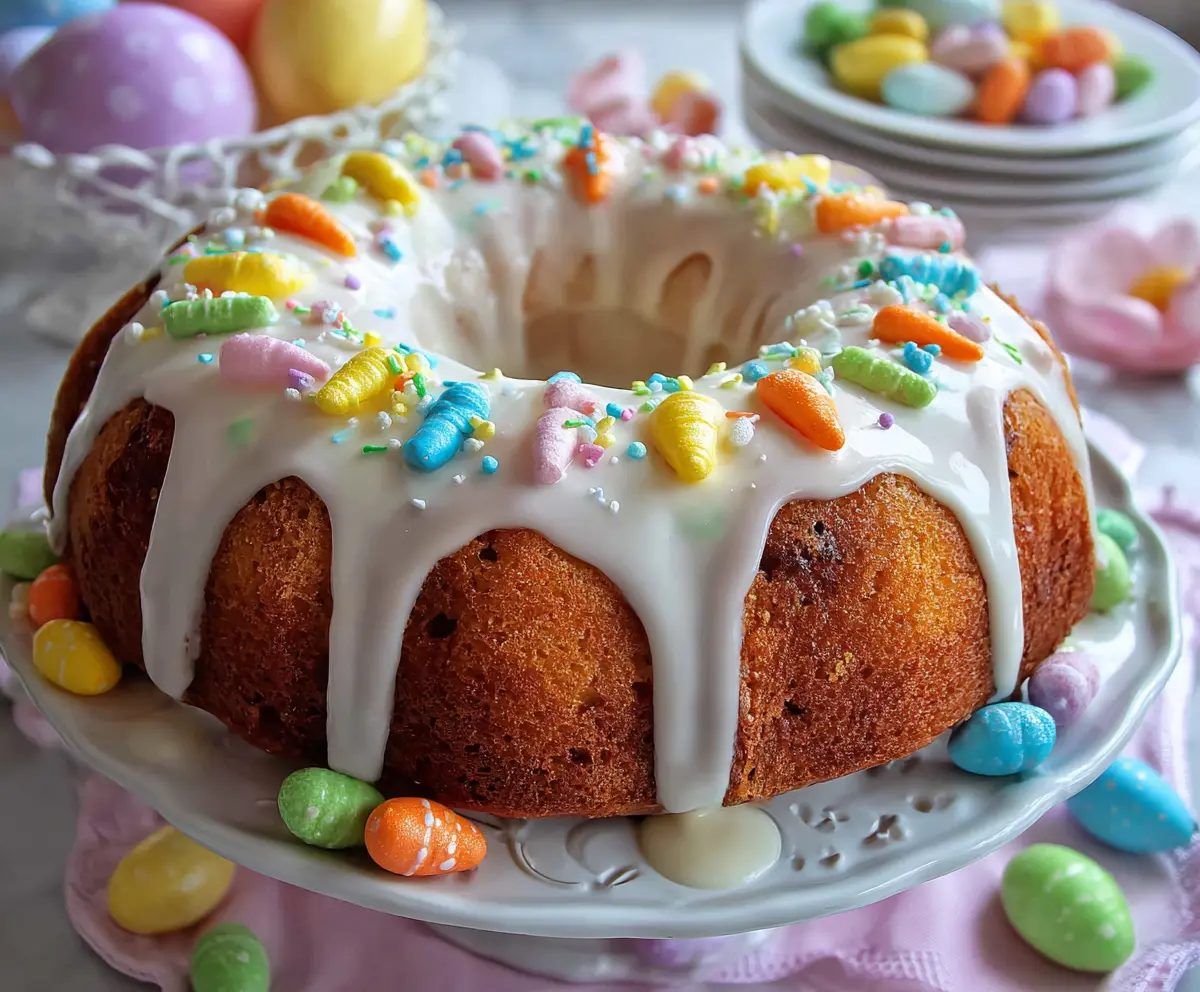
How to Make Easter Bundt Cake
Ingredients You’ll Need:
For the Bundt Cake:
- 3 cups all-purpose flour
- 2 ½ tsp baking powder
- ½ tsp baking soda
- ½ tsp salt
- 1 cup unsalted butter, softened
- 2 cups granulated sugar
- 4 large eggs
- 2 tsp vanilla extract
- 1 cup buttermilk
For the Icing:
- 2 cups powdered sugar, sifted
- 2-4 tbsp milk (adjust for desired consistency)
- 1 tsp vanilla extract
For Decoration:
- Assorted colorful candy eggs (such as speckled chocolate eggs)
- Small candy carrots
- Edible sugar flowers and other pastel-colored decorations
How Much Time Will You Need?
This Easter Bundt Cake will take about 20 minutes to prepare and around 50-60 minutes to bake. After baking, let it cool for 15 minutes in the pan, then completely on a rack. Overall, set aside 2 hours for a delicious cake ready to be served!
Step-by-Step Instructions:
1. Preheat and Prepare:
Start by preheating your oven to 350°F (175°C). Make sure to grease and flour your bundt cake pan thoroughly, so your cake doesn’t stick.
2. Mix the Dry Ingredients:
In a medium bowl, sift together the all-purpose flour, baking powder, baking soda, and salt. This helps ensure even mixing and prevents clumps. Set this mixture aside for later.
3. Cream Butter and Sugar:
In a large mixing bowl, use an electric mixer to cream the softened butter and granulated sugar together. Mix until the mixture is light and fluffy—this should take about 3-4 minutes!
4. Incorporate Eggs and Vanilla:
Add the eggs one at a time, making sure to beat well after each addition. Don’t forget to mix in the vanilla extract until everything is well blended.
5. Combine Dry Ingredients and Buttermilk:
Now, it’s time to add the dry ingredients and buttermilk to the butter mixture. Start with a little bit of the dry mix, then the buttermilk, alternating until everything is combined. Make sure not to overmix; just blend until no floury bits remain.
6. Pour and Smooth:
Pour the batter evenly into the prepared bundt pan. Use a spatula to smooth the top so that it bakes evenly.
7. Bake:
Place the cake in the preheated oven and bake for 50-60 minutes. To check if it’s done, insert a toothpick into the center; it should come out clean.
8. Cool the Cake:
Once baked, remove the cake from the oven and allow it to cool in the pan for about 15 minutes. After that, carefully invert the cake onto a cooling rack to cool completely.
9. Make the Icing:
In the meantime, whip up your icing. In a bowl, whisk together the sifted powdered sugar, vanilla extract, and enough milk to reach a smooth, pourable consistency.
10. Drizzle Icing:
Once the cake has cooled, drizzle the icing generously over the top and let it cascade down the sides.
11. Decorate:
Time to have some fun! Decorate your cake with the colorful candy eggs, small candy carrots, and edible sugar flowers. Gently press them into the icing to make sure they stick.
12. Serve and Enjoy:
Your festive Easter Bundt Cake is ready! Slice it up, serve it at your gathering, and enjoy the cheerful celebration you’ve created.
Can I Use Self-Rising Flour Instead of All-Purpose Flour?
Yes! If you use self-rising flour, simply omit the baking powder and salt from the recipe since self-rising flour already contains these ingredients. This can give your cake a slightly different texture, but it will still be delicious!
How Can I Store Leftovers?
Leftover Bundt cake can be stored in an airtight container at room temperature for up to 3 days. If you want it to last longer, you can refrigerate it for up to a week. To enjoy later, consider wrapping individual slices and freezing them for up to 3 months.
Can I Make the Icing Thicker or Thinner?
Absolutely! To make the icing thicker, add more powdered sugar in small increments until you reach your desired consistency. For a thinner icing, gradually add more milk, one tablespoon at a time, until it’s pourable but still holds a bit of shape.
What Can I Use Instead of Buttermilk?
If you don’t have buttermilk on hand, you can make a substitute by mixing 1 cup of regular milk with 1 tablespoon of vinegar or lemon juice. Let it sit for about 5 minutes until it thickens slightly, and it’s ready to use!