Layered Dutch oven lasagna comes out with exactly what you want from a campfire pasta: tender noodles, a rich meat sauce, and a cheesy top that turns golden and bubbly under the lid. The best part is that it holds together when you scoop it, so you get clean layers instead of a collapsed pile on the plate. It feels rustic, but it eats like a proper baked lasagna.
What makes this version work is the way the noodles cook right in the sauce and steam under steady heat. You don’t need to boil the pasta first, and that matters when you’re cooking outdoors or feeding a crowd. The meat sauce needs to be a little loose before it goes in the pot so the noodles have enough liquid to soften evenly. A short rest at the end gives the layers time to settle, which is what keeps the slices from sliding apart the second you serve them.
Below you’ll find the small details that make a Dutch oven lasagna come out consistent every time, plus a few variations if you’re cooking for different diets or using what you already have on hand.
The noodles came out tender all the way through and the bottom layer stayed saucy instead of dry. I was nervous about cooking lasagna in the Dutch oven, but the cheese melted evenly and the whole thing held together after the 10-minute rest.
Save this Dutch oven lasagna for your next campfire dinner or crowd-sized pasta night when you want a bubbling, cheese-topped main dish with almost no fuss.
The Part That Keeps Dutch Oven Lasagna From Turning Soupy
Most campfire lasagna problems start with too much moisture. If the sauce is thin, the bottom noodles can go mushy before the center sets, and the whole pan ends up loose instead of layered. This version uses a jarred sauce, but it still needs to be thick enough to cling to the noodles. The Dutch oven traps heat and steam, so you want enough liquid for the pasta to cook, not so much that the whole dish turns into a casserole soup.
The other thing people miss is the rest time. Pulling it off the heat the second the cheese looks melted is the fastest way to get a slidey, messy serving. Ten minutes gives the ricotta layer time to firm up and the sauce time to settle back into the noodles.
- Ground beef — Brown it fully before adding the sauce so you build flavor and keep the filling from tasting flat. If your beef throws off a lot of grease, drain the excess before mixing in the spaghetti sauce.
- Spaghetti sauce — This does the heavy lifting for flavor and moisture. A thicker jarred sauce works better than a watery one because it won’t over-soak the noodles.
- Ricotta cheese — This gives you the creamy middle layer that makes the lasagna taste like lasagna instead of baked pasta. Full-fat ricotta holds up best, but part-skim works if that’s what you keep around.
- Uncooked lasagna noodles — Break them to fit the Dutch oven, but don’t stress over perfect edges. They soften as they cook, and small gaps are better than forcing a noodle to curve and crack badly.
- Mozzarella and Parmesan — Mozzarella gives the melt and stretch; Parmesan adds salty depth so the filling doesn’t taste one-note. Shredding your own mozzarella melts a little smoother, but pre-shredded is fine here.
Building the Layers So the Middle Cooks Through
Start with Sauce on the Bottom
Spray the Dutch oven, then spread a thin layer of meat sauce across the bottom before any noodles go in. That first layer keeps the pasta from sticking and gives the bottom noodles enough moisture to soften. If you skip it, the underside can dry out while the top looks finished. You want a light coating, not a puddle.
Fit the Noodles to the Pot
Lay in three uncooked noodles broken to fit, then spoon over half the ricotta mixture and half the remaining meat sauce. Keep the layers even so the center cooks at the same pace as the edges. If the noodles overlap too much in one spot, that section stays firmer than the rest. Slight breaks are fine; the sauce helps everything settle together.
Finish with Enough Heat on Top
Repeat the layers, top with the final noodles and the last of the sauce, then scatter the remaining mozzarella over everything. When you cook it over coals, the lid needs heat too or the top can stay pale while the bottom finishes first. The goal is bubbling sauce at the edges and cheese that looks melted all the way across with some browned spots. Let it rest before serving so the layers slice instead of slump.
How to Tweak This for Your Crowd, Your Pantry, or Your Diet
Swap in Italian sausage for part of the beef
Replace half or all of the ground beef with Italian sausage if you want a deeper, spicier sauce. The sausage adds fat and seasoning, so the filling tastes bolder without needing much else changed. If you use hot sausage, the whole dish picks up a little heat.
Make it vegetarian with a thicker veggie sauce
Skip the meat and use a chunky vegetable marinara or a lentil-based sauce. You still need a sauce with body, because watery vegetables can make the lasagna loose. A vegetarian version works best when the filling is hearty enough to stand up to the noodles.
Use gluten-free lasagna noodles
Gluten-free lasagna noodles work here, but they can turn soft faster than regular pasta, so keep the sauce thick and don’t overcook the dish. If your brand usually needs pre-cooking, follow that package direction first. The texture will be a little more delicate, but the flavor stays the same.
Make it ahead for camping day
Assemble the lasagna at home, cover it tightly, and keep it chilled until you’re ready to cook. Cold lasagna may need a little extra time over the coals, especially if the center goes into the Dutch oven straight from the fridge. This is the easiest way to cut campfire work in half.
Storage and Reheating
- Refrigerator: Store leftovers in a covered container for up to 4 days. The noodles soften a bit more as they sit, but the flavor gets even better.
- Freezer: It freezes well in portions. Wrap tightly and freeze for up to 2 months; thaw overnight in the fridge before reheating.
- Reheating: Reheat covered in the oven at 350°F until hot in the center, or warm individual portions in the microwave with a splash of sauce or water. The biggest mistake is blasting it uncovered, which dries out the top before the middle is warm.
Answers to the Questions Worth Asking
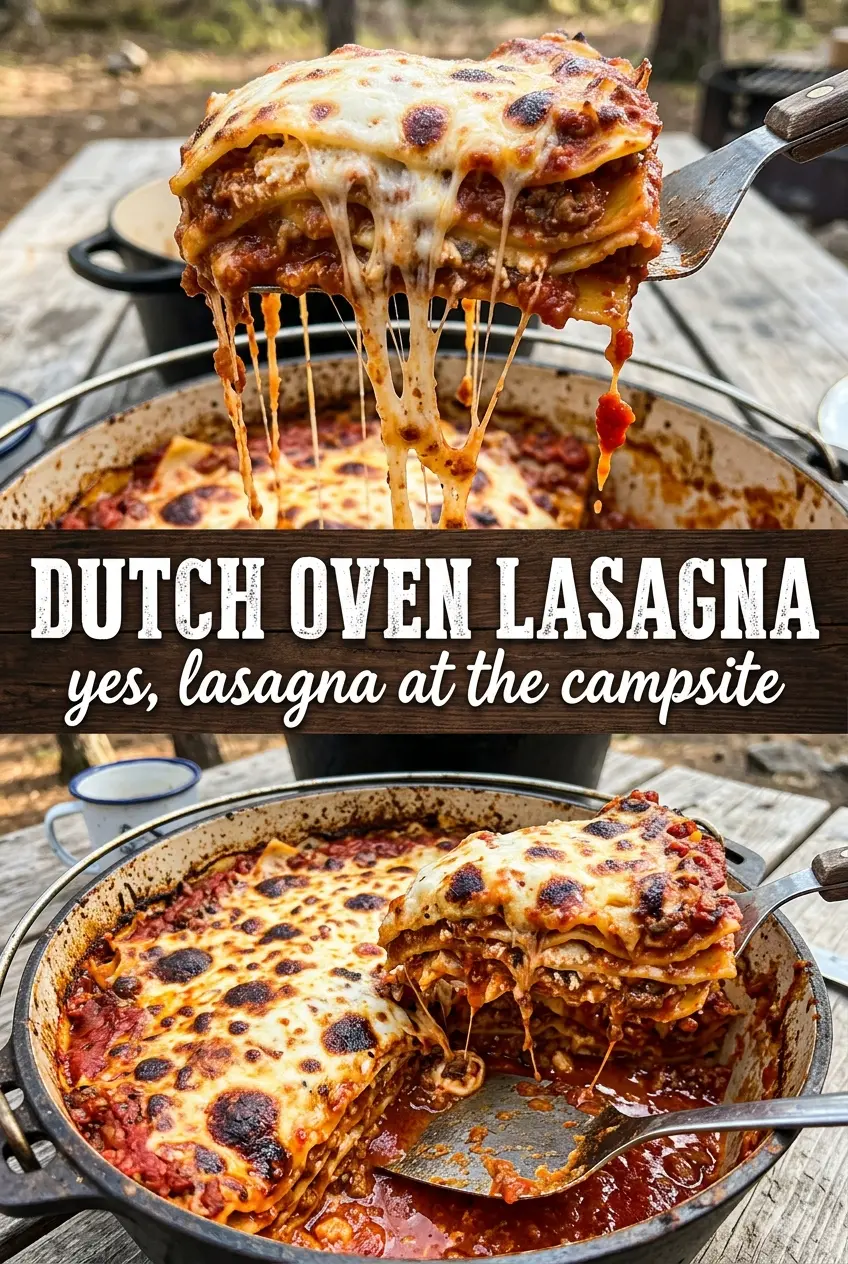
Dutch Oven Lasagna
Ingredients
Equipment
Method
- Brown the ground beef in a skillet over medium-high heat until no longer pink, then stir in the spaghetti sauce until combined.
- Simmer the mixture for 5 minutes to thicken slightly, keeping it hot so it layers easily.
- In a bowl, mix ricotta cheese with 1 cup mozzarella, Parmesan cheese, egg, and Italian seasoning until smooth and evenly combined.
- Spray the Dutch oven with cooking spray, then spread a thin layer of meat sauce over the bottom.
- Layer 3 lasagna noodles on top (break to fit), then spread half the ricotta mixture and half the remaining meat sauce.
- Repeat the layers using another set of 3 noodles, the remaining ricotta mixture, and the remaining meat sauce.
- Top with the final 3 noodles, then cover evenly with the remaining meat sauce and sprinkle with the remaining mozzarella.
- Cover the Dutch oven and place it on campfire coals with coals on the lid, cooking for 45-50 minutes until the center is bubbling and the cheese is melted.
- Let the lasagna rest for 10 minutes before serving so the layers set and slice cleanly.