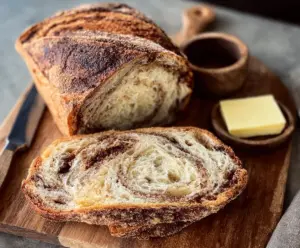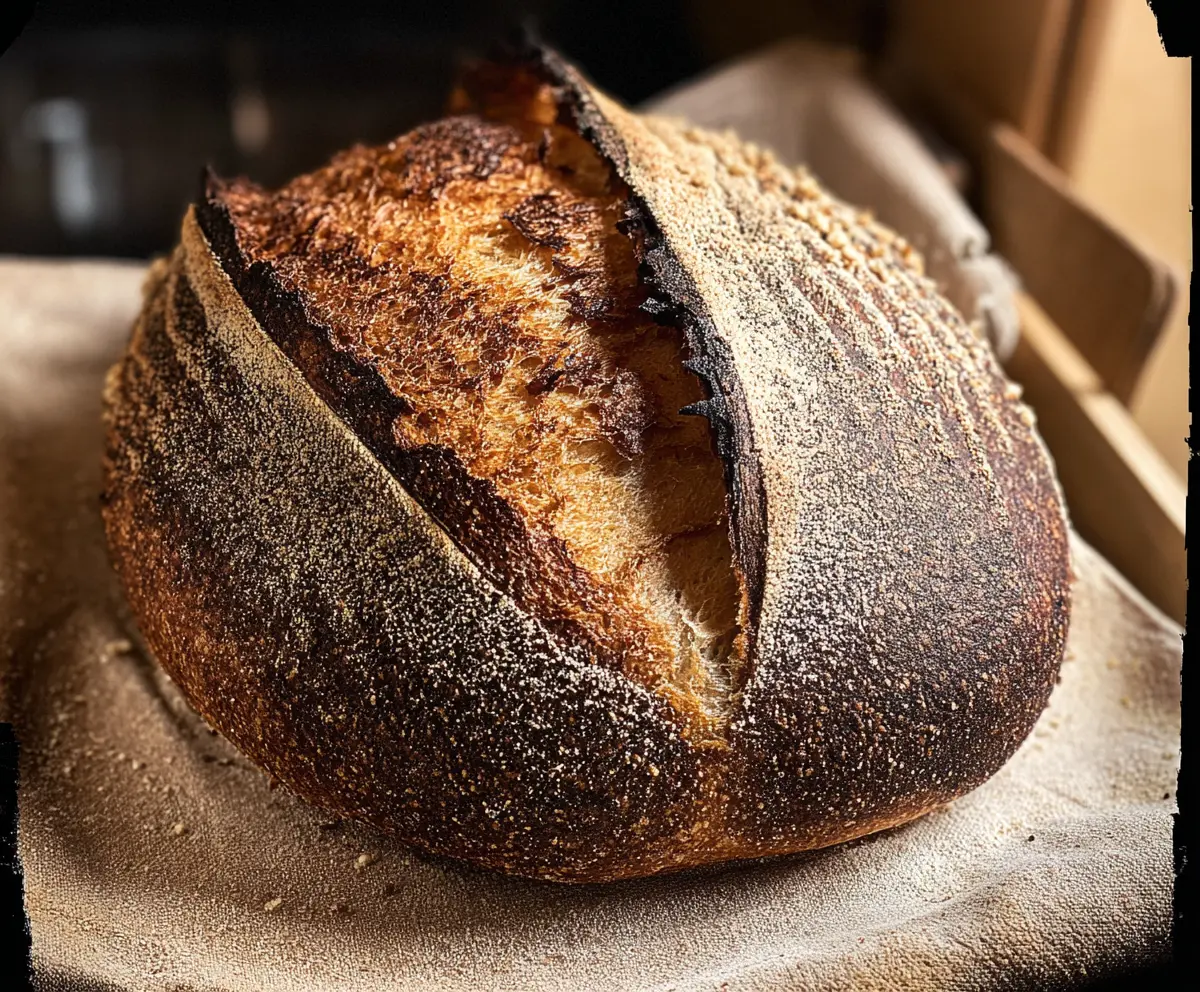
This Crust Sourdough Bread pairs perfectly with your morning coffee! It’s golden-brown on the outside and soft inside, with a yummy tangy flavor that makes every bite special.
There’s nothing like the smell of fresh bread baking in the oven. I love to toast my slices and enjoy them with a little butter while sipping my coffee. It’s pure happiness! ☕🍞
Key Ingredients & Substitutions
Bread Flour: High-protein bread flour is best for a good rise and chewy texture. If you can’t find it, all-purpose flour can work, but your bread may be slightly less crusty.
Sourdough Starter: Using an active, bubbly starter gives the bread its unique flavor. If you don’t have a starter, you can use commercial yeast, but this will change the flavor profile and texture.
Coffee: Instant coffee granules give a convenient kick. If you prefer, strong brewed coffee adds a richer flavor. Make sure it’s cooled down to avoid killing your starter!
Salt: Always use good-quality salt for the best taste. Sea salt or kosher salt are excellent choices. Avoid table salt as it may affect flavor balance.
How Do I Effectively Shape My Sourdough Loaf?
Shaping your dough properly is key to a nice round loaf. Start with the dough on a lightly floured surface and follow these simple steps:
- Gently turn the dough out from the bowl.
- With floured hands, fold the edges of the dough towards the center, creating tension.
- Then, cup your hands around the dough while rotating it to tighten the surface.
- Make sure to keep your surface floured to prevent sticking.
Practice makes perfect here! The more you shape, the better your technique will become.
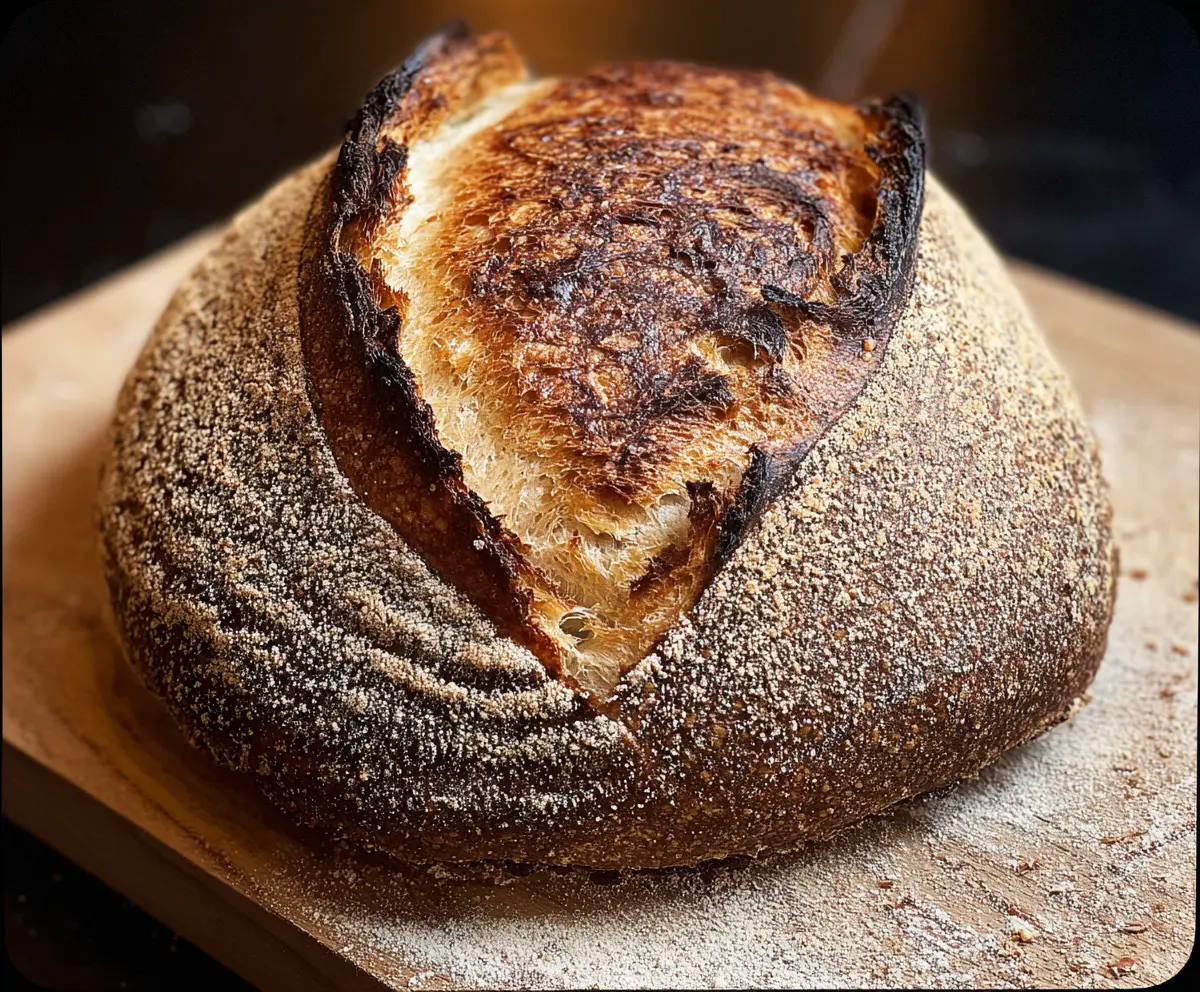
How to Make Crusty Sourdough Bread with a Coffee Twist
Ingredients You’ll Need:
For the Bread:
- 500g bread flour (preferably high-protein)
- 350ml water, lukewarm
- 150g active sourdough starter (fed and bubbly)
- 10g salt
- 1 tbsp instant coffee granules or 50ml strong brewed coffee, cooled
- Extra flour for dusting and shaping
How Much Time Will You Need?
This recipe takes about 20 minutes for preparation and shaping. You’ll then need to wait about 6-10 hours for the fermentation and proofing process, depending on your method. After that, it’ll take about 45 minutes to bake. So, in total, set aside a good part of your day to create your delicious bread!
Step-by-Step Instructions:
1. Combine Ingredients:
In a large mixing bowl, start by combining the bread flour and salt together. Mix them well to ensure even distribution of the salt throughout the flour.
2. Prepare the Coffee-Water Mixture:
Dissolve the instant coffee granules in the lukewarm water. If you’re using brewed coffee, just add it directly into the bowl. Make sure it’s cool so it won’t harm your starter.
3. Mix the Starter:
Add your active sourdough starter to the coffee-water mixture. Stir gently until everything is mixed together smoothly.
4. Form the Dough:
Pour the liquid ingredients into the flour mixture. Stir everything together until all the flour is hydrated, and you form a shaggy dough. Don’t worry about it being perfect!
5. Autolyse the Dough:
Cover the bowl with a clean cloth or some plastic wrap, and let it rest for 30 minutes. This resting period is called autolyse and helps improve the dough’s texture.
6. Develop Gluten:
After 30 minutes, perform a series of stretch and folds every 30 minutes for 2 hours. To do this, wet your hands, grab one side of the dough, stretch it upwards and fold it over itself. Turn the bowl and repeat until you’ve gone around the dough.
7. Bulk Fermentation:
Once you’re done with stretching and folding, cover the dough again and let it bulk ferment at room temperature for 4-6 hours, or until it has doubled in size. Check back to admire your rising dough!
8. Shape the Dough:
Turn the dough out onto a lightly floured surface. To shape it into a round loaf, gently fold the edges into the center, then cup your hands around the dough and tighten its surface by rotating.
9. Proof the Dough:
Place your shaped dough seam-side up in a floured banneton or a bowl that you’ve lined with a tea towel. Cover it and let it proof for 2-3 hours at room temperature or refrigerate overnight for a more developed flavor.
10. Preheat the Oven:
About 30 minutes before you’re ready to bake, preheat your oven to 250°C (480°F). If you’re using a Dutch oven or a baking stone, make sure it’s inside while preheating.
11. Score the Bread:
When ready to bake, carefully transfer your dough onto a piece of parchment paper. With a sharp blade, score the top of the dough to allow it to expand during baking.
12. Bake the Bread:
Place the dough (with parchment) into the hot Dutch oven, cover it with the lid, and bake for 20 minutes. The enclosed space will create a lovely steam.
13. Finish Baking:
After 20 minutes, remove the lid and bake for an additional 20-25 minutes until the crust is deep golden brown and crisp. This is where the magic happens!
14. Cool Before Slicing:
Once baked, remove the bread from the oven and let it cool on a wire rack for at least 1 hour before slicing. This cooling time helps set the crust and makes for better slicing.
Enjoy your flavorful crusty sourdough bread infused with a delightful coffee twist! Perfect for toasting or as an accompaniment to your favorite soup.
Can I Substitute the Sourdough Starter?
Yes, if you don’t have a sourdough starter, you can use around 7g of instant yeast instead. This will alter the flavor and texture slightly but will still yield a delicious bread!
How Can I Store Leftover Bread?
Once the bread is cooled, store it in a paper bag at room temperature for up to 3 days. For longer storage, wrap it tightly in plastic wrap or aluminum foil and freeze for up to 3 months. Just make sure to let it cool completely before freezing.
Can I Omit the Coffee from the Recipe?
Absolutely! If you’d prefer a plain sourdough bread, you can simply leave out the coffee. The bread will still be delicious and have a lovely crust.
What Should I Do If My Dough Isn’t Rising?
If your dough doesn’t seem to be rising after the bulk fermentation time, ensure your starter was active and bubbly before using it. If your kitchen is cool, try placing the dough in a warmer spot, like an oven with the light on. Patience is key—sometimes it just needs a bit more time!