
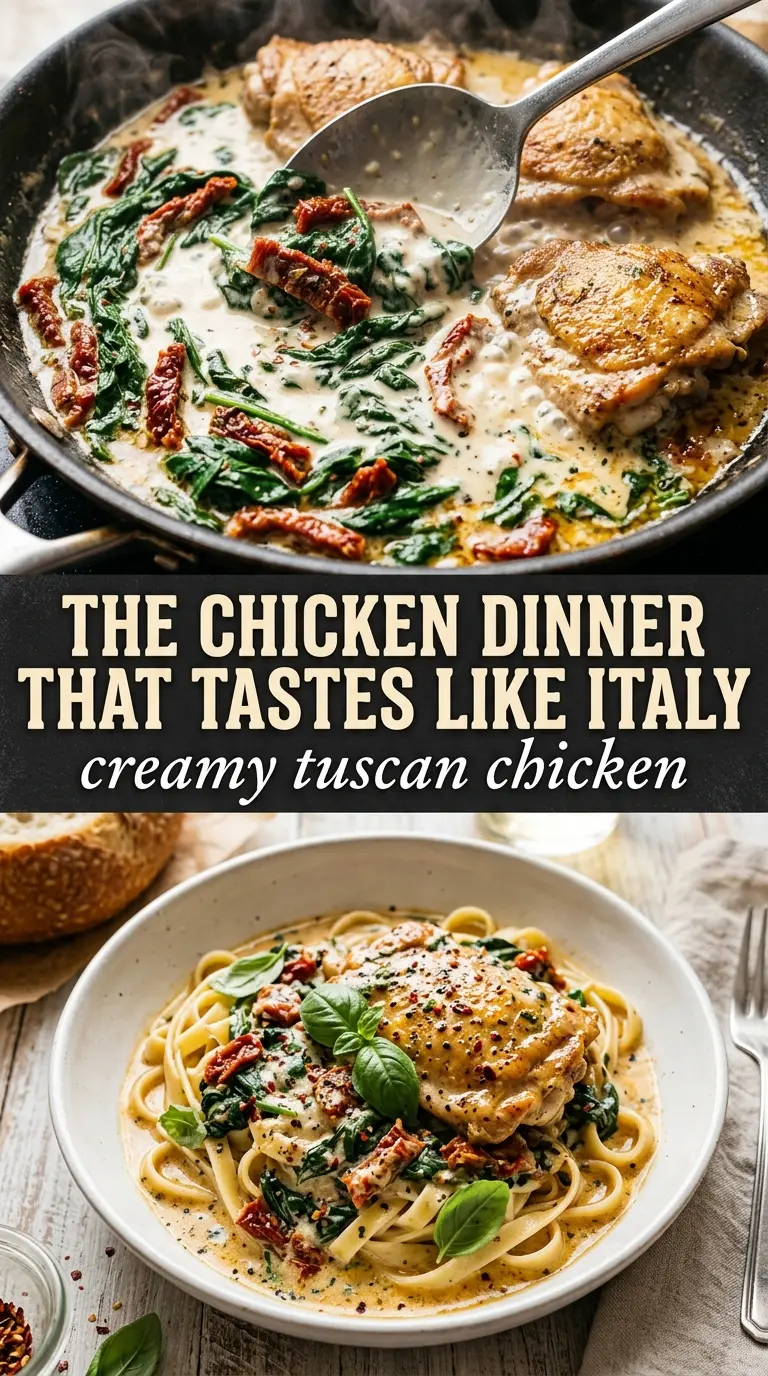
Golden seared chicken breasts tucked into a silky sun-dried tomato cream sauce earn a permanent spot in the weeknight rotation for a reason: the sauce clings to every bite instead of pooling sadly at the bottom of the pan. The spinach softens just enough to melt into the cream, while the Parmesan and sun-dried tomatoes bring that salty, savory depth that makes the whole skillet taste finished, not fussy.
This version works because the chicken gets a real sear before anything creamy goes in. Those browned bits left in the pan are what give the sauce its backbone, and the broth loosens them without dulling the flavor. The cream stays on a gentle simmer, which keeps it smooth, and the spinach goes in at the end so it keeps its color and doesn’t disappear into the sauce.
Below you’ll find the exact point where the sauce thickens, the swap I use when I want a slightly lighter skillet, and the one reheating trick that keeps the chicken from turning dry.
The sauce thickened up beautifully and coated the chicken instead of running all over the plate. I followed the simmer time exactly, and the sun-dried tomatoes gave it that restaurant taste my husband kept talking about.
Save this creamy Tuscan chicken for the nights when you want a silky sun-dried tomato sauce without standing over the stove all evening.
The Seared Chicken Is What Keeps the Sauce from Tasting Flat
A creamy skillet like this lives or dies by the first five minutes in the pan. If you rush the chicken or crowd the skillet, you lose the browned fond that gives the sauce its savory edge, and the whole dish can taste one-note. A good sear doesn’t just look better; it gives the cream something worth carrying.
The other place people go wrong is moving too fast once the dairy goes in. Cream and Parmesan need gentle heat to stay smooth. If the sauce boils hard, it can turn grainy or separate around the edges before it ever gets a chance to thicken.
- Chicken breasts — Use even-sized breasts so they finish at the same time. If one end is much thicker, pound it lightly for a more even sear and juicier result.
- Sun-dried tomatoes in oil — These bring concentrated tomato flavor and a little of that oil can help carry the aromatics. The dry-packed kind work in a pinch, but they won’t give the same plush, savory depth.
- Heavy cream — This is what keeps the sauce stable. Half-and-half can work, but it won’t thicken as cleanly and it’s easier to overheat.
- Parmesan cheese — Grate it fresh if you can. Pre-shredded cheese often has anti-caking agents that keep it from melting as smoothly.
What Each Ingredient Is Actually Doing in This Skillet
- Olive oil — Gives the chicken the first layer of flavor and helps the seasoning bloom on contact with heat. You don’t need anything fancy here, but use enough to coat the pan evenly.
- Garlic — It only needs about 30 seconds before the tomatoes go in. If it browns, it turns bitter and you taste that bitterness in the finished sauce.
- Chicken broth — This deglazes the pan and lifts every browned bit into the sauce. Water works in a pinch, but broth gives the sauce a rounder, more savory base.
- Fresh baby spinach — Add it at the end so it wilts into ribbons instead of disappearing. Frozen spinach can work, but squeeze it very dry first or the sauce gets loose and muddy.
- Red pepper flakes and basil — The flakes keep the cream from tasting heavy, and the basil wakes everything up at the end. Skip the basil if you have to, but the dish loses some of its freshness without it.
Building the Sauce Without Breaking It
Searing the Chicken First
Season the chicken generously on both sides, then lay it into a hot skillet and leave it alone long enough to form a deep golden crust. If the chicken sticks when you try to turn it, it isn’t ready yet. When it releases cleanly and the surface looks browned and slightly crisp at the edges, it’s time to flip.
Using the Same Pan for the Sauce
Don’t wipe the skillet out. The browned bits stuck to the bottom are the flavor foundation for the cream sauce, and the broth will lift them right up. Add the garlic briefly, then the sun-dried tomatoes, because you want the tomatoes to warm through without scorching the garlic.
Letting the Cream Thicken Gently
Once the broth goes in, stir in the cream, Parmesan, Italian seasoning, and red pepper flakes, then keep the heat low enough that the sauce only barely bubbles. A hard boil can make the dairy separate or the cheese clump. After 4 to 5 minutes, the sauce should coat a spoon and leave a clear trail when you drag your finger across it.
Finishing with Spinach and Chicken
Stir in the spinach just until it wilts, then return the chicken and spoon the sauce over the top. That last baste matters because it warms the chicken through without overcooking it. If the sauce looks too thick, loosen it with a splash of broth; if it looks too thin, give it another minute or two off the heat before serving.
How to Adapt This for a Lighter Skillet or a Dairy-Free Table
Lighter Cream Sauce
Swap half of the heavy cream for half-and-half if you want a lighter finish. The sauce won’t be quite as plush, and you’ll need to keep the heat lower so it doesn’t split, but the chicken and tomatoes still carry the dish.
Dairy-Free Version
Use full-fat coconut cream and a dairy-free Parmesan-style alternative. The sauce will taste a little sweeter and less sharp, so add an extra pinch of salt and a touch more red pepper flakes to keep it balanced.
Make It with Chicken Thighs
Boneless thighs work well if you want richer meat and a little more forgiveness on the stove. They usually need a few extra minutes to cook through, so go by temperature, not the clock.
Storage and Reheating
- Refrigerator: Store leftovers in an airtight container for up to 3 days. The sauce will thicken as it chills, which is normal.
- Freezer: I don’t recommend freezing this one. Cream sauces can separate after thawing, and the spinach turns soft and watery.
- Reheating: Warm it slowly in a skillet over low heat with a splash of broth or cream. The common mistake is blasting it in the microwave, which can make the sauce oily and the chicken dry at the edges.