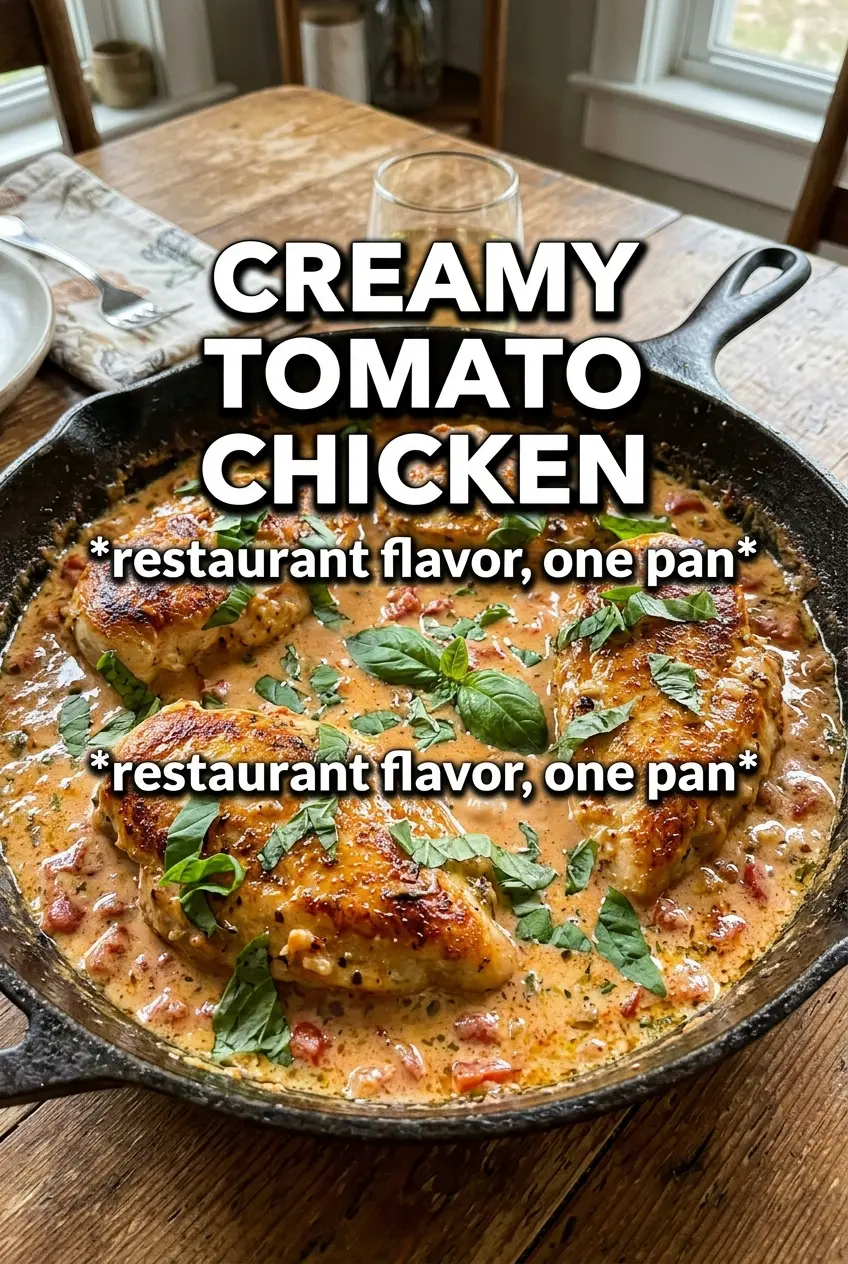
Golden seared chicken breasts in a silky tomato cream sauce earn a permanent spot on the dinner rotation because they hit that sweet spot between comforting and bright. The sauce turns a deep rosy pink, clings to the chicken, and still tastes like tomatoes first instead of a heavy cream bath. When it’s done right, every bite has browned edges, a little garlic, and enough basil to keep the richness in check.
The trick here is building the sauce in the same pan you used for the chicken. Those browned bits are what give the tomato cream sauce depth, and the quick splash of white wine loosens them without making the sauce taste sharp. The cream goes in after the tomatoes have simmered for a few minutes, which keeps the sauce smooth and prevents that chalky, broken look you get when dairy meets high heat too early.
Below, I’ll walk through the part that matters most: getting a good sear without overcooking the chicken, then finishing the sauce so it stays glossy and spoonable. There’s also a simple storage note and a few swaps that still keep the dish tasting like creamy tomato chicken, not a compromise.
The sauce turned that perfect rosy color and thickened just enough to coat the chicken without getting heavy. I served it over pasta, and even my picky eater asked for the leftovers the next night.
Save this creamy tomato chicken for the nights when you want a silky tomato sauce, golden chicken, and a dinner that feels finished in one pan.
The Seared Chicken Is What Keeps the Sauce from Tasting Flat
If the chicken goes into the sauce pale and underbrowned, the whole dish tastes softer and less defined. That golden crust does more than look good; it leaves behind browned bits in the pan and gives the sauce a deeper, more savory base. The goal is a real sear, not just cooked-through chicken with a little color.
Keep the pan hot enough that the chicken sizzles the second it lands. If it sticks hard, give it another minute; once the crust forms, it releases cleanly. Pull the chicken when it reaches 165°F, then let the sauce do the finishing work. If you cook it all the way through in the pan before the sauce is made, the chicken gets dry before dinner even hits the table.
What the Tomatoes, Cream, and Parmesan Are Each Doing Here

- Crushed tomatoes — They give the sauce body and enough texture to coat pasta or spoon over the chicken. Crushed tomatoes work better than smooth sauce here because they keep the tomato flavor present instead of turning the dish into an orange cream sauce. If your pantry only has tomato sauce, use it, but the final texture will be a little less rustic.
- Heavy cream — This softens the acidity and turns the sauce silky. Half-and-half can work in a pinch, but it won’t thicken the same way and is more likely to split if the sauce boils. Add it after the tomatoes have simmered, not before.
- Parmesan — It thickens the sauce and adds saltiness, so the sauce tastes finished instead of just creamy. Grate it finely so it melts without clumping. Pre-shredded Parmesan can be a little stubborn because of the anti-caking agents, but it’ll still work if that’s what you have.
- Dry white wine — The wine cuts through the richness and lifts the browned bits from the pan. Chicken broth is the best substitute if you don’t keep wine around, but the sauce will be a touch less bright. Let it bubble for a moment before the tomatoes go in so the sharp edge cooks off.
- Butter and basil — The butter gives the sauce a glossy finish at the end, and the basil adds freshness that keeps the dish from tasting heavy. Don’t add the basil early or it disappears into the sauce; stir it on top right before serving.
Building the Sauce So It Stays Silky and Rose-Colored
Season and Sear First
Pat the chicken dry, season it generously, and lay it into hot olive oil without crowding the pan. You want a steady sizzle from the first second, because that tells you the surface is browning instead of steaming. After 5 to 6 minutes per side, the chicken should be deeply golden and pull away from the pan without tearing. If the heat is too low, you’ll get gray chicken and weak sauce.
Use the Same Pan for the Base
Once the chicken comes out, add the garlic to the same pan and stir just until fragrant, about 30 seconds. Then pour in the wine or broth and scrape the bottom well; that’s where the flavor lives. If the pan is too hot when the garlic goes in, it can burn fast, so keep it moving and get the liquid in quickly.
Let the Tomato Sauce Reduce Before the Cream
Add the crushed tomatoes and Italian seasoning, then let the mixture simmer for about 5 minutes. You’re looking for the sauce to darken slightly and lose that raw, canned edge. After that, stir in the cream, Parmesan, and red pepper flakes, then keep the heat at a gentle simmer. A hard boil is the fastest way to make a grainy sauce.
Finish with Butter and Return the Chicken
Swirl in the butter off the heat or over very low heat until the sauce looks glossy and smooth. Slide the chicken back in and spoon sauce over the top so it warms through without overcooking. The sauce should coat the back of a spoon and pool thickly around the chicken, not run across the skillet like soup.
How to Adapt Creamy Tomato Chicken Without Losing the Point
Make it dairy-free with coconut cream
Swap the heavy cream for full-fat coconut cream and skip the Parmesan, then finish with a little extra salt and a squeeze of lemon if needed. The sauce will be a little more muted and slightly sweet, but it still turns creamy and coats the chicken well. This works best if you keep the tomato flavor dominant and don’t overdo the red pepper.
Use chicken thighs for a richer, juicier finish
Boneless skinless thighs give you more forgiveness and a deeper chicken flavor. They usually need a few extra minutes to cook through, but they stay tender even if the sauce simmers a little longer. The final dish tastes a little richer and less lean, which works beautifully here.
Turn it into a gluten-free skillet dinner
The recipe is naturally gluten-free as written, as long as your broth is gluten-free and you serve it over rice, mashed potatoes, or gluten-free pasta. The sauce itself gets its thickness from the tomatoes, cream, and Parmesan, not flour. That means you don’t need any special thickener to get a good result.
Add spinach without making the sauce watery
Toss in a handful or two of baby spinach after the cream and Parmesan go in, then stir just until it wilts. Add it too early and it disappears into the sauce; add too much and you’ll thin the sauce down. This is a good way to stretch the dish without changing the flavor balance.
Storage and Reheating
- Refrigerator: Store in an airtight container for up to 4 days. The sauce thickens as it chills, and the chicken stays best when it’s kept in the sauce.
- Freezer: It freezes, but the cream sauce may separate a little on thawing. For the best texture, cool it completely and freeze in a freezer-safe container for up to 2 months.
- Reheating: Warm it gently on the stove over low heat with a splash of broth or water to loosen the sauce. High heat is what breaks the cream, so keep it slow and stir often until the chicken is hot through.
Answers to the Questions Worth Asking
Creamy Tomato Chicken
Ingredients
Equipment
Method
- Season the chicken breasts with salt, pepper, garlic powder, and Italian seasoning to taste. Heat olive oil in a wide skillet over medium-high heat, then sear the chicken until golden, 5-6 minutes per side, until the internal temperature reaches 165°F; remove to a plate.
- Reduce heat to medium and cook the minced garlic in the same pan for 30 seconds. Deglaze with white wine or chicken broth, then add crushed tomatoes and Italian seasoning and simmer for 5 minutes.
- Stir in heavy cream, Parmesan, and red pepper flakes, then simmer for 4-5 minutes until the sauce is thick and rose-colored. Swirl in the butter until glossy.
- Return the chicken to the pan and spoon the tomato cream sauce over each breast. Garnish with fresh basil and serve over pasta or gnocchi.