Golden chicken thighs tucked into a paprika-stained sour cream sauce are the kind of dinner that disappears fast once it hits the table. The chicken stays juicy under a crisp, well-seared skin, and the sauce turns silky and deep red without tasting heavy. Spoon it over fluffy rice and you get the best kind of comfort food: bold, savory, and built from straightforward ingredients that actually pull their weight.
What makes this version work is the order. The chicken gets a real sear first, which leaves behind the browned bits that give the sauce its backbone. Then the onions soften in the same pan before the paprika blooms briefly in the oil, which keeps it fragrant instead of dull or bitter. The sour cream goes in off the heat at the end, so it blends smoothly instead of breaking.
Below, I’ve included the one mistake that trips people up with paprika sauces, plus the ingredient swaps that still keep the dish tasting balanced. If you’ve ever had chicken paprikash turn muddy or grainy, the fixes here will help.
The sauce turned out smooth and bright, and the sour cream didn’t split when I stirred it in off the heat. My husband kept going back for more rice just to soak up every bit.
Like this creamy paprika chicken with rice? Save it for the night you want a silky sour cream sauce and deeply seasoned chicken thighs over fluffy rice.
The Secret to a Paprika Sauce That Stays Smooth Instead of Grainy
Paprika sauces can go flat fast if the spice is treated like an afterthought. The key here is giving the paprika a short bloom in the onion and garlic base, just long enough to wake it up without letting it scorch. If it fries too long, it turns bitter; if it goes in raw and rushes straight to liquid, the sauce tastes thin and dusty.
The other thing that matters is heat control at the end. Sour cream is what gives this dish its signature body, but it can curdle if it hits a boiling sauce. Pull the pan off the burner before stirring it in, and the sauce stays glossy, pale enough to show those cream swirls, and thick enough to coat the chicken and rice.
What Each Ingredient Is Actually Doing in This Dish

- Bone-in, skin-on chicken thighs — These stay moist through the simmer and give you better flavor than boneless breasts. The skin also browns into the pan, and that color becomes part of the sauce. If you use boneless thighs, cut the simmer time back a few minutes and watch for doneness early.
- Sweet Hungarian paprika — This is the backbone of the dish. It brings the warm, round paprika flavor that makes the sauce taste full instead of just smoky. Cheap paprika works in a pinch, but it should still be fresh; old paprika tastes dusty and muted.
- Smoked paprika — This adds depth and a little edge. Use it lightly, because too much can take over the sauce and make it taste like barbecue instead of paprikash. If you only have sweet paprika, the dish still works; it’ll just taste softer and less layered.
- Sour cream — This is what turns the tomato-paprika base into a creamy sauce. Full-fat sour cream holds up best and gives the smoothest finish. Low-fat versions are more likely to split, especially if the pan is too hot.
- Crushed tomatoes and chicken broth — The tomatoes give body and color, while the broth loosens the sauce enough to simmer the chicken properly. Don’t swap in a thick marinara; it changes the balance and pushes the sauce toward something sweeter and heavier than it should be.
- White rice — Plain rice is the right landing spot for a sauce this rich. It absorbs the paprika cream without competing for attention. Long-grain white rice keeps the bowl light and fluffy, which is exactly what you want here.
Getting the Chicken, Sauce, and Sour Cream to Work in the Right Order
Searing the thighs until the skin turns crisp
Season the chicken well, then lay it skin-side down in hot oil and leave it alone long enough to form a deep golden crust. If you move it too soon, the skin sticks and tears instead of releasing cleanly. The goal is rendered fat, browned bits, and skin that still has texture after simmering. A quick flip on the second side is enough; the chicken finishes in the sauce.
Building the onion and paprika base
Cook the onion until it turns soft and translucent, not browned. Once the garlic and paprika go in, stir constantly for about a minute so the spices bloom in the fat and coat the onions evenly. If the pan looks dry or the paprika starts darkening fast, add the tomatoes sooner to stop it from burning.
Simmering without washing out the flavor
When the tomatoes and broth go in, scrape the bottom of the pan until the browned bits dissolve into the liquid. Return the chicken skin-side up so the skin stays exposed and doesn’t go soggy in the sauce. Keep the simmer gentle; a hard boil can make the sauce reduce too fast and toughen the chicken before it reaches 165°F.
Finishing with sour cream the safe way
Take the pan off the heat before adding the sour cream and stir until the sauce turns smooth and creamy. If you want extra insurance against curdling, whisk a few spoonfuls of hot sauce into the sour cream in a bowl first, then stir that mixture back into the pan. That small step keeps the sauce stable and gives you a glossy finish instead of little white flecks.
How to Adapt This Creamy Paprika Chicken When You Need a Different Finish
Use boneless chicken thighs for a faster weeknight version
Boneless thighs cook a little quicker and are easier to portion over rice. You’ll lose some of the richness that comes from the bone and skin, but the sauce still carries the dish. Sear them hard on both sides, then start checking for doneness a few minutes earlier than the recipe calls for.
Make it dairy-free with coconut cream
Coconut cream can stand in for sour cream if you need to skip dairy, but the sauce will taste a little sweeter and less tangy. Add it off the heat the same way you would sour cream so it blends smoothly. A small splash of lemon juice at the end helps bring back some of the sharpness.
Swap in rice pilaf or mashed potatoes
Rice is the classic choice because it lets the sauce shine, but mashed potatoes make this even more comforting. A simple rice pilaf adds a little more aroma without changing the core flavor. Either one should stay mild so the paprika sauce remains the main event.
Storage and Reheating
- Refrigerator: Store leftovers in an airtight container for up to 3 days. The sauce thickens as it chills, which is normal.
- Freezer: The chicken freezes well, but dairy sauces can turn a little grainy after thawing. If you freeze it, expect a less silky texture and rewarm it gently.
- Reheating: Reheat low and slow on the stovetop with a splash of broth or water to loosen the sauce. High heat is the fastest way to break the sour cream and dry out the chicken.
Questions I Get Asked About This Recipe
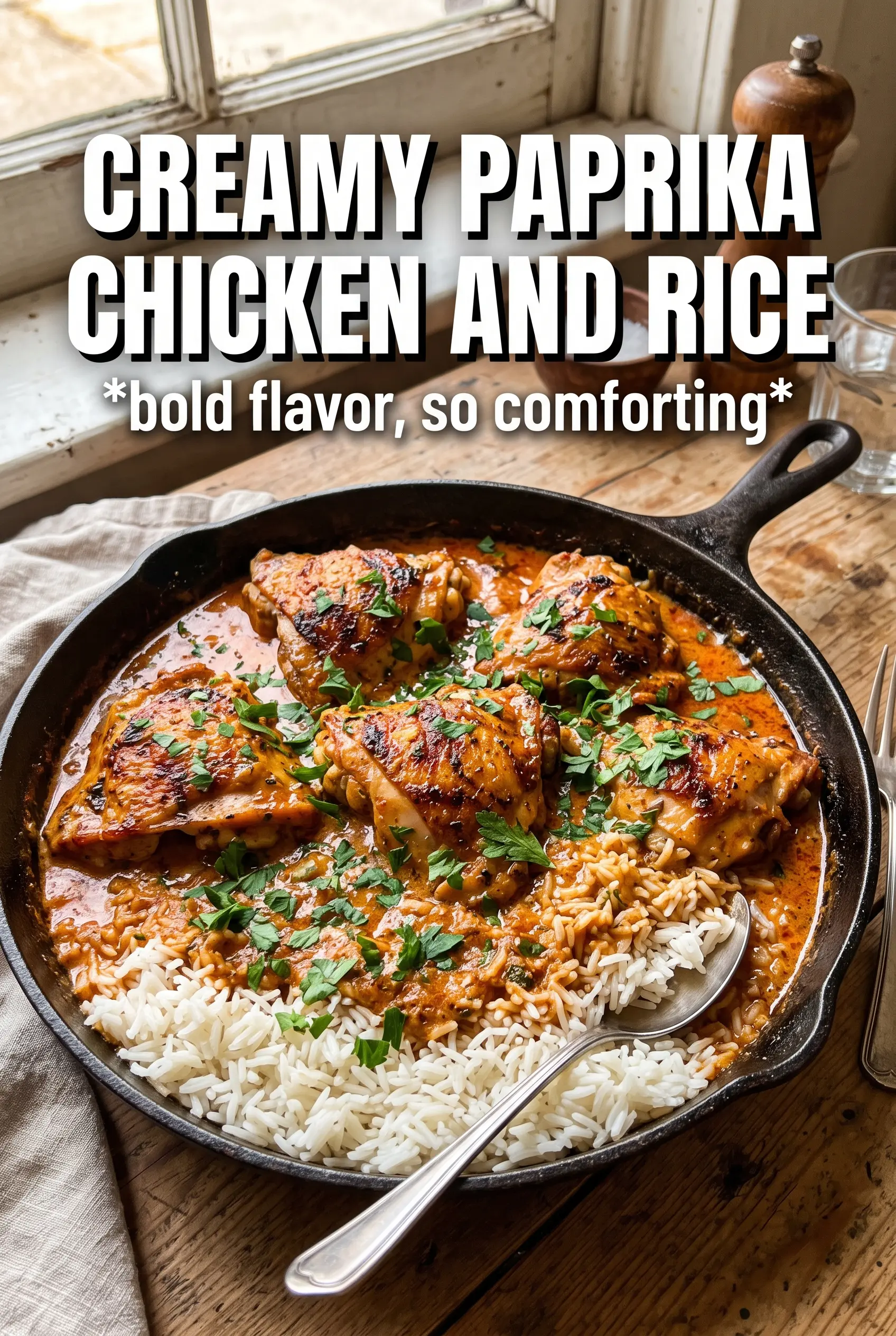
Creamy Paprika Chicken with Rice
Ingredients
Equipment
Method
- Season the bone-in skin-on chicken thighs with salt, pepper, garlic powder, and smoked paprika to taste. Heat vegetable oil in a cast iron skillet over medium-high heat and sear the chicken skin-side down for 6-7 minutes until deeply golden.
- Flip the chicken and sear for 4 minutes, then remove to a plate.
- Add the finely diced onion to the same pan and cook over medium heat for 5-6 minutes until softened. Stir in minced garlic and both paprikas and cook for 1 minute until fragrant.
- Add crushed tomatoes and chicken broth, then bring to a simmer. Return the chicken skin-side up.
- Cover and simmer for 18-20 minutes, until the internal temperature reaches 165°F. If the pan seems dry, add a splash of broth.
- Remove from the heat and stir in sour cream until the sauce is smooth and creamy with visible swirls. Serve over cooked white rice and garnish with fresh dill.