Cream cheese apple coffee cake bakes up with a tender, buttery crumb, a tangy cheesecake layer, soft cinnamon apples, and a crisp streusel top that turns golden at the edges. The contrast is what makes it worth repeating. Every slice gives you a little bit of everything: plush cake, creamy filling, juicy fruit, and that brown-sugar crunch on top.
The key is layering in the right order and keeping each component where it belongs. The cream cheese layer stays smooth when the ingredients are beaten until no lumps remain, and the apples don’t sink as easily when they’re diced small and tossed with cinnamon and sugar before baking. The streusel should stay cold and crumbly so it bakes into crisp little nubs instead of melting into the batter.
Below, I’ve included the places where this coffee cake usually goes sideways, plus the swaps that still keep the texture balanced. If you’ve ever ended up with a soggy middle or a streusel that disappeared, the notes here will help.
The cream cheese layer stayed perfectly distinct and the apples softened just enough without turning mushy. I baked it in a 9×13 and the streusel got those crisp caramelized edges my husband kept sneaking off the corner pieces.
Save this cream cheese apple coffee cake for a brunch bake with a tangy cream layer, soft cinnamon apples, and a crisp streusel top.
The Reason the Cream Cheese Layer Stays Clean Instead of Sinking
What ruins a layered coffee cake is usually impatience at assembly. If the cake batter is too thin, the cream cheese mixture can sink and blur into the middle instead of sitting in a distinct ribbon. This version holds its shape because the batter starts with the butter and sugar beaten until light, then gets the flour and sour cream added in turns, which gives you enough body without turning the cake dense.
The other thing that matters is the temperature of the filling and the apples. Softened cream cheese beats smooth; cold cream cheese leaves little lumps that never fully disappear. The apples should be diced small enough to soften in the oven, but not so small that they turn to applesauce and leak into the cake.
- Butter and sugar — This is what gives the cake its lift and soft crumb. Beat them until the mixture looks pale and fluffy; that extra air helps the cake rise around the heavier filling.
- Sour cream — This is the moisture insurance. It keeps the crumb tender without thinning the batter the way extra milk would.
- Cream cheese — Use full-fat cream cheese for the cleanest, richest layer. Reduced-fat versions can bake up looser and less stable.
- Apples — A firm baking apple holds its shape better than a soft eating apple. If all you have is a softer variety, dice it a little larger so it doesn’t disappear.
What Each Part Is Doing in the Pan
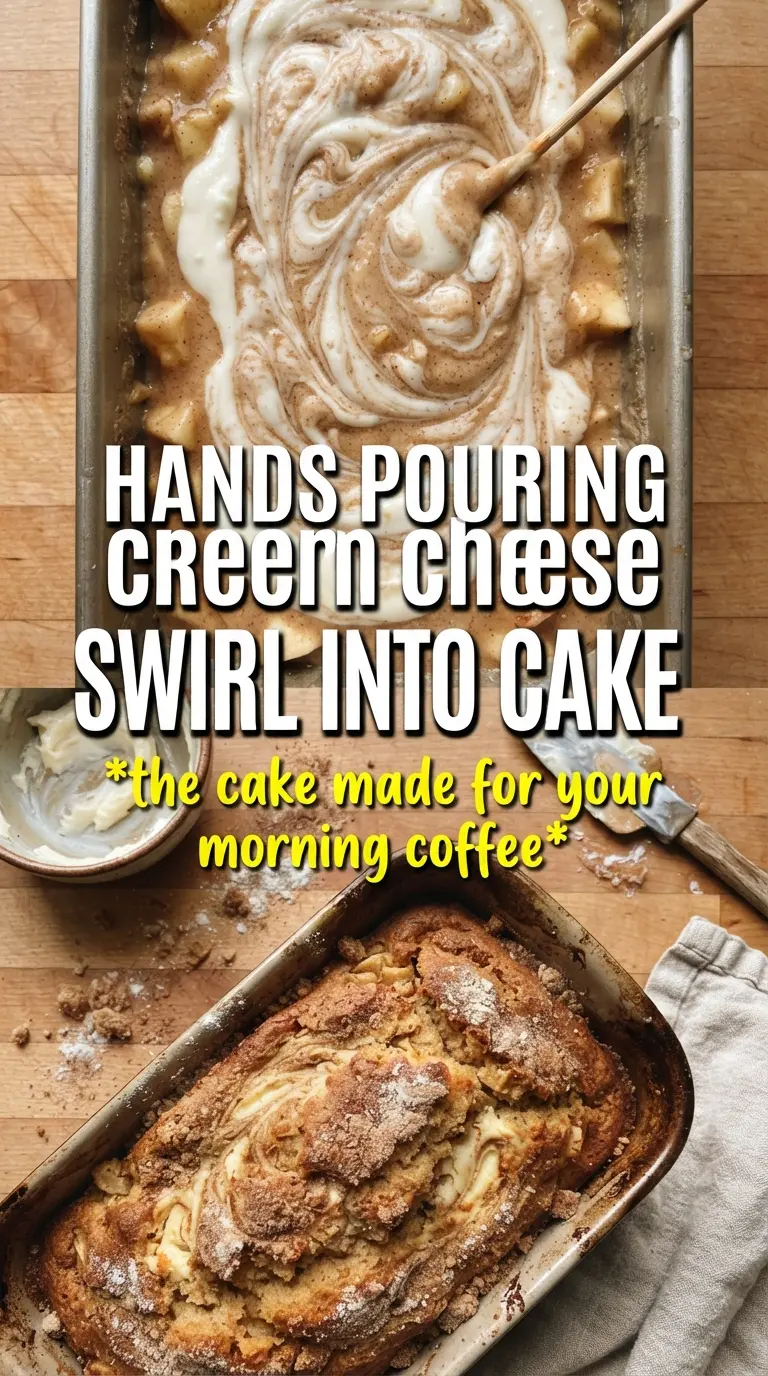
Cake batter — The flour, baking powder, and baking soda work together to give the cake enough lift to support the cream cheese and apple layers. The sour cream adds acidity and tenderness, which matters because a plain butter cake can get dry by the time the center finishes baking.
Cream cheese layer — This is the part that makes each slice taste like bakery coffee cake instead of just spice cake with fruit on top. The egg in the filling helps it set into a soft cheesecake layer rather than staying loose and runny.
Apple layer — Tossing the diced apples with sugar and cinnamon draws out a little moisture and seasons the fruit before it goes into the oven. Don’t skip that step or the apples can taste flat against the richer layers below them.
Streusel — Cold butter is the difference between a crunchy topping and a greasy one. Work it in just until you have uneven crumbs; those bigger pieces are what bake into the best crisp edges.
Building the Layers Without Smearing Them Together
Mix the streusel first
Start with the streusel so the butter stays cold while you work on the rest. Use a fork or your fingertips to cut the butter into the flour, brown sugar, and cinnamon until the mixture looks like damp crumbs with a few pea-sized bits. If it turns into a paste, the butter was too warm, and the topping will melt instead of crisping.
Beat the filling until smooth
The cream cheese layer should look glossy and lump-free before it goes anywhere near the batter. Beat the cream cheese, sugar, egg, and vanilla just until smooth; overmixing here doesn’t help, but under-mixing leaves streaks that bake into little pockets. Set it aside while you build the cake so it stays spreadable.
Build the base batter
Cream the butter and sugar until fluffy, then add the eggs and vanilla before alternating the dry ingredients with the sour cream. That alternating method keeps the batter from breaking and helps everything emulsify cleanly. Stop mixing as soon as the flour disappears; if you keep going, the cake can bake up tight instead of tender.
Layer with purpose
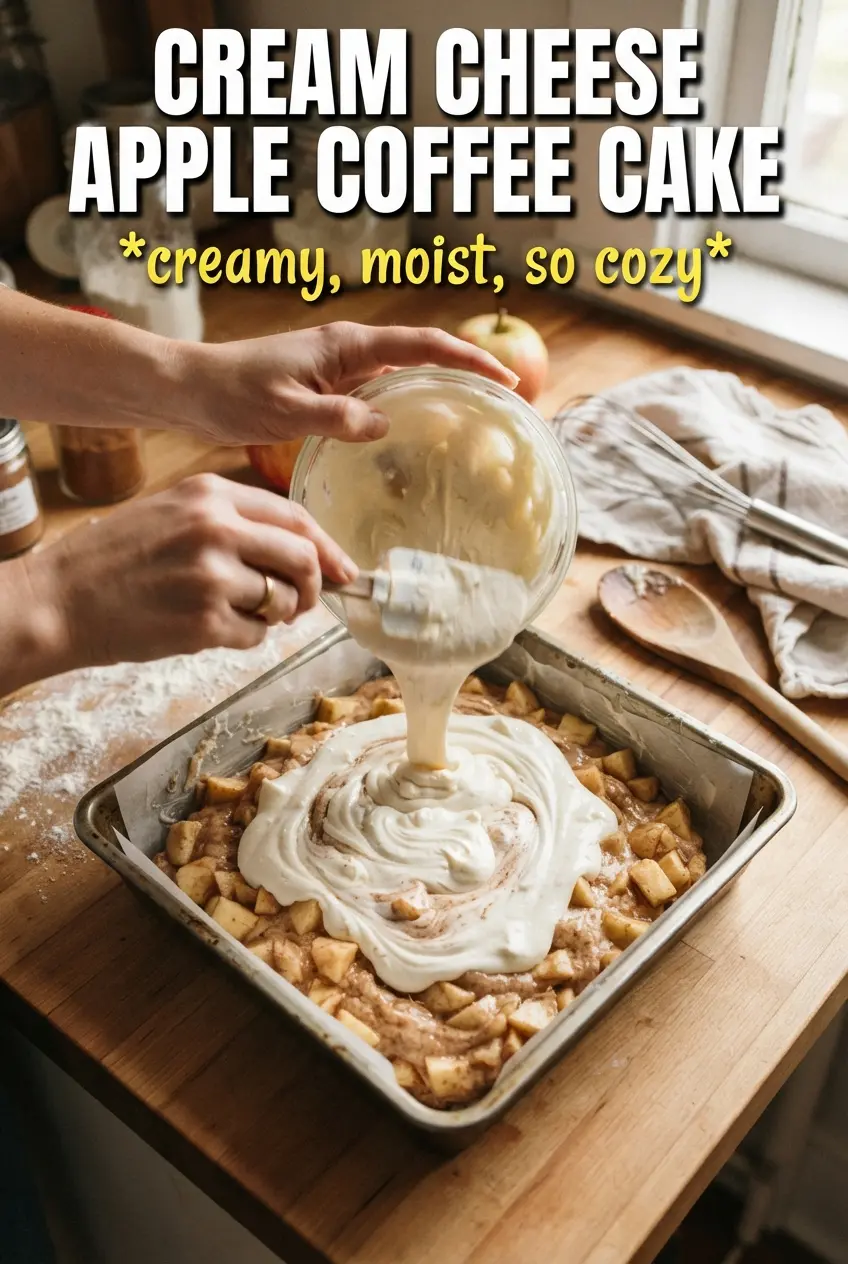
Spread the batter evenly in the greased 9×13 pan, then dollop the cream cheese mixture across the surface and gently spread it toward the edges. It doesn’t need to be perfect, but it should cover most of the cake so every slice gets a ribbon of filling. Scatter the apples over the top, then finish with the streusel so the crumbs stay on top instead of sinking into the batter.
Bake until the center sets
Bake at 350°F until the top is deeply golden and a toothpick in the cake part comes out clean, about 45 to 50 minutes. If the streusel is browning fast before the center is done, loosely tent the pan with foil for the last stretch. Let it cool before slicing or the cream cheese layer will smear instead of cutting cleanly.
How to Adapt This Coffee Cake Without Losing the Texture
Use Greek yogurt instead of sour cream
Full-fat plain Greek yogurt works in place of sour cream if that’s what you have. The cake will still stay moist, though the crumb is a touch less rich and a little more tangy. Use the same amount and keep the yogurt full-fat so the batter doesn’t get watery.
Make it gluten-free with a 1:1 baking blend
A good 1:1 gluten-free flour blend can replace the all-purpose flour in both the cake and streusel. The texture will be a little more delicate, so let the cake cool fully before cutting. If your blend doesn’t include xanthan gum, choose one that does for the best structure.
Swap the apples for pears
Firm pears work well here if you want a softer, more floral filling. They break down a little more than apples, so keep the dice slightly larger to preserve some texture. Bartlett pears are fine if they’re still firm; Bosc pears hold their shape even better.
Store and reheat it the right way
Refrigerator: cover leftovers and refrigerate for up to 4 days. The cream cheese layer keeps it safest and best stored cold. Freezer: freeze individual slices wrapped well for up to 2 months; thaw overnight in the fridge. Reheating: warm slices in a low oven or toaster oven until just heated through. The microwave works in a pinch, but it softens the streusel and makes the cake a little rubbery if you overdo it.
Answers to the Questions Worth Asking
Cream Cheese Apple Coffee Cake
Ingredients
Equipment
Method
- Preheat oven to 350F, then grease a 9x13 baking dish so the cake releases easily.
- Combine flour, brown sugar, cinnamon, and cold butter in a bowl and mix with a fork until crumbly, with no large clumps.
- Set the streusel aside while you make the layers.
- Beat cream cheese layer ingredients together until smooth, stopping to scrape the sides for an even filling texture.
- Toss diced apples with sugar and cinnamon until coated, then set aside.
- Beat butter and sugar until fluffy, about 1-2 minutes, then add eggs and vanilla and mix until combined.
- Alternate adding the flour mixture and sour cream to the butter mixture, mixing just until the batter looks smooth.
- Spread the cake batter in the prepared pan and dollop the cream cheese mixture over the top, then spread gently so it stays layered.
- Top with cinnamon apples, then sprinkle streusel over everything for a crisp golden crust.
- Bake for 45-50 minutes at 350F until a toothpick comes out clean, with a golden, caramelized top.