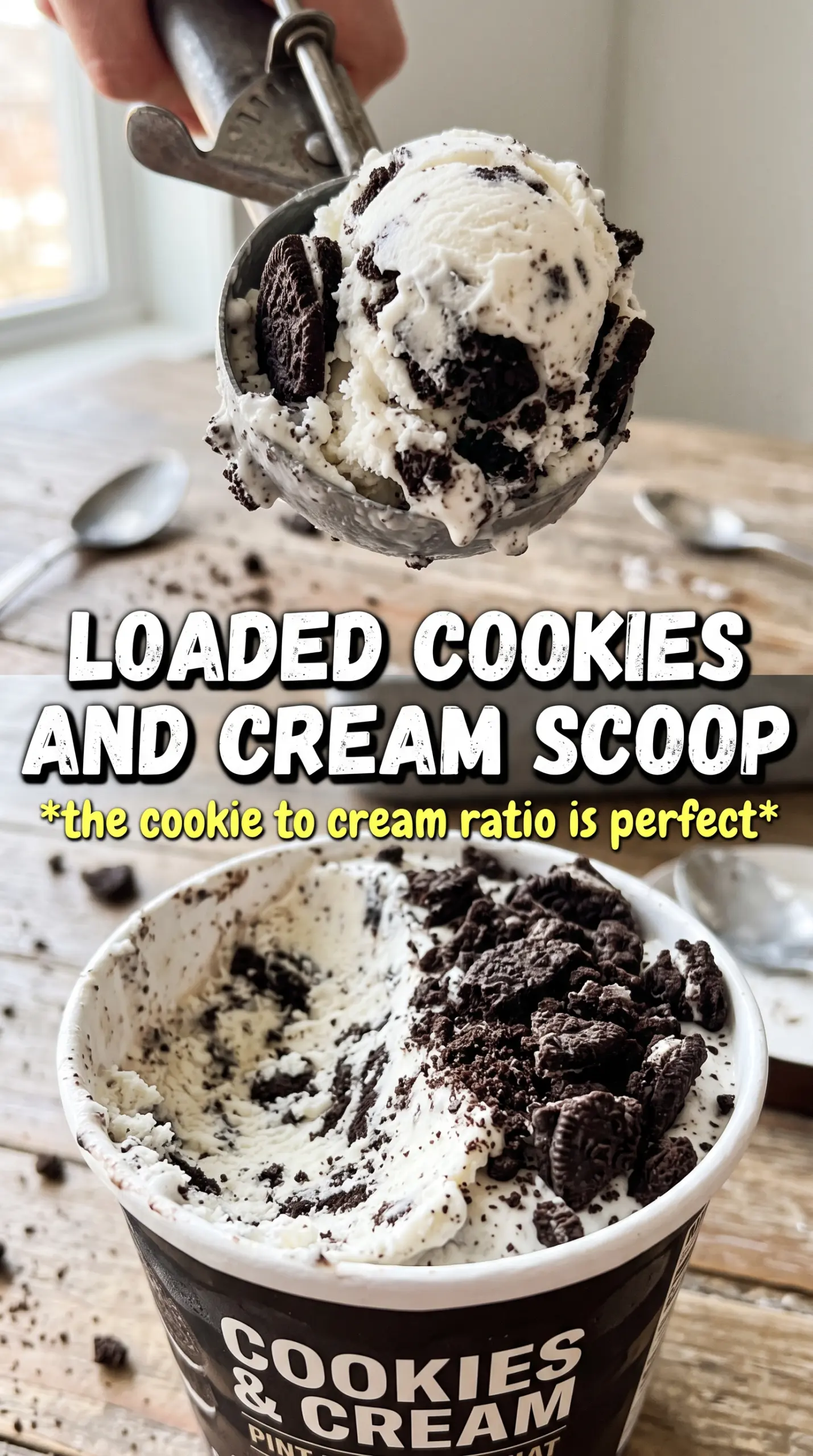
Cookies and cream ice cream hits that sweet spot between nostalgic and worth-making-from-scratch: a clean vanilla custard base, plenty of cookie chunks, and a texture that scoops like the good stuff from an old-school ice cream shop. The best part is the contrast. You get cold, silky cream in one bite and crunchy chocolate cookie pieces in the next.
This version leans on a cooked custard, which gives it a richer body than a no-churn base and helps keep the final ice cream smooth instead of icy. The cookies go in at the end of churning so they stay distinct, but I like them roughly crushed rather than pulverized into crumbs. That way, some pieces melt into the base while others stay bold and chunky.
Below, I’ve included the temperature cue that matters most, the reason the custard gets strained, and a few smart swaps if you want to adjust the richness or make it dairy-free.
The custard thickened up exactly at 175F and the cookies stayed chunky instead of turning muddy. I froze it overnight and it scooped like the ice cream shop version my kids always ask for.
Save these creamy cookies and cream ice cream scoops for the nights when you want big cookie chunks in every bite.
The Custard Temperature That Keeps Ice Cream Silky, Not Scrambled
The biggest mistake with custard ice cream is pushing it too far on the stove. Egg yolks thicken the base around 170F to 175F; once you start racing past that, you’re making soft scrambled eggs, not ice cream base. Medium-low heat and constant stirring matter here because the custard should thicken gradually and coat the back of a spoon without ever looking grainy.
Straining the custard is not extra fuss. It catches any tiny bits of cooked egg and gives you the smooth, clean finish you want in the final churn. Cooling it completely before it goes into the ice cream maker matters too, because a warm base takes longer to freeze and can turn a batch soft and sloppy instead of dense and scoopable.
What Each Ingredient Is Actually Doing in This Bowl
- Heavy cream — This is what gives the ice cream its plush body and rich mouthfeel. There isn’t a good substitute if you want the same scoopable texture; lighter cream makes the finished ice cream icier.
- Whole milk — Whole milk keeps the custard from turning heavy or greasy. You can swap in 2 percent in a pinch, but the base won’t feel as round and silky.
- Egg yolks — Yolks thicken the base and help keep it stable in the freezer. They’re also what turn a simple cream mixture into a real custard with that velvet texture.
- Chocolate sandwich cookies — These bring the cookie crunch and the classic cookies-and-cream flavor. Crush them roughly, not into powder, so you get visible chunks and some cookie streaks in the base.
- Vanilla extract — Vanilla is the quiet backbone here. It rounds out the dairy and makes the chocolate cookie pieces taste more pronounced.
How to Turn the Custard Into Ice Cream Without Losing the Cookies
Heating the Dairy
Warm the cream and milk until the mixture is steaming, not boiling. You want tiny bubbles at the edge of the pan and a little heat rising from the surface. If it boils, you’ll drive off moisture and risk scorching the dairy on the bottom of the pan, which gives the base a cooked taste before the eggs even go in.
Tempering the Yolks
Whisk the sugar into the yolks first, then add the hot dairy slowly in a thin stream while whisking the whole time. This step protects the eggs from curdling, which is what happens when hot liquid hits them all at once. Once tempered, pour the mixture back into the saucepan and keep the heat low enough that the custard thickens gradually instead of clumping.
Cooking to the Right Thickness
Stir constantly and watch for the moment the custard coats the back of a spoon. At 175F, it should look slightly thicker and leave a clean path when you run your finger through it on the spoon. If it starts to bubble hard, pull it off the heat immediately; that’s the point where the yolks can overcook and the texture goes from smooth to grainy.
Chilling, Churning, and Adding the Cookies
After straining, stir in the vanilla and salt, then chill the base until it is completely cold. A warm custard won’t churn properly and can stay soft for hours after freezing. Add the crushed cookies during the last 2 minutes of churning so they distribute evenly without getting smashed to dust, then freeze the finished ice cream until firm enough to scoop cleanly.
How to Adapt This for Different Kitchens and Different Diets
No-Churn Cookies and Cream Version
Skip the custard and fold crushed cookies into a whipped cream and sweetened condensed milk base. It’s faster and easier, but you lose the deeper custard flavor and the tighter, scoop-shop texture that churned ice cream gives you.
Dairy-Free Swap
Use full-fat coconut milk and a dairy-free vanilla ice cream base, then fold in dairy-free chocolate sandwich cookies. The ice cream will set a little firmer and carry a faint coconut note, but it still gives you the same cookie-heavy bite.
Extra-Crunchy Cookie Pieces
Reserve a handful of cookie pieces and fold them in after churning instead of adding everything in the machine. That keeps a few bigger chunks from softening too much in the churn and gives you a more dramatic cookie bite in the frozen dessert.
Storage and Reheating
- Refrigerator: The base can be refrigerated up to 2 days before churning, but the finished ice cream should not be stored in the fridge or it will melt.
- Freezer: Freeze in a tightly covered container for up to 2 weeks for the best texture. After that, it can pick up ice crystals and lose some of its creaminess.
- Reheating: Not applicable for ice cream. For the best scoop, let it sit at room temperature for 5 to 10 minutes before serving so the cookies don’t shatter the scoop.
Answers to the Questions Worth Asking

Cookies and Cream Ice Cream
Ingredients
Equipment
Method
- Heat heavy cream and whole milk in a saucepan until steaming, not boiling, then reduce heat to maintain a gentle steam.
- In a bowl, whisk egg yolks with granulated sugar until smooth, then slowly whisk the hot cream mixture into the yolks in a thin stream to temper.
- Return the mixture to the saucepan and cook over medium-low heat, stirring constantly, until the custard reaches 175F (it should lightly coat the back of a spoon).
- Strain the custard through a fine mesh sieve into a clean container, then stir in vanilla extract and salt.
- Cool completely at room temperature, then refrigerate for at least 4 hours until very cold.
- Churn the chilled custard in an ice cream maker according to the manufacturer’s instructions, until it thickens to soft-serve consistency.
- During the last 2 minutes of churning, add crushed chocolate sandwich cookies so some remain chunky and some dissolve slightly for a cookies-and-cream swirl effect.
- Transfer to a container, then freeze until firm.