Shatteringly crisp skin, bright lime, and a garlicky cilantro marinade make this chicken the kind of dinner that disappears fast. The skin turns deeply golden in the skillet while the marinade leaves just enough tang to cut through the richness, so every bite lands with a little crunch and a lot of flavor.
The key is simple: let the chicken marinate long enough to pick up the lime and herb notes, then dry the skin before it hits the pan. That one detail keeps the thighs from steaming in their own seasoning. A hot cast iron skillet does the rest, building crispness first and letting the chicken finish gently without drying out.
Below, you’ll find the exact timing that gives you crisp skin without burning the herbs, plus the small adjustments that help if your limes are extra juicy or your chicken thighs are on the larger side.
The skin crisped up beautifully in the cast iron, and the lime-cilantro marinade made the chicken taste fresh instead of heavy. Mine hit 165 exactly in the time listed.
Save this cilantro lime crispy chicken for the nights when you want crackly skin, a bright marinade, and one skillet doing all the work.
The Trick to Crisp Skin When the Marinade Has Lime Juice
Acid is great for flavor, but it can work against you if it sits on the skin too long. Lime juice softens the surface, which is fine for the meat, but the skin needs to be dry before it goes into the pan or it will steam before it sears. That is the difference between crisp and leathery.
The other thing that matters here is heat control. Cast iron gives you enough steady heat to render the fat under the skin without scorching the herbs in the marinade too early. Start skin-side down and leave it alone; every time you move it, you interrupt the crust before it has a chance to set.
- Bone-in, skin-on chicken thighs — These stay juicy through the longer skillet cook and give you the best crispy skin. Boneless thighs cook faster, but they won’t give you the same texture.
- Fresh lime juice and zest — The juice brings tang, but the zest carries the brighter lime flavor. Bottled juice works in a pinch, though the finished dish tastes flatter.
- Fresh cilantro — Chopping it finely helps it cling to the chicken and infuse the marinade. Dried cilantro won’t give you the same fresh, grassy note.
- Olive oil — It helps carry the garlic and spices across the chicken and keeps the marinade from feeling harsh. You can swap in avocado oil if you want a higher-heat option.
- Cumin, garlic powder, smoked paprika, and cayenne — This is the backbone of the seasoning. If you want less heat, cut the cayenne in half; if you want deeper smokiness, increase the paprika slightly.
What Each Ingredient Is Actually Doing in This Recipe

- Primary ingredient (the star) — Quality matters most. Choose the best you can find.
- Cooking medium (oil, butter, or broth) — This carries flavors and prevents dryness.
- Seasonings (salt, pepper, spices, herbs) — Layer flavors so nothing overpowers. Build depth gradually.
- Aromatics (garlic, onion, herbs) — Cook with fat to bloom flavors. Become the foundation.
- Supporting ingredients — Complement the main ingredient without overpowering it.
- Sauce or liquid (if applicable) — Brings flavors together. Balance richness with acid.
- Acid (lemon, vinegar, wine, or other) — Brightens and prevents flat-tasting results.
- Final finish (garnish, glaze, or sauce) — Prevents one-dimensional taste and adds visual appeal.
Getting the Skin Crisp Before the Chicken Overcooks
Build the Marinade First
Stir the lime juice, zest, cilantro, garlic, oil, and spices together until the mixture looks loose and evenly speckled. The olive oil should help the herbs float through the liquid instead of clumping at the bottom. If the garlic sits in one spot, it tends to burn later, so mix it well before the chicken goes in.
Marinate, Then Dry the Skin
Let the chicken sit in the marinade for at least an hour so the meat picks up the citrus and herb flavor. Right before cooking, lift the thighs out and pat the skin dry with paper towels. That step matters more than anything else in the recipe; wet skin will spit, steam, and soften instead of crisping.
Sear Skin-Side Down Without Touching It
Set the skillet over medium-high heat and lay the chicken in skin-side down. You should hear a steady sizzle, not an aggressive sputter, and then leave it alone for 8 to 10 minutes. If you try to move it too soon, the skin tears and sticks; it releases cleanly only after a proper crust has formed.
Finish the Thighs Through to the Center
Flip the chicken and cook the second side until the thighs reach 165F in the thickest part. The skin will darken a little more from the marinade, which is good, but pull the heat back if the herbs on the pan bottom start to look too dark too fast. Let the chicken rest for 5 minutes so the juices settle before serving.
How to Adapt This for Different Pan Sizes and Diets
Use boneless thighs for a faster dinner
Boneless, skinless thighs will cut the cook time down, but you lose the crackly skin and some of the richness from rendered fat. The marinade still works well, though, so this is the best swap if you want the same flavor in less time.
Make it dairy-free and naturally gluten-free
This recipe already fits both of those needs as written, which is part of why it works so well for a wide range of dinners. Just double-check your spices for any added anti-caking agents if you’re cooking for someone with a sensitivity.
Swap the cayenne for a milder finish
Leaving out the cayenne keeps the chicken bright and herb-forward instead of spicy. You won’t lose much depth, because the cumin, garlic, and smoked paprika are doing most of the seasoning work.
Storage and Reheating
- Refrigerator: Store leftovers in an airtight container for up to 4 days. The skin softens a bit, but the flavor holds up well.
- Freezer: Freeze cooked thighs for up to 2 months, wrapped tightly and sealed well. The skin won’t stay crisp after thawing, but the chicken still reheats nicely for salads, rice bowls, or tacos.
- Reheating: Reheat in a 375F oven or air fryer until hot. The common mistake is microwaving, which turns the skin rubbery and mutes the lime; dry heat gives you the best shot at bringing back some crispness.
Answers to the Questions Worth Asking
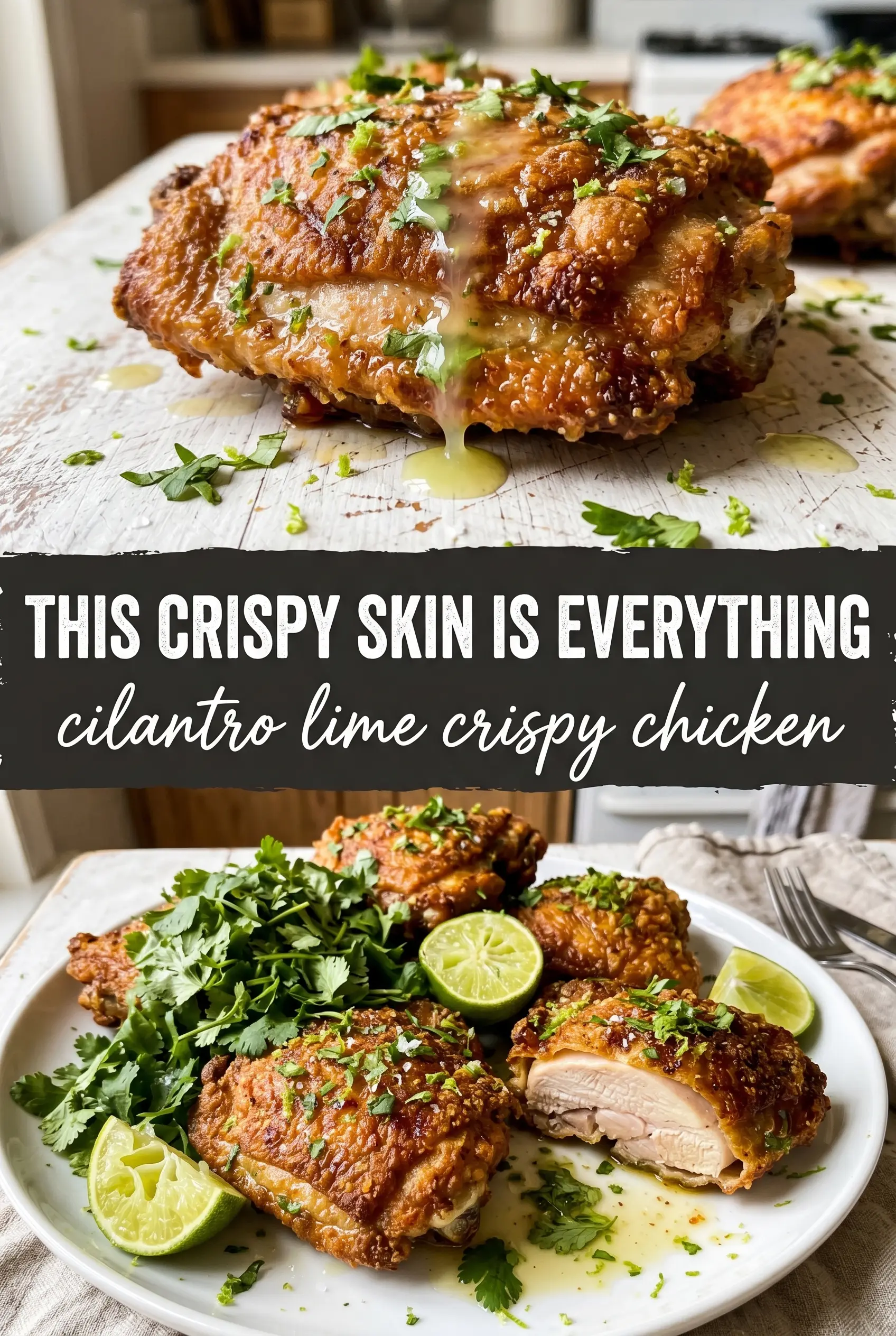
Cilantro Lime Crispy Chicken
Ingredients
Equipment
Method
- Combine lime juice, lime zest, cilantro, garlic, olive oil, cumin, garlic powder, smoked paprika, salt, pepper, and cayenne until well mixed.
- Add chicken to the marinade and refrigerate for at least 1 hour.
- Before cooking, pat the chicken skin dry for maximum crispiness.
- Heat a cast iron skillet over medium-high heat until hot.
- Place chicken skin-side down in the skillet and cook undisturbed for 8-10 minutes, until the skin is shatteringly crispy and golden.
- Flip the chicken and cook for 8-10 minutes more, until cooked through (165F).
- Rest the chicken for 5 minutes before serving to help the juices settle.
- Serve with fresh cilantro and lime wedges for brightness.