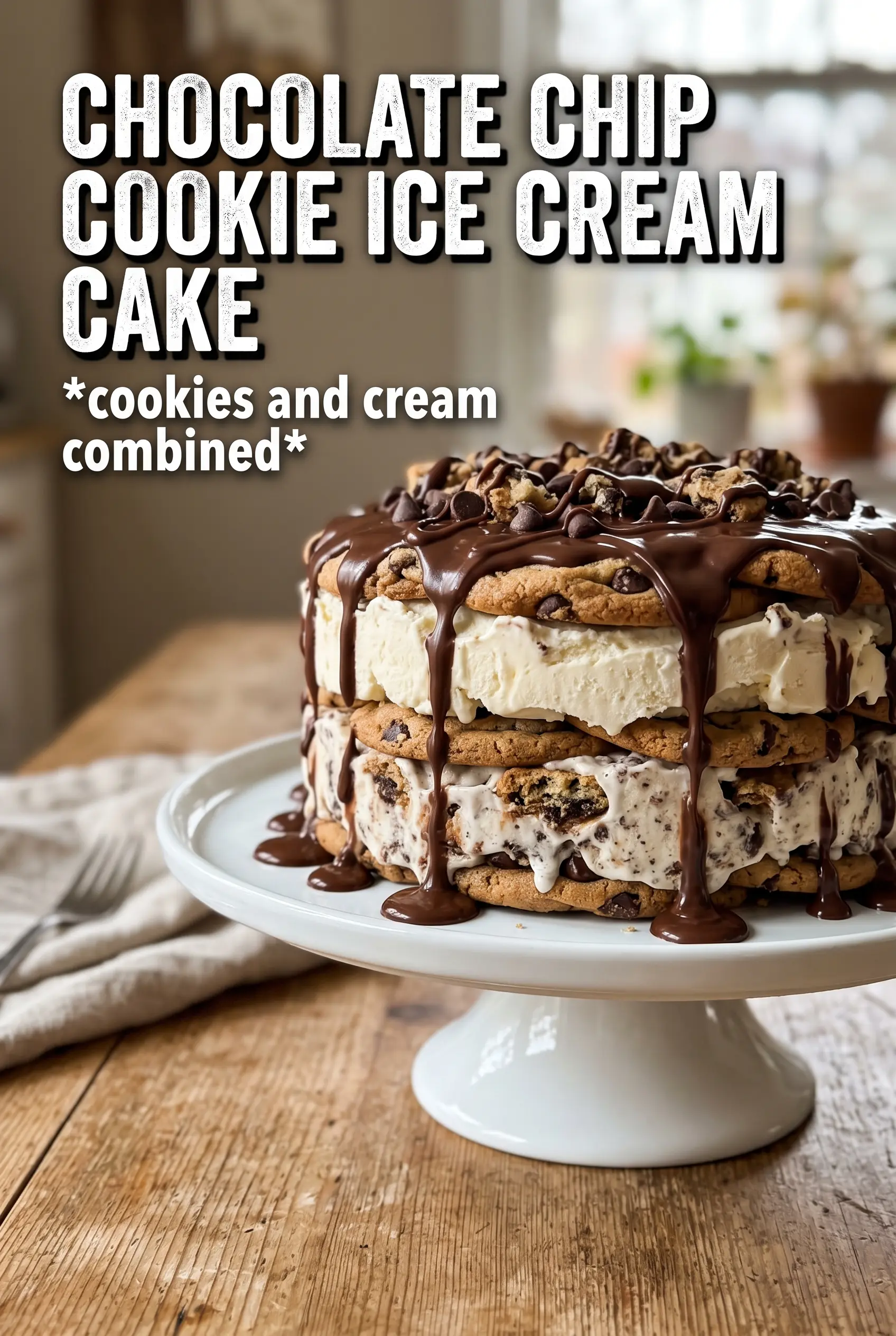
Two giant chocolate chip cookies sandwiching a thick layer of vanilla ice cream makes this dessert feel nostalgic and a little dramatic in the best way. The cookie layers stay chewy at the center with crisp edges, while the ice cream settles into the middle like a frozen filling that slices clean after a proper freeze. It’s the kind of dessert that gets loud when it hits the table and even better when the first wedge reveals those clean layers.
This version works because each layer is treated separately. The bottom cookie bakes in the pan so it sets up as a sturdy base, while the top cookie is baked on parchment first so it can be moved onto the ice cream without tearing or collapsing. Softened ice cream matters here too; if it’s still too firm, you’ll end up with gaps instead of a smooth middle layer. A little flaky sea salt on top keeps the whole thing from tasting one-note and makes the chocolate feel richer.
Below, I’ve added the timing details that keep the layers neat, plus a few swaps for making this with store-bought dough or different ice cream flavors without losing the structure.
The cookie layers baked up sturdy but still soft, and after the freeze the ice cream slice held its shape perfectly. I used magic shell on top and the salty finish made it taste like a bakery ice cream sandwich.
Pin this chocolate chip cookie ice cream cake for the next birthday when you want a frozen cookie-and-vanilla slice with a clean cut and a chocolate shell finish.
The Freezer Time That Keeps the Layers Clean Instead of Melting Together
The part that trips people up with ice cream cakes isn’t the flavor. It’s the timing. If the cookie base is even slightly warm when the ice cream goes on, the edges start to melt and the whole middle can slide around before it sets. The other common problem is rushing the final freeze; without enough time, the top cookie won’t sit neatly on the ice cream and the first slice turns messy fast.
The easiest way to keep this cake sharp is to think of it in three separate freezes. Bake and cool the bottom cookie completely. Add the softened ice cream only when the base is fully cool, then freeze until the middle is firm enough to support the top cookie. That extra patience pays off at slicing time, because the layers stay distinct instead of collapsing into one another.
What Each Ingredient Is Actually Doing in This Cookie Ice Cream Cake
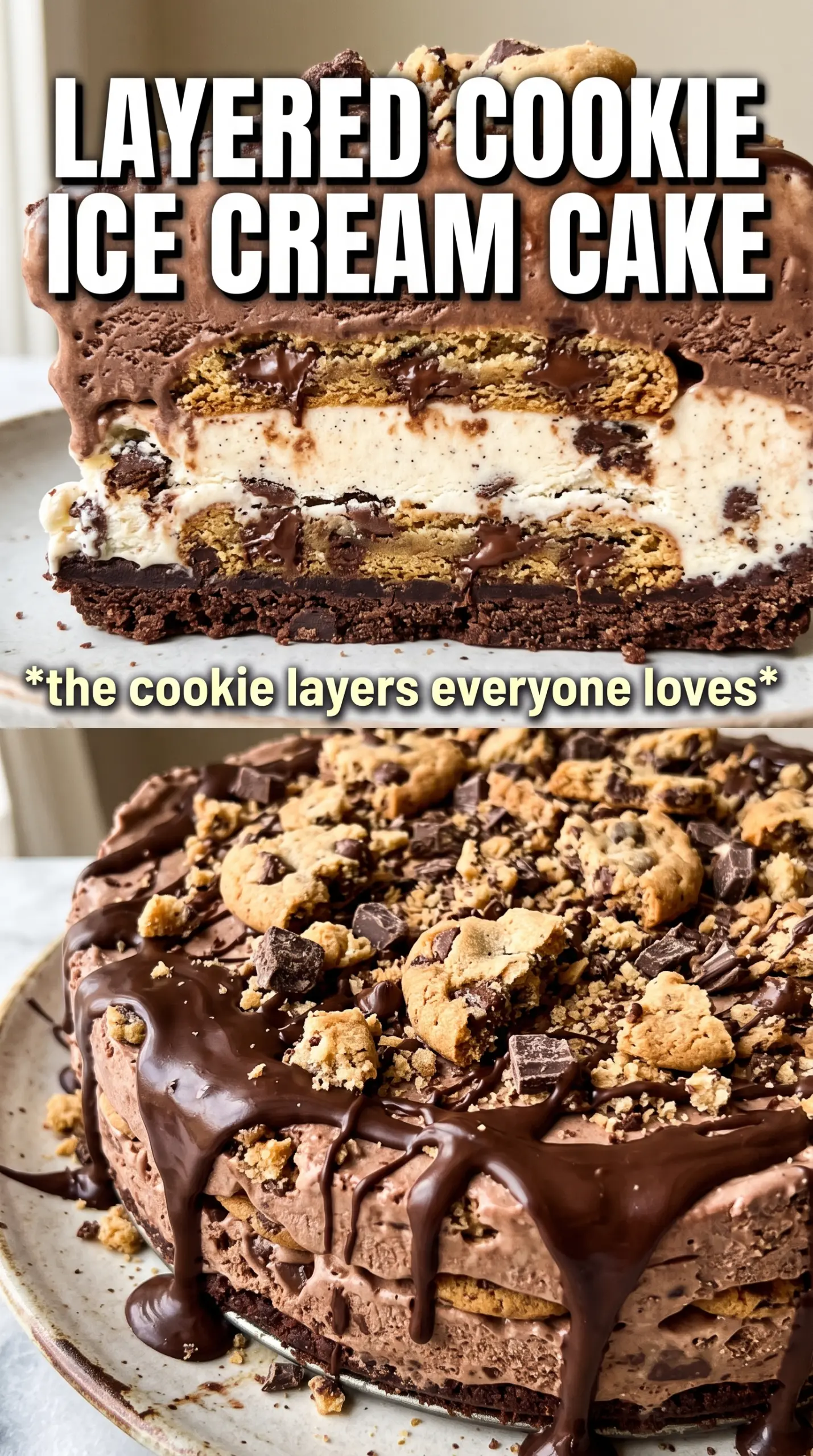
- Chocolate chip cookie dough — This is the structure of the cake, so it needs enough butter and flour to bake into a sturdy, sliceable layer. Homemade dough gives you the best flavor and texture, but refrigerated dough works when you want a shortcut. If you use store-bought dough, don’t underbake it; a soft center sounds nice, but here it can make the cake slump once it’s frozen.
- Vanilla ice cream — Vanilla gives the chocolate chips room to stand out, and its fat content helps it freeze into a creamy middle instead of an icy one. The important part is softening it until it spreads easily, not until it turns soupy. If it gets too loose, it can soak into the cookie base instead of sitting as its own layer.
- Chocolate ganache or magic shell — This is the finish that makes the top feel bakery-style. Ganache gives you a richer, softer chocolate layer; magic shell sets faster and cracks when sliced, which is fun with the frozen texture. Use the one that fits how neat or dramatic you want the top to look.
- Flaky sea salt — It doesn’t just garnish the cake. It sharpens the chocolate and keeps each bite from tasting flat. A light sprinkle is enough; too much and it starts to fight the ice cream instead of balancing it.
Building the Cake So the Top Cookie Lands Without Cracking
Baking the Bottom Layer
Press half the cookie dough into the springform pan in an even layer so it reaches the edges without thick lumps in the center. Bake until the edges are golden and the middle looks set instead of wet; that center will finish as it cools, and overbaking here makes the cake dry later. Let it cool all the way in the pan. If the base feels even a little warm, the ice cream starts melting the moment it touches down.
Spreading the Ice Cream
Let the vanilla ice cream soften just enough to spread with a spatula, then work quickly so it doesn’t turn slushy. Scoop it over the cooled cookie base and push it into an even layer all the way to the sides. If you see empty pockets, press more ice cream into them now, because those gaps show up as weak spots once the cake freezes. Freeze until it’s firm enough that a finger pressed lightly on top leaves only a small mark.
Adding the Top Cookie Without a Mess
Bake the second cookie layer on parchment so it’s easy to move once it cools. Let it cool completely, then lift it carefully and set it on the frozen ice cream layer. If it cracks a little, don’t panic; small breaks disappear once the ganache goes on. The key is a full freeze under it so the cookie doesn’t sink or tilt when you place it.
Finishing and Slicing
Drizzle the chocolate over the top cookie and let the cake freeze again until everything is firm. That last hour matters because it gives the whole dessert enough structure to release cleanly from the springform pan. When you slice it, use a sharp knife warmed under hot water and wiped dry between cuts. That keeps the layers neat instead of dragging the cookie across the ice cream.
Ways to Change the Flavor Without Losing the Structure
Gluten-Free Cookie Ice Cream Cake
Use a gluten-free chocolate chip cookie dough that bakes into a sturdy round, not a cakey one. The texture can be a little more delicate, so let both cookie layers cool completely before moving them. Once frozen, the cake still slices well, but don’t skip the full chill between layers.
Dairy-Free Version
Swap in a rich non-dairy vanilla ice cream that softens and refreezes well, since lighter coconut or almond blends can ice over. Use a dairy-free chocolate topping or shell for the finish. The result is still creamy and layered, but the flavor leans a little more toward the cookie and chocolate than the dairy-based version.
Birthday Cake Style
Fold a handful of rainbow sprinkles into the outer edge of the top cookie dough or scatter them over the chocolate before it sets. Keep the ice cream vanilla so the cake doesn’t get busy. This version still tastes like classic cookie-and-cream comfort, just dressed up for a party.
Storage and Reheating
- Refrigerator: This cake doesn’t belong in the fridge for long because the ice cream softens fast. If it has to sit out before serving, keep it to 10 to 15 minutes at most.
- Freezer: Store covered in the springform pan or wrapped tightly for up to 1 week. After that, the cookie layers can pick up freezer flavor and the ice cream starts to lose its smooth texture.
- Reheating: Don’t reheat this dessert. For cleaner slices, let it stand at room temperature for 5 to 10 minutes so the knife can cut through the cookie without shattering the top or dragging the ice cream.