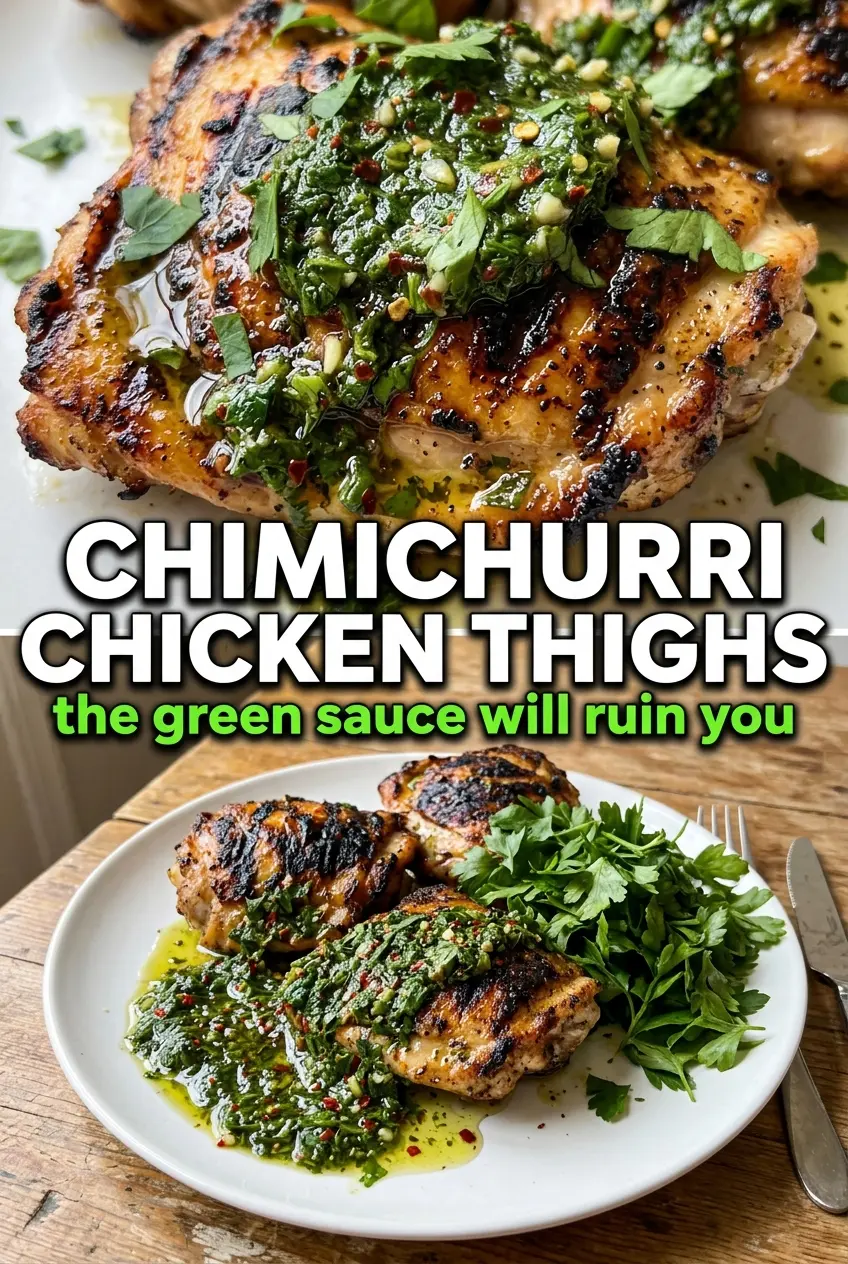
Charred chicken thighs and a bright, garlicky chimichurri are one of those combinations that never gets old because the sauce does more than add flavor — it wakes up every bite. The chicken stays juicy underneath the crisp, bronzed surface, and the herby topping cuts through the richness with vinegar, garlic, and just enough heat to keep things interesting.
What makes this version work is the balance in the sauce and the way it’s used twice. Half gets brushed onto the chicken before it rests, which seasons the meat and gives the herbs time to cling to the surface. The rest goes on after grilling, when the sauce is freshest and the parsley still tastes green and sharp. That contrast is what keeps chimichurri chicken from tasting flat.
Below, I’ve included the small details that matter most: how chunky the sauce should be, why medium-high heat is the sweet spot for the grill, and what to do if your chimichurri tastes a little too sharp before it hits the chicken.
The chimichurri came together in minutes and stayed bright after grilling. I brushed some on before marinating and the chicken picked up so much flavor without getting soggy.
Save these chimichurri chicken thighs for the nights when you want crispy grilled chicken and a punchy herb sauce in the same bite.
The One Chimichurri Mistake That Makes Chicken Taste Flat
Chimichurri needs enough acidity to brighten the chicken, but not so much that it tastes harsh. If the sauce is all vinegar and garlic, it can overwhelm the meat instead of coating it. The olive oil matters here because it carries the herbs across the surface of the chicken and keeps the sauce from feeling sharp or thin.
The other place people lose flavor is on the grill. Chicken thighs can handle heat, but if the grill runs too hot, the outside chars before the inside has time to cook through. Medium-high heat gives you browned edges, rendered fat, and chicken that stays juicy enough to stand up to the sauce.
- Bone-in thighs — These stay juicy and taste a little richer, but they need a few extra minutes on the grill. Boneless thighs cook faster and are easier to slice for serving.
- Fresh parsley — This is the backbone of the sauce. Flat-leaf parsley gives the cleanest herb flavor, and dried parsley won’t work here.
- Fresh oregano — It adds the unmistakable chimichurri note. If you can’t find it, use half the amount of dried oregano, but crush it between your fingers first to wake it up.
- Red wine vinegar — This gives the sauce its lift. Lime or lemon changes the profile, so only use them if you want a brighter, less traditional result.
- Garlic — Raw garlic is part of the punch, but too much can turn bitter. If yours tastes harsh after blending, let the sauce sit 10 minutes before tasting again.
How to Keep the Chicken Juicy While the Skin Gets Crisp
Building the Chimichurri
Blend the parsley, oregano, garlic, vinegar, olive oil, red pepper flakes, and salt until the sauce is smooth but still a little textured. You want it spoonable, not a puree with no life left in it. If it tastes too sharp right after blending, give it a few minutes on the counter; the herbs soften the bite as they sit.
Coating and Marinating
Season the chicken with salt and pepper first, then brush on half the chimichurri. That first layer needs to cling to the meat, so don’t drown the thighs in sauce or the surface will steam instead of brown. A 30-minute rest is enough for flavor, and up to 2 hours gives you a deeper herb note without turning the chicken mushy.
Grilling to the Right Finish
Preheat the grill to medium-high and place the chicken over direct heat. You’re looking for crisp edges, visible grill marks, and rendered fat sizzling off the surface. For bone-in thighs, the timer is a guide, not a promise; pull them only when the thickest part reaches 165°F. If the outside is browning too fast, move the thighs to a cooler spot on the grill and let the inside catch up.
The Final Spoonful
Let the chicken rest for 5 minutes before serving. That short pause keeps the juices in the meat instead of running onto the cutting board. Spoon the remaining chimichurri over the top right before serving so the herbs stay vibrant and the garlic stays sharp.
How to Adapt These Chimichurri Thighs for Different Pans, Grills, and Diets
Boneless Thighs for Faster Cooking
Boneless thighs are the easiest swap if you want dinner on the table faster. They cook in less time and are easier to turn on the grill, but they don’t have quite the same juicy, rich bite as bone-in pieces. Keep an eye on them because they go from done to dry faster than people expect.
Oven-Broiled Chicken When You Can’t Grill
Set the chicken on a rack over a lined sheet pan and broil it close to the heat source. You’ll still get browned edges and good color, though the flavor will be a little less smoky than on a grill. Watch it closely, because broilers can burn the herbs on the surface if the chicken sits too high for too long.
Dairy-Free and Naturally Gluten-Free
This recipe is already dairy-free and gluten-free as written, which makes it an easy main dish for mixed groups. The key is keeping the sauce clean and fresh, without adding creamy fillers or thickeners that would mute the parsley and oregano. Serve it with grilled vegetables, potatoes, or rice and the dish still feels complete.
Storage and Reheating
- Refrigerator: Store the chicken and sauce separately for up to 4 days. The chimichurri may darken a little, but it still tastes bright.
- Freezer: The cooked chicken freezes well for up to 2 months. Freeze the chimichurri separately if you want, though the herbs will lose some freshness after thawing.
- Reheating: Warm the chicken gently in a covered skillet over low heat or in a 300°F oven until just hot. High heat dries out thighs fast, especially once they’ve already been grilled.
Answers to the Questions Worth Asking
Chimichurri Chicken Thighs
Ingredients
Equipment
Method
- Blend fresh parsley, fresh oregano, garlic cloves, red wine vinegar, olive oil, red pepper flakes, and salt until smooth but slightly chunky.
- Transfer chimichurri to a bowl and reserve half for serving later.
- Season chicken thighs with salt and pepper, then brush with half the chimichurri.
- Marinate for 30 minutes to 2 hours in the refrigerator, keeping the thighs covered.
- Preheat the grill to medium-high heat.
- Grill chicken thighs for 6-7 minutes per side, until the internal temperature reaches 165°F and the skin is crispy, showing clear grill marks.
- Let the thighs rest for 5 minutes to help juices redistribute, then spoon the remaining chimichurri over the hot chicken.