Juicy grilled chicken and bright chimichurri are a combination that never stays on the plate long. The chicken gets a savory char on the outside while the sauce brings in sharp vinegar, garlic, herbs, and just enough heat to keep every bite interesting. It’s the kind of dinner that tastes like you put in a lot more effort than you did.
What makes this version work is the balance between the marinade and the finishing sauce. A little chimichurri goes on the chicken before grilling, which seasons it from the start, but most of it stays fresh and uncooked so the herbs stay vivid and the garlic stays punchy. That split is what keeps the dish from tasting flat or muddy.
Below, I’ve included the small details that matter here: how to keep the sauce from turning bitter, why you don’t want to drown the chicken in marinade, and what to change if you’re using thighs instead of breasts.
The chimichurri stayed bright even after sitting on the chicken, and the grill marks came out perfect without drying anything out. I used thighs and they were done in right around 7 minutes per side.
Save this chimichurri chicken for the nights when you want a fast grill recipe with a bold herb sauce and a clean, charred finish.
The Trick to Keeping the Chicken Juicy Under a Sharp, Herby Sauce
The main mistake with chimichurri chicken is treating the sauce like a marinade that needs hours to work. Chimichurri is bold enough to flavor the surface quickly, but the vinegar and garlic can turn harsh if the chicken sits in it too long. A short 30-minute marinate gives you seasoning without pulling moisture out of the meat.
Grill heat matters here too. Medium-high is hot enough to build those dark marks and keep the chicken from sticking, but not so hot that the herbs on the surface scorch before the center cooks through. If you’re using breasts, pound them to an even thickness first so the thin end doesn’t dry out while the thicker end catches up.
What Each Ingredient Is Actually Doing in This Dish

- Flat-leaf parsley — This is the backbone of the sauce. Curly parsley works in a pinch, but flat-leaf gives a cleaner, more aromatic finish and blends into a looser chimichurri better.
- Red wine vinegar — This gives the sauce its lift and keeps the rich grilled chicken from tasting heavy. Swap in lime juice only if that’s what you have; it changes the profile, but the acid still does the job.
- Garlic — Fresh garlic is what gives chimichurri its edge. If you chop it by hand instead of blitzing it too smooth, you keep tiny bits that mellow on the chicken instead of turning the sauce into paste.
- Olive oil — Use a good everyday olive oil, not your most expensive bottle. It carries the herbs and vinegar across the chicken and helps the sauce cling instead of running off the plate.
- Chicken breasts or thighs — Breasts cook fast and slice cleanly, while thighs stay a little more forgiving on the grill. Thighs are the better choice if your grill runs hot or you want a slightly richer bite.
How to Grill It So the Sauce Stays Bright and the Chicken Stays Tender
Building the Chimichurri
Blend or finely chop the parsley, garlic, oregano, vinegar, oil, red pepper flakes, salt, and pepper until the herbs are broken down but not completely pureed. You want a loose sauce with texture, not a smooth green paste. Taste it before it touches the chicken; if it seems too sharp, another pinch of salt or a drizzle of oil usually rounds it out.
Marinating Without Overdoing It
Rub the chicken with olive oil, salt, and pepper, then spoon on about 2 tablespoons of chimichurri and let it sit for 30 minutes. That short rest seasons the meat and helps the surface pick up flavor, but it won’t start curing the chicken the way a longer acid-heavy marinade can. Save the rest of the chimichurri for serving so it stays fresh and vivid.
Getting the Grill Marks
Heat the grill or grill pan until it’s properly hot before the chicken goes on. Lay the pieces down and leave them alone until they release cleanly; if they stick, they need another minute to sear. Grill for 6 to 7 minutes per side, depending on thickness, and pull them when the thickest part reaches 165°F.
Finishing With the Fresh Sauce
Let the chicken rest for 5 minutes after grilling so the juices settle back in. Then spoon the remaining chimichurri over the top while the chicken is still warm enough to perfume the herbs but not so hot that it dulls them. This is the moment that makes the dish taste fresh instead of merely grilled.
Three Ways to Make This Chimichurri Chicken Work for Your Table
Chicken Thighs for a More Forgiving Grill
Use boneless skinless thighs if you want a little more wiggle room on timing. They stay juicy even if the grill runs a touch hot, and their richer flavor stands up well to the garlic and vinegar.
Dairy-Free, Gluten-Free, and Naturally Flexible
This recipe already fits both dairy-free and gluten-free eating without any changes. That makes it a good one to keep in rotation when you need a main dish that still tastes bold and finished without leaning on cream, butter, or breadcrumbs.
No Grill, No Problem
A grill pan gives you the closest match, but a heavy skillet works too. You’ll lose a little of the smoky edge, so let the chicken brown undisturbed and finish with extra chimichurri to bring back that fresh, punchy contrast.
Storage and Reheating
- Refrigerator: Store the cooked chicken for up to 4 days. Keep extra chimichurri in a separate container so it stays bright.
- Freezer: The chicken freezes well for up to 2 months, but the chimichurri is best made fresh. Freeze the chicken plain, then add a fresh batch of sauce after reheating.
- Reheating: Warm the chicken gently in a covered skillet over low heat or in a 300°F oven until just heated through. High heat dries out the breast meat fast, and the sauce should always go on after reheating, not before.
Answers to the Questions Worth Asking
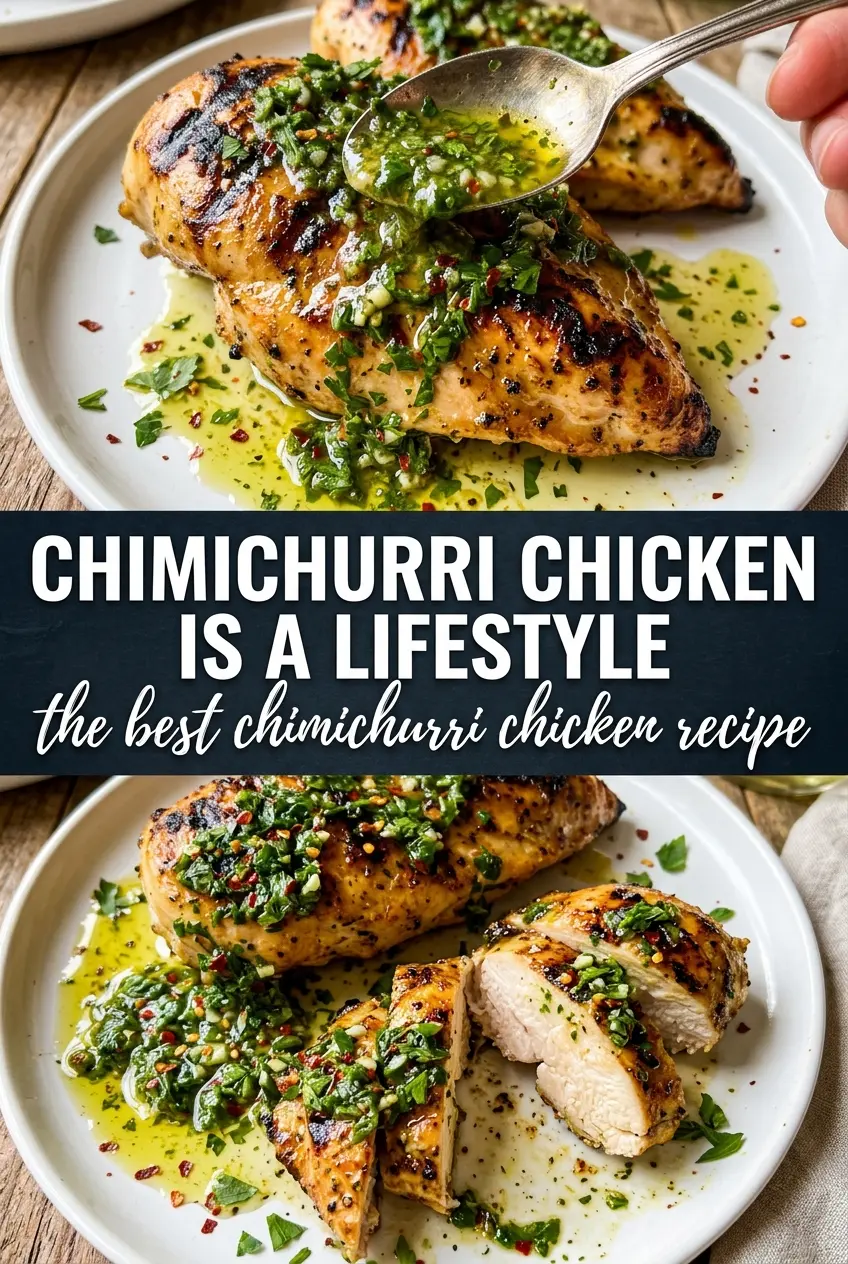
Chimichurri Chicken
Ingredients
Equipment
Method
- Blend or finely chop the parsley, garlic, olive oil, red wine vinegar, oregano, red pepper flakes, salt, and black pepper until evenly combined. Taste and adjust seasoning, then set aside.
- Rub the chicken with olive oil, then season with salt and pepper until coated. Spread 2 tablespoons chimichurri over the chicken and marinate for 30 minutes.
- Preheat a grill or grill pan to medium-high heat. Keep it hot so the chicken sears quickly and forms prominent grill marks.
- Grill the chicken 6-7 minutes per side until cooked through to 165°F. Cook until the surface shows visible char and grill marks.
- Rest the chicken for 5 minutes off the heat. Top generously with the remaining chimichurri and serve immediately.