Golden hash browns, smoky ham, sweet peppers, and onions all cooked together in one cast iron skillet make a breakfast that lands on the table hot and stays satisfying right down to the last bite. The eggs set into little pockets of creamy yolk, the cheese melts over everything, and the edges of the potatoes turn crisp where they touch the pan. It eats like a diner breakfast but comes together with the kind of low-effort rhythm that works just as well at camp as it does on a busy morning at home.
The trick here is giving the hash browns enough time to brown before anything else crowds the pan. Frozen potatoes need direct contact with the skillet so they can dry out and crisp instead of steaming, and a cast iron pan holds that heat better than almost anything else. Once the ham, peppers, and onions go in, the skillet gets a little sweeter and more savory at the same time, which is exactly what makes this old-school breakfast so good.
The eggs finish under a lid or foil, so you get set whites without overcooking the yolks. Below, I’ve included the timing cue that keeps the potatoes crisp, plus a few smart swaps if you want to make it work with what’s already in your fridge.
The hash browns got crisp around the edges instead of soggy, and the eggs cooked perfectly under the foil without drying out. My husband went back for seconds before I even sat down.
Save this cheesy western skillet for mornings when you want crisp hash browns, melty cheese, and eggs cooked right in the pan.
The Reason the Potatoes Need the Head Start
If the hash browns go in and immediately get buried under ham, peppers, and eggs, they never get the chance to brown. They soften, release steam, and the whole skillet turns heavy instead of crisp. The first ten minutes are about giving the potatoes direct heat so they can lose moisture and form those deeply golden edges that hold the dish together.
Cast iron matters here because it stays hot when you add cold frozen potatoes. A thin skillet cools down too fast, which is where soggy breakfast skillets usually begin. Stir occasionally, but don’t keep moving them every second; the potatoes need contact with the pan to color properly.
What Each Ingredient Is Doing in the Skillet

- Frozen hash browns — Frozen potatoes are the backbone of this dish. Thawed potatoes can work, but they need to be patted dry first or they’ll steam instead of crisp. If you use shredded potatoes from scratch, rinse off the starch, dry them well, and give them the same head start in the pan.
- Ham — Diced ham brings salt, smoke, and enough structure to feel substantial. Leftover baked ham works beautifully. If your ham is already very salty, go lighter on seasoning at the end and taste before adding more.
- Bell pepper and onion — These build the sweet-savory base that makes a cheesy western skillet taste complete. Dice them small so they soften in the time it takes the eggs to cook. A red or orange pepper gives a little more sweetness, but any color works.
- Cheddar cheese — Shredded cheddar melts into the hash browns and helps bind the skillet together. Buy a block and shred it yourself if you want the smoothest melt; pre-shredded cheese works, but it can be a little less silky because of the anti-caking coating.
- Eggs — The wells keep the eggs from spreading all over the skillet and let them cook evenly. Crack them into the indents one at a time so the yolks stay intact. Covering the pan traps enough heat to set the whites without overcooking the yolks.
- Butter or oil — Fat is what keeps the potatoes from sticking and helps them brown. Butter gives the richest flavor, while oil is a little more forgiving over higher heat. If you’re cooking over campfire heat that swings hot and cool, a blend of both is a good middle ground.
Building the Skillet So the Eggs Finish Right
Getting the Potatoes Crisp First
Start with the butter or oil in a large cast iron skillet over steady heat. Add the frozen hash browns in an even layer and let them sit long enough to develop color before you stir. You want golden patches, not pale potatoes that cling together in wet clumps. If the pan looks dry before the potatoes are browned, add a small bit more fat at the edge rather than tossing in a big splash.
Softening the Ham and Vegetables
Once the potatoes are crisping, stir in the ham, bell pepper, and onion. The vegetables should soften and lose their raw bite, but they don’t need to turn mushy. This stage is about flavor and warmth, not long cooking. If the onion starts to darken too fast, the heat is too high and the skillet needs a moment off the flame.
Making Space for the Eggs
Use a spoon to press six clear wells into the potato mixture, then crack an egg into each one. Cracking the eggs into a small bowl first gives you more control and helps avoid broken yolks, which is worth doing if the eggs are fresh or the shells tend to crack unevenly. Spoon a little cheese around the eggs and over the top so it melts into the gaps and keeps everything cozy under the lid.
Covering Until the Whites Set
Cover the skillet with a lid or tightly with foil and let the trapped steam finish the eggs. Watch for the whites to turn opaque and the yolks to set to your liking. If you like runny yolks, pull the skillet as soon as the whites are mostly set; if you wait for completely firm yolks, the potatoes underneath can go soft. The lid does the work here, so resist lifting it every minute and bleeding off the heat.
Make It Meatless
Skip the ham and add an extra half bell pepper or a handful of sautéed mushrooms. You lose the smoky saltiness, so taste the finished skillet before serving and season a little more aggressively. The texture stays hearty because the potatoes and eggs carry the dish.
Dairy-Free Version
Use oil instead of butter and swap in a dairy-free shredded cheddar-style cheese that melts well. Some plant-based cheeses get oily instead of creamy, so choose one labeled for melting if you can. The skillet still works, but the top will look a little less stretchy and a little more glossy.
Use Fresh Potatoes Instead of Frozen
Grate russet potatoes, rinse them, and dry them well in a towel before they hit the skillet. Fresh potatoes can taste a little brighter and crisp up beautifully, but they need the extra drying step or they’ll gum up the pan. Give them the same cooking time, then check by lifting a corner with the spatula for color.
Storage and Reheating
- Refrigerator: Store leftovers in an airtight container for up to 3 days. The hash browns will soften a bit, but the flavor holds well.
- Freezer: Freeze only if you’re okay with a softer texture after thawing. Eggs and potatoes can both turn a little watery, so this is better as a fridge dish than a freezer one.
- Reheating: Reheat in a skillet over medium-low heat until the potatoes are hot and the eggs are warmed through, or use a 350°F oven. The biggest mistake is blasting it in the microwave, which turns the potatoes rubbery and the eggs tough.
Answers to the Questions Worth Asking
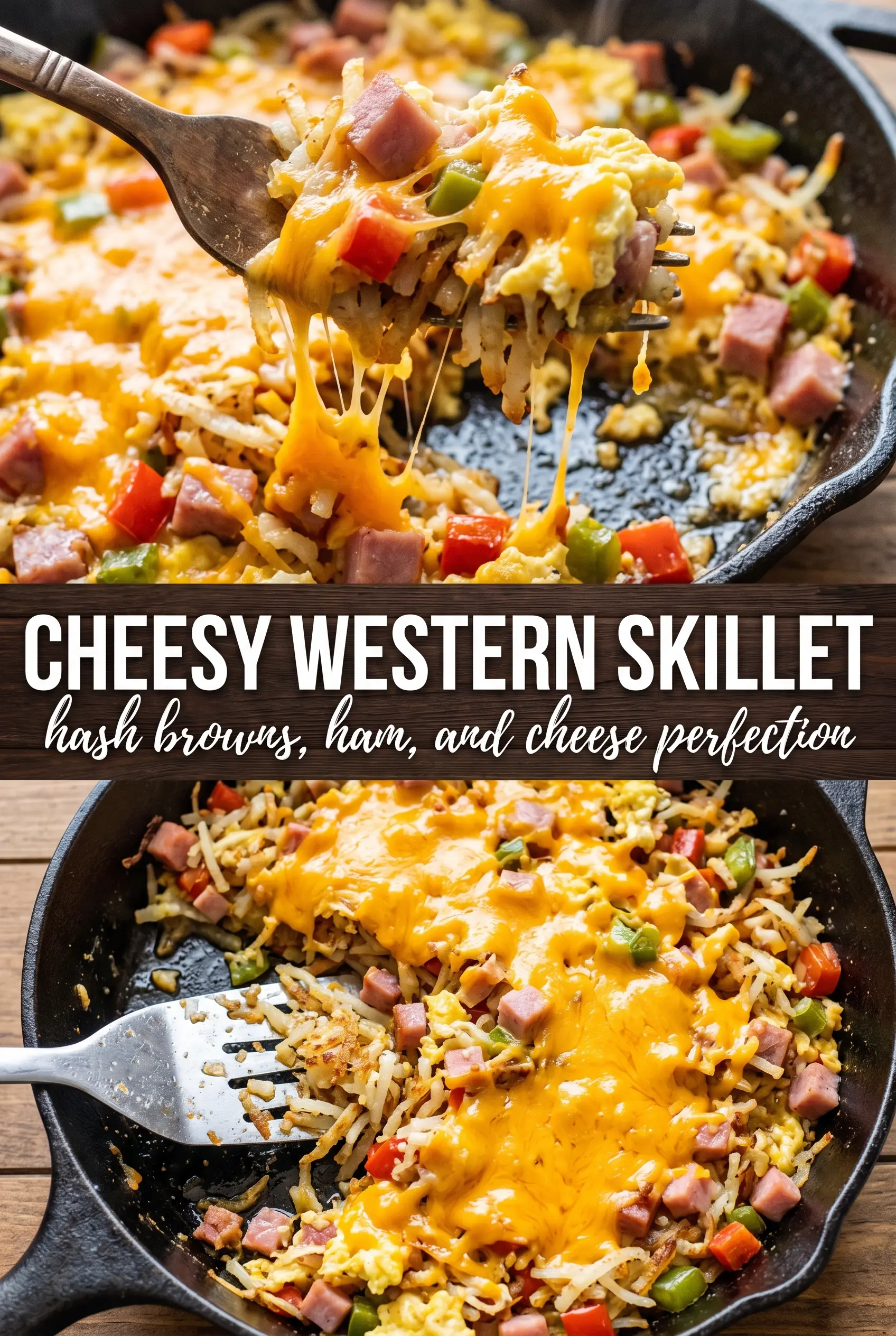
Cheesy Western Skillet with Hash Browns and Ham
Ingredients
Equipment
Method
- Heat 3 tablespoons butter or oil in a large cast iron skillet over campfire until shimmering. Add the frozen hash browns and cook for 10 minutes, stirring occasionally, until golden with crisp edges.
- Add the diced ham, bell pepper, and onion to the skillet and cook for 5 minutes more, stirring once or twice. Cook until the vegetables soften and the ham is heated through.
- Create 6 wells in the hash brown mixture and crack an egg into each well. Keep the eggs centered so they sit in the hash browns.
- Sprinkle the shredded cheddar cheese over everything and cover with a lid or foil. Cook for 8-10 minutes until the eggs are set to your desired doneness and the cheese is melted.
- Season with salt and pepper to taste and serve directly from the skillet. Scoop portions with a spatula while the cheese is still melted and glossy.