Cheesy, saucy spaghetti baked in a Dutch oven is the kind of campfire dinner that disappears fast because it lands on the plate hot, gooey, and satisfying. The noodles soak up the meat sauce just enough to stay flavorful without turning mushy, and the top bakes into a golden, bubbly lid of cheese that scoops up in stretchy, messy ribbons.
What makes this version work is the balance between pre-cooked pasta and a short covered bake over coals. The spaghetti is already tender, so the Dutch oven only has to melt the cheese and bring everything together instead of trying to cook raw noodles from scratch. That keeps the texture right and makes the timing forgiving, which matters when you’re cooking outdoors and heat isn’t perfectly even.
Below you’ll find the little details that keep the pasta from clumping, the cheese from scorching, and the whole bake from drying out before the center is hot. If you’ve ever had campfire pasta come out uneven, this method fixes the most common problem: too much direct heat for too long.
The cheese melted into a perfect blanket and the pasta stayed saucy all the way through. I cooked it over a bed of coals and it came out bubbling at the edges without burning on the bottom.
Save this cheesy Campfire Spaghetti Bake for your next Dutch oven dinner when you want a bubbly pasta crowd-pleaser with almost no fuss.
The Trick to Keeping Dutch Oven Pasta Saucy, Not Dry
Campfire pasta fails for one simple reason: the heat is coming from below and above, and that can dry out the edges before the middle is hot. The fix is to start with fully cooked spaghetti and a sauce that already coats the noodles well. Once everything goes into the Dutch oven, the goal isn’t to cook the pasta further. It’s to heat, melt, and settle.
Keep the lid on during the bake so the moisture stays trapped. If the top looks done before the center is hot, the coals are too aggressive, and the cheese will brown before the sauce has a chance to bubble through. A short rest at the end matters too. It lets the sauce cling to the noodles instead of sliding around the pan.
What Each Ingredient Is Actually Doing in This Bake
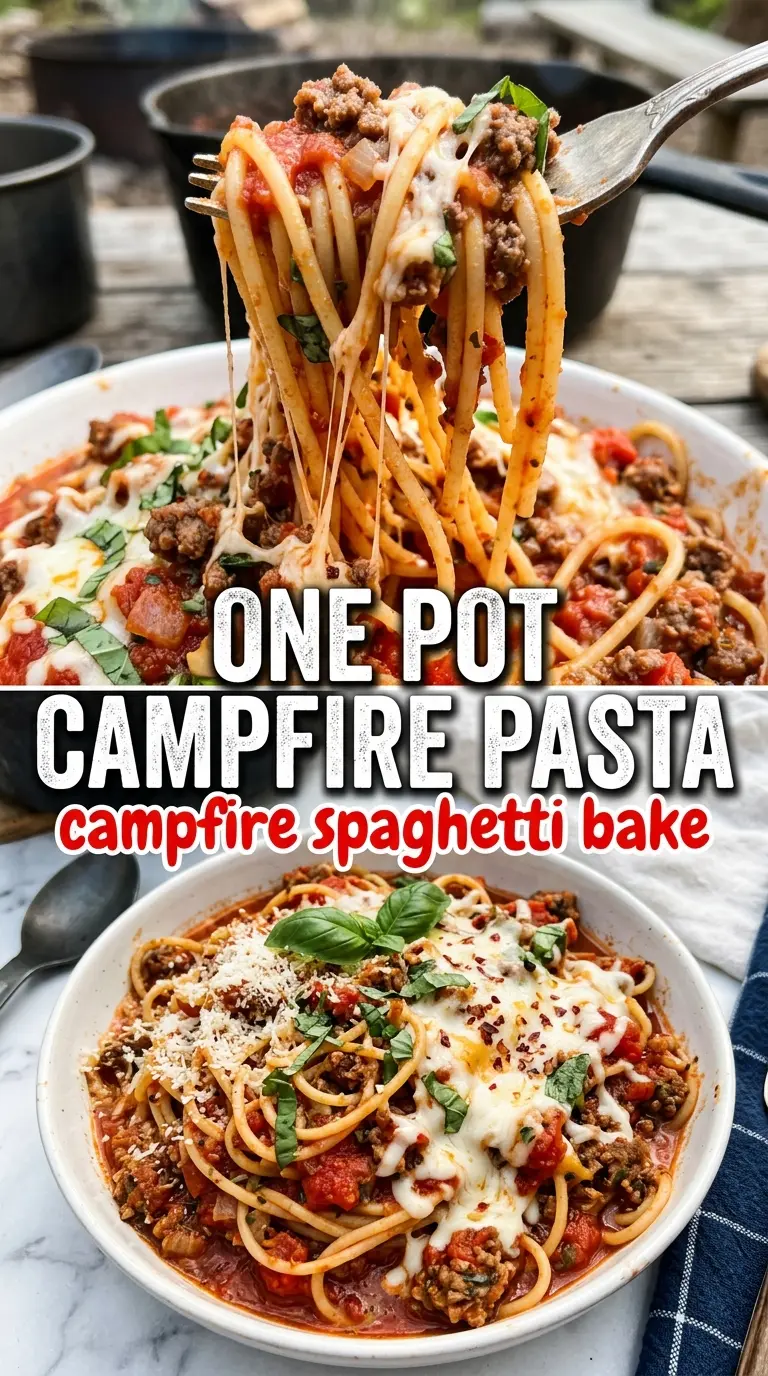
- Ground beef — This gives the bake its backbone and keeps it filling enough for a main dish. Brown it well so you get deeper flavor, then drain off the excess fat so the sauce doesn’t turn greasy in the Dutch oven.
- Spaghetti sauce — Use a jarred sauce you like eating on its own, because it’s doing most of the seasoning work here. A thick sauce is better than a thin one since it clings to the pasta and holds up during the bake.
- Cooked spaghetti — Pre-cooked noodles are the reason this can work over campfire heat without turning gummy. Cook them just to al dente, because they’ll soften a little more once they meet the hot sauce and cheese.
- Mozzarella and Parmesan — Mozzarella gives you that stretchy, melty top, while Parmesan adds the salty edge that keeps the whole dish from tasting flat. If you only have pre-shredded mozzarella, it works fine, but freshly shredded melts more evenly.
- Italian seasoning and garlic powder — These boost the sauce without adding extra prep at the campsite. Garlic powder is a better choice than fresh garlic here because it won’t scorch before the bake finishes.
Building the Dutch Oven Layers So the Cheese Bakes Evenly
Brown the Beef First
Cook the ground beef in a skillet over the campfire until it’s fully browned and the pink is gone. Break it up as it cooks so you don’t end up with big clumps that hide in the pasta. Drain off the excess fat before mixing in the sauce, or the bake can turn slick at the bottom and separate when it heats.
Coat Every Strand Before It Goes In
Mix the cooked spaghetti with the beef, spaghetti sauce, half the mozzarella, Italian seasoning, and garlic powder until every noodle looks coated. Don’t leave dry pockets in the bowl, because those are the spots that bake up bland and stiff. The cheese in the mixture helps bind everything together and keeps the center creamy instead of loose.
Let the Coals Do the Work
Spray the Dutch oven, add the pasta mixture, and smooth it into an even layer. Top with the remaining mozzarella and the Parmesan, then cover and set it over campfire coals with coals on the lid too. You want steady heat, not a roaring fire under the pot, because high flames can scorch the bottom before the top melts.
Rest Before Serving
Cook for 30 to 35 minutes until the cheese is melted and bubbly and the edges look hot all the way through. Pull it off the heat and let it sit for 5 minutes. That short rest helps the sauce settle so the first scoop comes out in thick, cheesy portions instead of sliding apart in the Dutch oven.
Three Ways to Change It Without Losing the Campfire Feel
Use Italian sausage instead of beef
Swap the ground beef for bulk Italian sausage if you want a richer, more seasoned bake with less added seasoning needed. It brings more fat and spice, so drain it well after browning and expect a slightly bolder, saltier result.
Make it vegetarian
Leave out the meat and add sautéed mushrooms, zucchini, or bell peppers cooked down until they lose most of their moisture. That keeps the bake hearty without watering down the sauce, though it will be a little lighter and less savory than the beef version.
Use gluten-free spaghetti
A sturdy gluten-free spaghetti works here as long as you cook it just shy of done, because it softens fast once it hits the hot sauce. Stir it gently so it doesn’t break apart, and check the bake a little early since some gluten-free pastas go from firm to soft quickly.
Add extra heat
Stir in red pepper flakes or a spoonful of chopped pickled peppers if you want a little kick. Keep the amount modest at first, because campfire cooking can make spice taste sharper when everything is hot and concentrated.
Storage and Reheating
- Refrigerator: Store leftovers in an airtight container for up to 4 days. The pasta will absorb more sauce as it sits, so the texture gets a little firmer the next day.
- Freezer: This freezes well for about 2 months. Wrap portions tightly or pack them in freezer containers, and thaw overnight in the fridge before reheating.
- Reheating: Reheat covered in the oven at 350°F with a splash of sauce or water to loosen it up. The common mistake is blasting it uncovered in the microwave until the edges dry out and the cheese turns rubbery.
Answers to the Questions Worth Asking
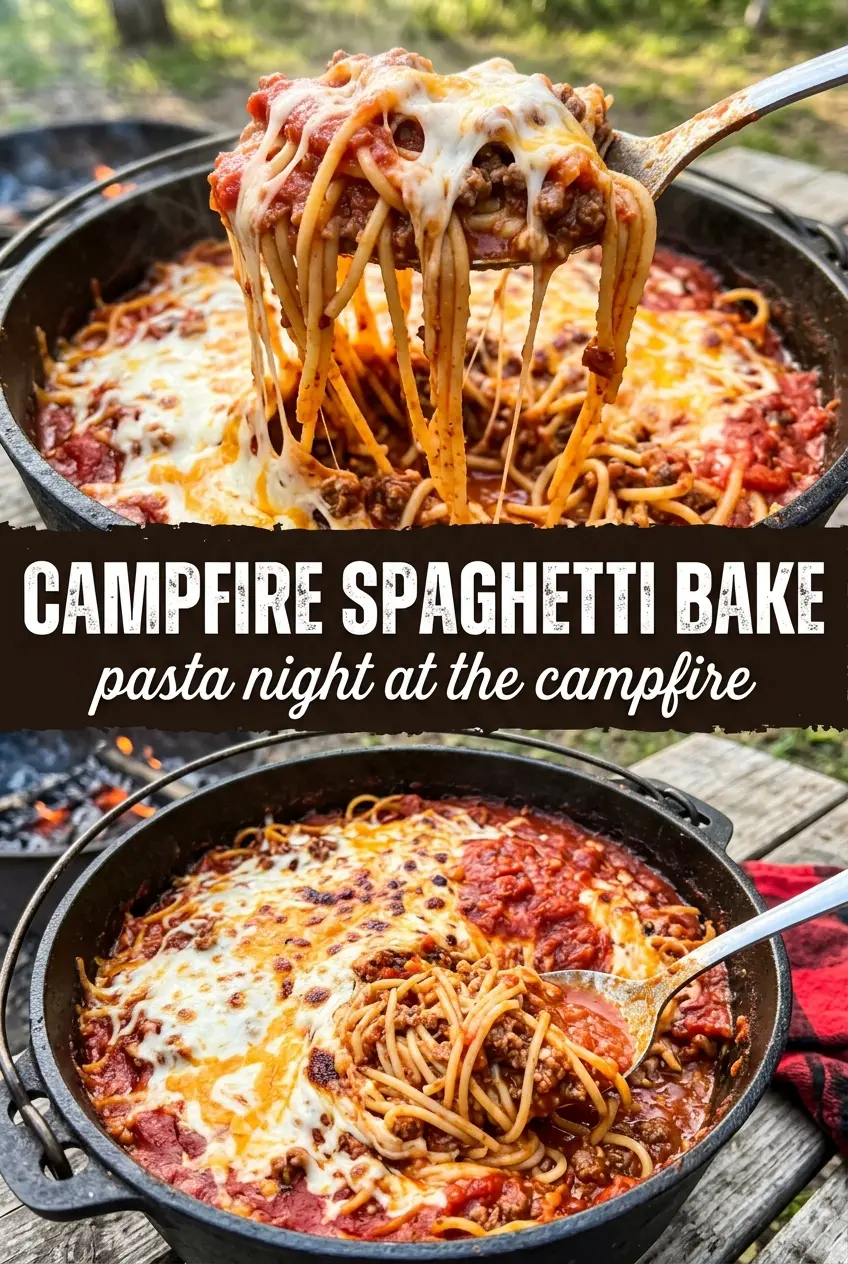
Campfire Spaghetti Bake
Ingredients
Equipment
Method
- Brown the ground beef in a skillet over a campfire until no longer pink, then drain excess fat.
- Keep the heat steady so the beef browns without burning on the outside.
- In a large mixing step, combine cooked spaghetti, browned beef, spaghetti sauce, half the mozzarella, Italian seasoning, and garlic powder until evenly coated.
- Spread everything together so every strand gets sauce.
- Spray the Dutch oven with cooking spray, then add the spaghetti mixture and level it into an even layer.
- Top with the remaining mozzarella and the Parmesan cheese so the surface turns golden.
- Cover the Dutch oven and place it on campfire coals, with additional coals on top of the lid to heat from both sides.
- Cook for 30-35 minutes, until the cheese is melted and bubbly with a golden, bubbling top.
- Let the Dutch oven cool for 5 minutes before serving.
- Spoon out servings to show the bubbly cheese layer when the lid is lifted.