Golden campfire potatoes are one of those side dishes that disappear fast because the edges turn tender and lightly crisp while the onions melt into the butter and seasoning. The foil packet does the work for you: the potatoes steam, then finish with just enough browning to taste roasted instead of soft and flat.
This version keeps the ingredients simple, but the layering matters. Thin potato slices cook evenly, the onions sit between the layers and perfume the whole packet, and the butter melts through the seasonings so every bite tastes seasoned all the way through. A little paprika gives the potatoes warmth and color without overpowering that smoky campfire feel.
Below, I’ll show you the packet trick that keeps the potatoes from drying out, plus the small timing detail that helps you get soft centers and those golden edges at the same time.
The potatoes came out tender with those buttery edges I was hoping for, and the foil packet kept everything moist without getting soggy. I used cheddar at the end and it melted right over the onions.
Save these foil packet Campfire Potatoes for the nights when you want a smoky side dish with crispy edges and almost no cleanup.
The Foil Packet Trick That Keeps Potatoes Tender, Not Watery
The biggest mistake with campfire potatoes is sealing in too much air and too much thickness at the same time. When the slices are piled high, the top layer steams forever while the bottom layer scorches against the foil. A double layer of foil helps, but the real fix is thin, even slices and a packet that lays flatter than a pillow.
Butter does more here than add richness. As it melts, it carries the garlic powder and paprika down through the potatoes and helps the onion soften into the gaps between the slices. If you want the best texture, keep the heat at medium and flip the packet halfway so one side doesn’t spend the whole cook time closest to the grate.
What Each Ingredient Is Doing Inside the Packet
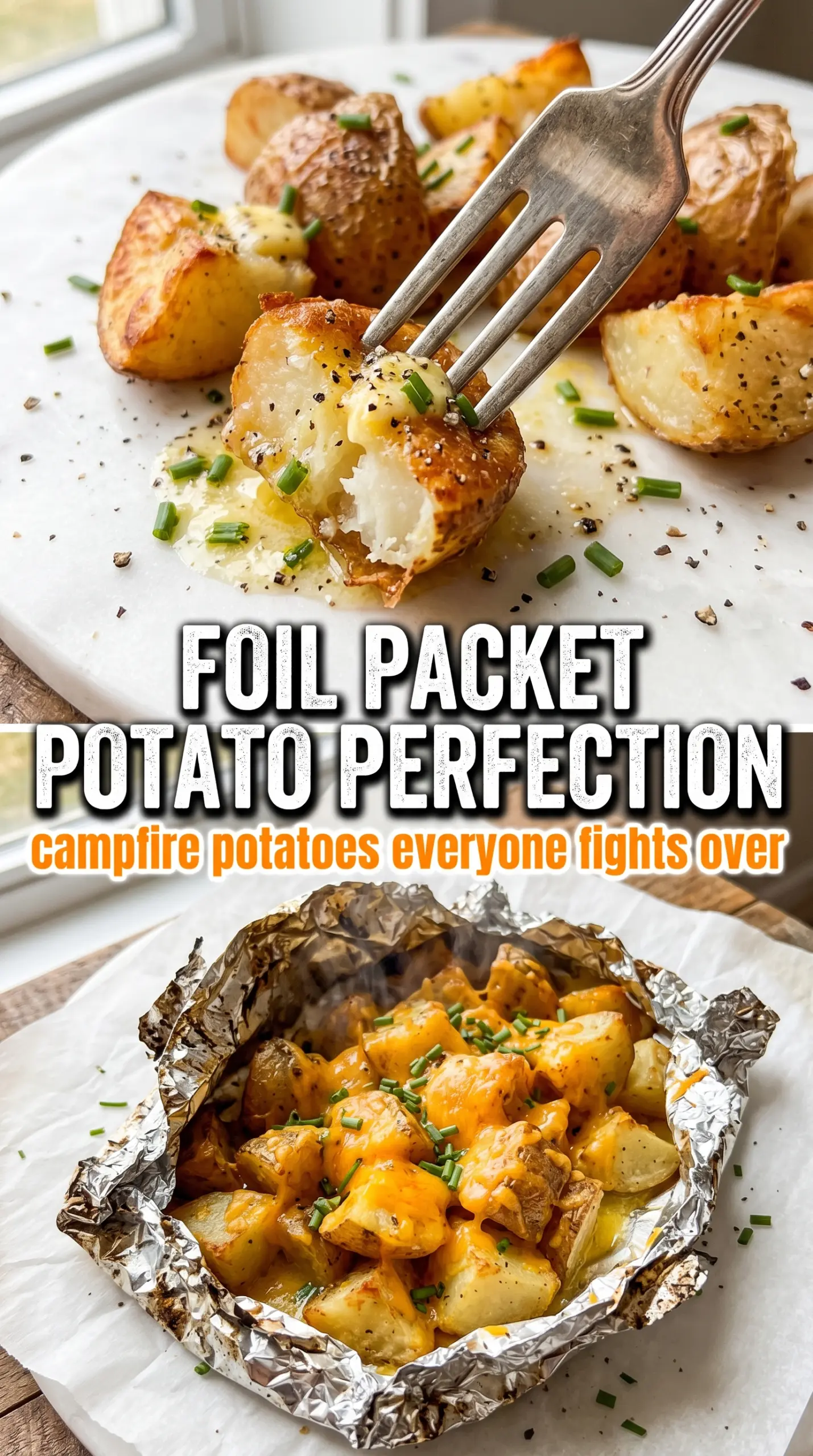
- Potatoes — Thin slices cook through in the cook time listed and give you those soft centers with lightly crisp edges. Russet potatoes turn fluffier, while Yukon Golds hold their shape a little better and taste a bit more buttery.
- Onion — This is the built-in seasoning layer. It softens, sweetens, and keeps the packet from tasting flat. Slice it thin enough that it turns tender at the same pace as the potatoes.
- Butter — This is the moisture and the flavor. Cubing it instead of melting it first helps it distribute more evenly as the packet heats. Margarine works in a pinch, but you lose that rich finish that makes these taste like campfire food.
- Garlic powder and paprika — Garlic powder seasons evenly without burning the way fresh garlic can in a hot foil packet. Paprika adds color and a little warmth; smoked paprika is a good swap if you want a deeper campfire note.
- Cheddar cheese — Optional, but it gives the potatoes a salty, melty finish. Add it only at the end, after the potatoes are already tender, or it can separate and turn oily before the vegetables are done.
- Heavy-duty foil — Regular foil tears too easily once the packet is flipped or moved on the grate. Double-layering it matters here because a leak means lost butter and uneven cooking.
How to Build the Packet So the Potatoes Cook Evenly
Lay the slices in a thin, even bed
Start with a double layer of foil and spread the potato and onion slices into a relatively flat mound. If the pile is thick in the center, the middle stays undercooked while the outer edges overheat. Thin, even slices are what let the packet cook in 25 to 30 minutes instead of dragging on much longer.
Seal in the butter and seasoning
Dot the potatoes with butter cubes, then scatter the seasonings across the top so they fall between the slices as the butter melts. Fold the foil tightly so steam stays inside, but leave a little room for the packet to puff. If the seal is loose, the potatoes dry out before they get tender.
Cook over medium heat and flip once
Set the packet on the grate over medium heat, not over roaring flames. Direct flame can scorch the foil before the potatoes soften. Flip the packet halfway through so both sides spend time closest to the heat, and open it only when the slices are soft enough for a fork to slide through without resistance.
Finish with cheese only after the potatoes are done
If you’re using cheddar, sprinkle it over the hot potatoes, then reseal the packet for a minute or two. That short rest melts the cheese without overcooking the potatoes. Open the packet carefully because the steam rushes out fast, and that’s where a lot of people get burned rushing to serve it.
How to Adapt These Campfire Potatoes for Different Trips
Dairy-Free Campfire Potatoes
Swap the butter for a good dairy-free butter stick or olive oil. Butter gives the richest finish, but olive oil handles the heat well and keeps the packet from drying out. You’ll lose a little of that classic buttery campfire flavor, but the potatoes still turn tender and savory.
Smokier, Deeper Flavor
Replace the paprika with smoked paprika and add a pinch of black pepper or chili powder. That gives the potatoes a more campfire-grill flavor without making them hot. Keep the amount light, since too much smoked paprika can turn bitter in a closed packet.
No Campfire, Same Result
These work in a 400°F oven on a sheet pan if you’re cooking at home. Cover the pan tightly with foil for most of the baking time, then open it near the end if you want a little color. You won’t get the same smoky edge, but the texture stays close to the foil-packet version.
Storage and Reheating
- Refrigerator: Store leftovers in an airtight container for up to 4 days. The potatoes soften as they sit, but the flavor stays good.
- Freezer: I don’t recommend freezing these. Potatoes change texture after freezing and thawing, and the onions turn soft in an unhelpful way.
- Reheating: Reheat in a skillet over medium-low heat or in a 375°F oven until hot. The microwave works, but it steams the potatoes and takes away the crisp edges you worked for.
Questions I Get Asked About This Recipe
Campfire Potatoes
Ingredients
Equipment
Method
- Layer the potato and onion slices on a large double-layer of heavy-duty aluminum foil, keeping the slices in an even layer. The visual cue is a flat, layered stack with onions distributed throughout.
- Dot the top with butter cubes and season with garlic powder, paprika, salt, and pepper. The visual cue is even speckles of seasoning and visible butter pieces across the surface.
- Fold the foil into a sealed packet, crimping edges so steam stays inside. The visual cue is a tight, fully enclosed packet with no gaps.
- Place the packet on a campfire grate over medium heat for 25-30 minutes. The visual cue is steady sizzling steam escaping only when opened, and the packet appearing slightly puffed.
- Flip the packet halfway through cooking so both sides roast evenly. The visual cue is a clean flip with potatoes and onions staying packed together.
- Open the packet and sprinkle with shredded cheddar cheese if desired, then reseal. The visual cue is melted-cheese-ready steam lifting as soon as the foil opens.
- Return the resealed packet to medium heat for 2 minutes to melt the cheese. The visual cue is glossy melted cheddar coating the potato slices.
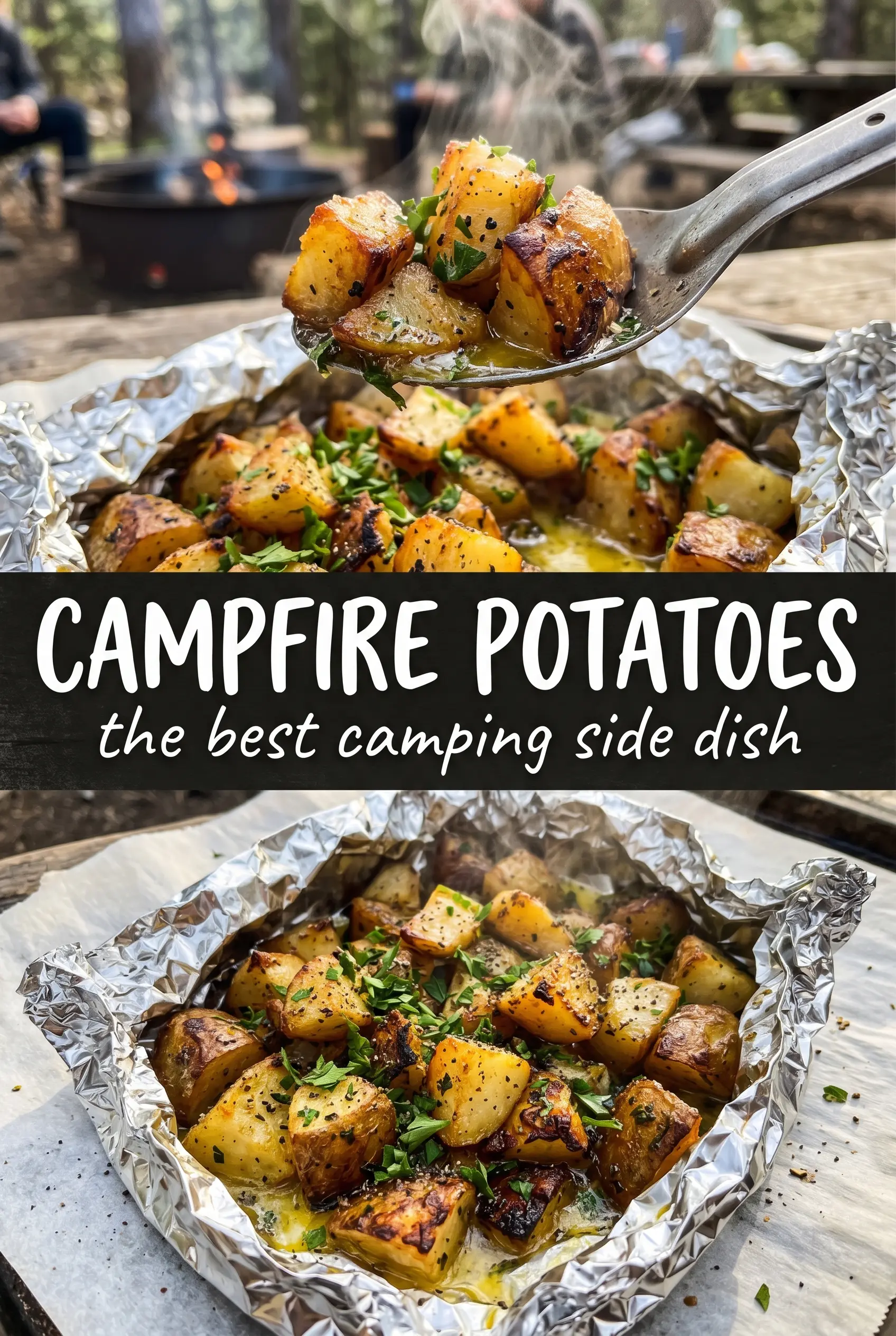
- Serve hot directly from the packet. The visual cue is golden, tender potato slices visible with onions and buttered edges.