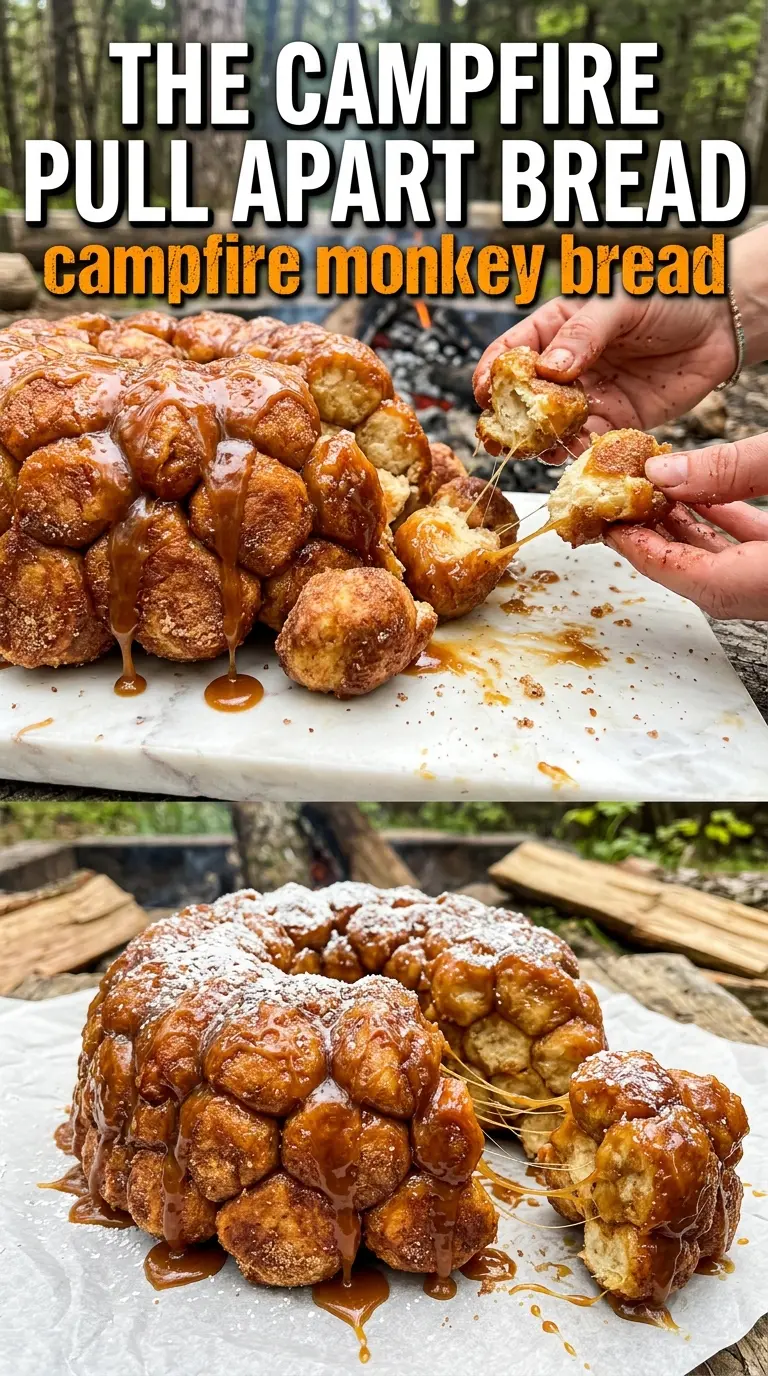
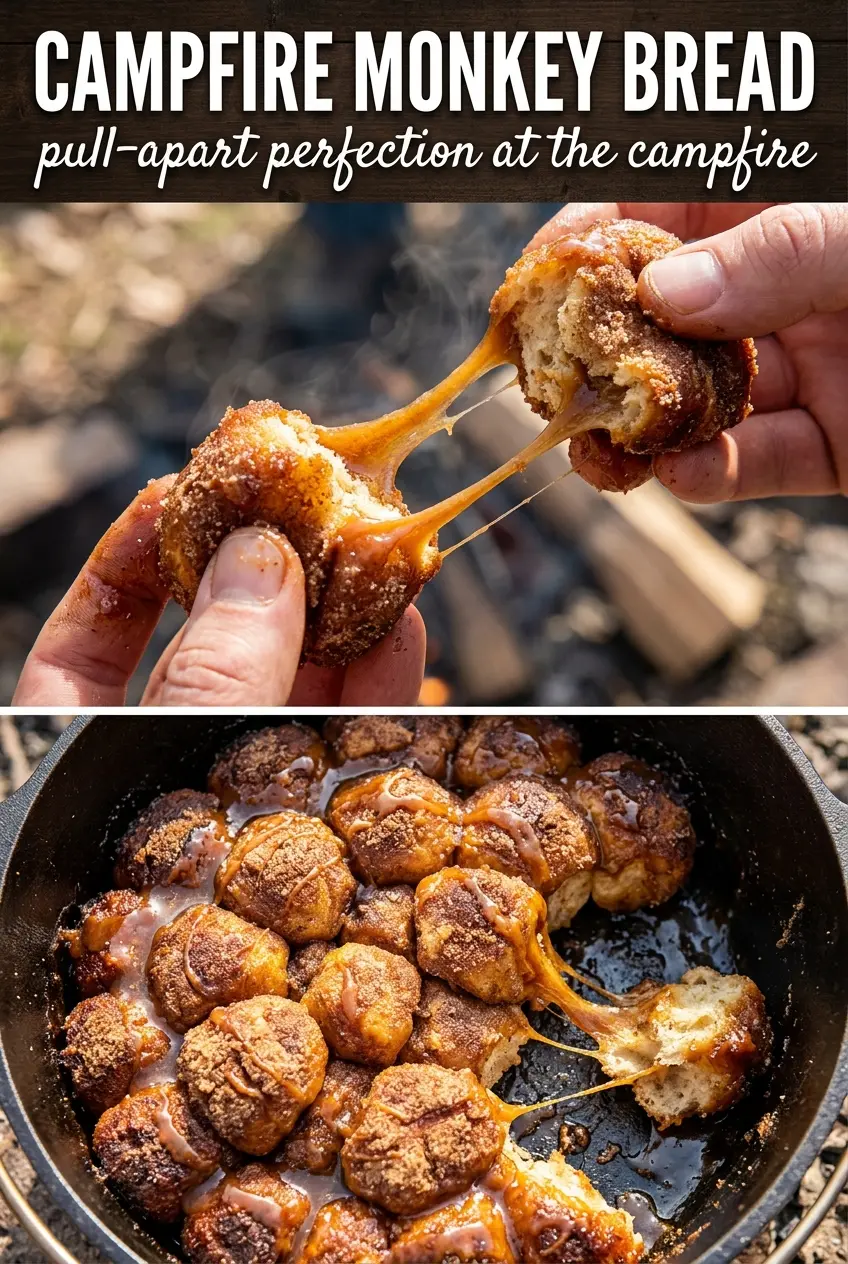
Golden, sticky, pull-apart monkey bread is hard to beat, and cooking it in a Dutch oven over campfire coals gives it a crackly cinnamon-sugar crust with a soft, buttery center. The top turns deeply caramelized while the middle stays tender, so every handful has a little bit of crunch, chew, and gooey glaze.
This version works because the biscuit pieces get coated before they go into the Dutch oven, which keeps the sugar-cinnamon mix clinging to every edge instead of sinking to the bottom. The butter and brown sugar pour over the top and melt down through the layers as the heat climbs from below and above. That even heat is what helps the bread cook through without burning the bottom too fast.
Below, I’ve included the small details that matter most outdoors: how to place the coals, what the bread should look like when it’s done, and how to keep the center from turning doughy. If you’ve ever had campfire bakes go from underdone to scorched, the timing notes here will help.
The cinnamon sugar coated every piece and the bottom didn’t burn, which never happens when I bake over coals. It came out golden and pulled apart in perfect sticky chunks.
Golden, gooey campfire monkey bread with a caramelized cinnamon crust belongs in your next Dutch oven night.
The Part That Keeps the Bottom From Burning Over the Coals
Campfire monkey bread can go wrong fast if the heat is too aggressive from underneath. The biscuit dough needs enough time to cook through, but if the coals are stacked too hot or the Dutch oven sits directly on flames, the sugar in the bottom layer can scorch before the center is done. Coals on the lid matter just as much as coals underneath because they give you the steady top heat that turns the whole loaf golden instead of leaving you with a raw middle.
The other thing people miss is that the pieces need space to puff. Packing them in too tightly makes the center dense, and that traps steam instead of letting the dough bake. You want snug layers, not compression.
- Even coals — Use a bed of glowing coals rather than open flame. Flame is unpredictable and much harsher on the bottom of the Dutch oven.
- Covered heat — Put coals on the lid so the top browns at the same pace as the underside cooks.
- Loose layering — Tumble the biscuit pieces in without pressing them down. They’ll expand as they bake.
- Short rest — Let it sit for 5 minutes after cooking. That sets the caramel slightly so the bread pulls apart cleanly instead of collapsing into a puddle.
What the Biscuit Dough and Sugar Are Doing Here
- Refrigerated biscuit dough — This is the shortcut that makes campfire monkey bread work. It puffs quickly, holds its shape in the Dutch oven, and gives you that soft pull-apart interior without needing yeast or a long rise.
- Granulated sugar and cinnamon — The sugar coats the biscuit pieces before baking, so every bite gets seasoning instead of just a sugary top. The cinnamon should be fresh if possible; old cinnamon tastes flat once it’s baked into butter.
- Brown sugar — This melts into the butter and creates the sticky glaze. Light or dark brown sugar both work, but dark brown sugar gives you a deeper caramel note.
- Butter — Melted butter carries the brown sugar down into the crevices and helps the whole thing bake up rich instead of dry. Margarine won’t give the same flavor or set the glaze the same way.
- Cooking spray — Don’t skip it. This is what keeps the caramel from welding itself to the Dutch oven once it cools.
Building the Layers So It Bakes Through Outdoors
Coating the Biscuit Pieces
Cut each biscuit into quarters so the pieces bake through in the campfire heat instead of staying doughy in the center. Shake them in the sugar-cinnamon mixture until every side is dusted; any bare spot will bake up plain and any clumped piece will stay gummy. If the bag gets crowded, work in batches so the coating stays even and doesn’t turn into wet paste.
Setting Up the Dutch Oven
Spray the Dutch oven generously, especially along the bottom edge where the sugar glaze tends to stick. Layer the coated pieces in loosely, then pour the butter and brown sugar mixture over the top so it can seep down through the gaps. If you dump everything in one pile, the glaze pools on top and the bottom stays dry.
Managing the Campfire Heat
Place the Dutch oven on coals, not flames, and put coals on the lid so the heat surrounds the bread. After about 25 minutes, lift the lid and check for a deep golden top and bubbling caramel around the edges. If the top is browning too fast but the center still looks pale, shift a few coals off the lid and give it a few more minutes rather than rushing it.
The Flip and First Serve
Let the bread rest for 5 minutes before inverting it onto a plate. That pause helps the syrup settle so the pieces don’t slide apart in a sticky heap. Turn it out in one confident motion, then serve it while it’s still warm enough to pull apart cleanly with your fingers.
How to Adapt Campfire Monkey Bread for Different Setups
Oven-Baked Version
Bake it in a greased Bundt pan at 350°F until the top is deep golden and the center is cooked through. You’ll lose the campfire smoke, but you’ll get a slightly more even bake and a cleaner caramel crust.
Dairy-Free Version
Use a plant-based butter with a high fat content and check that your biscuit dough is dairy-free. The texture stays close, but the caramel will taste a little less rich and a little more straightforwardly sweet.
Pumpkin Spice Swap
Replace part of the cinnamon with pumpkin pie spice for a warmer, clovey edge. Don’t overdo it; too much spice can bully the buttery caramel and make the bread taste muddled.
Storage and Reheating
- Refrigerator: Store leftovers covered for up to 3 days. The bread firms up as it chills, and the caramel turns less gooey.
- Freezer: It freezes, but the texture gets denser after thawing. Wrap portions tightly and freeze for up to 1 month if you don’t mind a softer, less crisp result.
- Reheating: Warm individual portions in the microwave in short bursts or reheat covered in a low oven. High heat dries out the biscuit pieces and hardens the sugar glaze instead of loosening it.
Answers to the Questions Worth Asking
Campfire Monkey Bread
Ingredients
Equipment
Method
- Cut each biscuit into quarters to create bite-size pieces for even coating and cooking.
- Mix sugar and cinnamon together, then add biscuit pieces and shake until every piece looks evenly dusted in cinnamon sugar.
- Spray the Dutch oven with cooking spray so the monkey bread releases cleanly after cooking.
- Layer the coated biscuit pieces in the Dutch oven so they form an even base layer.
- Mix melted butter and brown sugar, then pour over the biscuit pieces so the top is glossy and caramel-colored.
- Cover the Dutch oven and place it on campfire coals with additional coals on top of the lid for top-and-bottom heat.
- Cook for 25-30 minutes, checking for a golden brown color and making sure the center pieces are cooked through.
- Let cool for 5 minutes so the caramel glaze sets slightly and the pieces hold together when inverted.
- Invert onto a plate and pull apart to serve, aiming for warm, stretchy pull-apart layers coated in cinnamon sugar glaze.