Sizzling campfire fajitas hit the table with the kind of energy that makes everyone grab a tortilla before the skillet even settles. The meat stays juicy, the peppers keep a little bite, and the onions pick up those dark, smoky edges that make the whole pan taste like it spent hours cooking instead of twenty minutes. This is the kind of camp dinner that feels generous without being fussy, which is exactly why it gets made again and again.
The trick is working with a hot cast iron skillet and giving each part its own moment. The meat needs enough heat to brown fast before it loses moisture, while the peppers and onions need enough contact with the pan to blister instead of steam. That separation keeps the fajitas bold and structured, not soggy. A good fajita seasoning helps, but the real payoff comes from not crowding the pan and letting the fire do some of the work.
Below, you’ll find the timing that keeps the meat tender, the cue for when the vegetables are ready, and a few smart ways to adapt these fajitas when you’re cooking over a campsite grate instead of a kitchen burner.
The peppers got those perfect charred edges and the chicken stayed juicy instead of drying out. We wrapped everything in warm tortillas with lime and guac, and it tasted like a real camp meal, not just food cooked outside.
Save these campfire fajitas for the next night you want a smoky skillet dinner with tender meat, charred peppers, and warm tortillas.
The Part That Keeps Fajitas From Turning Watery Over a Fire
The biggest mistake with campfire fajitas is trying to cook everything at once. Meat releases moisture, peppers and onions release moisture, and a crowded skillet turns all of it into steam. You lose browning, you lose texture, and the fajitas start tasting flat instead of smoky.
Working in two stages fixes that. Brown the meat first, then pull it out while the vegetables take on color. When the meat goes back in at the end, it warms through without overcooking, and the juices coat everything instead of pooling in the pan.
- Thin-sliced chicken breast or steak — Thin slices cook fast and stay tender over high heat. If you cut the meat too thick, the outside overcooks before the center catches up.
- Cast iron skillet — This is what gives you the sear and the char. A thin pan can work, but it cools too quickly when the cold ingredients hit it.
- Bell peppers and onions — These are the whole texture story of the dish. Slice them evenly so they soften at the same rate and pick up a little blistering instead of collapsing.
- Fajita seasoning — Store-bought seasoning is fine here, but use one you trust because it carries most of the flavor. If your blend is salty, season lightly until you taste the finished filling.
Building the Skillet in the Right Order
Heating the Pan First
Set the cast iron skillet over the fire and let it get properly hot before the oil goes in. The oil should shimmer almost immediately, which tells you the pan is ready for browning instead of just warming the ingredients. If the pan is only lukewarm, the meat will stick and gray out before it browns.
Cooking the Meat Fast
Season the sliced meat, add it to the hot skillet, and leave it alone long enough to develop color. Stirring too early breaks the sear and cools the pan. Cook until the outside is browned and the meat is just cooked through, then transfer it out so it doesn’t keep going in its own heat.
Softening the Vegetables Without Losing the Char
Add the peppers and onions to the same skillet and cook them until they soften and pick up dark spots at the edges. That little bit of charring is what makes campfire fajitas taste like campfire fajitas. If the vegetables start to burn before they soften, the fire is too hot; pull the skillet slightly away from the flame and keep moving them around the pan.
Bringing Everything Back Together
Return the meat to the skillet and toss everything just until the filling is hot and coated in the seasoning and pan juices. This last toss should be quick. Long enough to combine, not long enough to dry out the meat or turn the vegetables mushy.
Swap the Protein for Steak
Skirt, flank, or sirloin all work well if you want a beef version. Steak gives you a deeper, richer flavor and a slightly firmer bite, but it still needs thin slices so it cooks fast over the fire.
Make Them Dairy-Free
The fajita filling itself is already dairy-free. Skip the sour cream and cheese at the table, then lean on guacamole, salsa, and extra lime for the creamy, tangy finish.
Use Corn Tortillas for a Gluten-Free Plate
Corn tortillas make this naturally gluten-free, but they need a little more attention so they don’t crack. Warm them over the fire until they bend without tearing, then keep them wrapped in a towel so they stay soft.
Turn It Into a Cooler-Weather Skillet Dinner
If the fire is low or uneven, cook the filling in batches and keep the finished meat warm in a covered dish. You lose a little speed, but you gain better browning and a skillet that never gets overcrowded.
Storage and Reheating
- Refrigerator: Store the filling for up to 3 days. The peppers soften a little more as they sit, but the flavor holds up well.
- Freezer: The cooked meat freezes better than the peppers and onions, which can turn soft after thawing. If you want to freeze it, freeze the filling in a flat bag and expect a looser texture when reheated.
- Reheating: Warm the filling in a skillet over medium heat until hot, adding a splash of water only if the pan looks dry. Microwaving works, but it can make the meat rubbery and the vegetables limp.
Questions I Get Asked About This Recipe
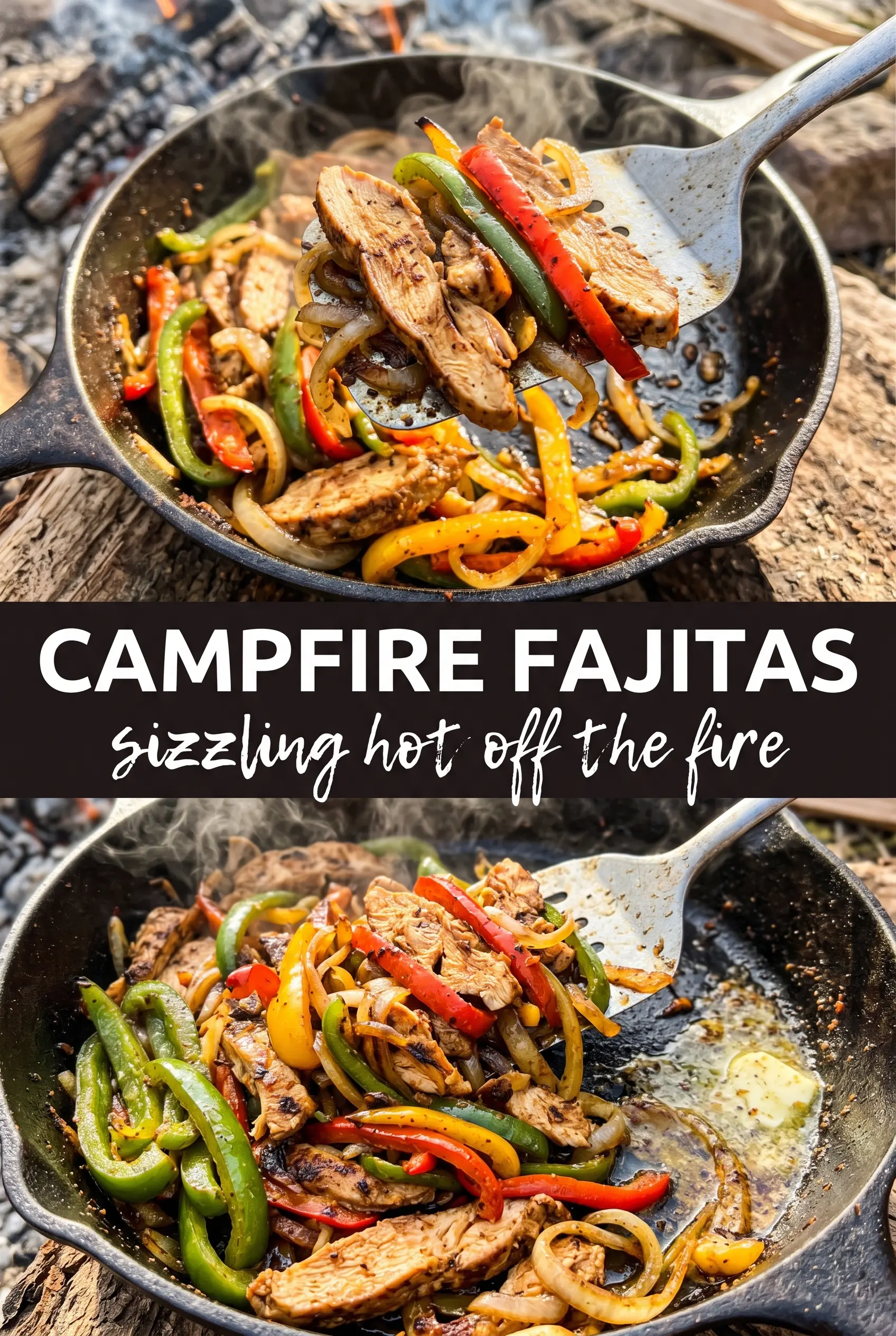
Campfire Fajitas
Ingredients
Equipment
Method
- Heat the oil in a large cast iron skillet over the campfire until shimmering and hot.
- Season the sliced chicken breast or steak with the fajita seasoning, then add it to the hot skillet.
- Cook for 8-10 minutes, stirring occasionally, until browned and cooked through, then remove and set aside.
- Add the sliced bell peppers and onions to the skillet and cook for 8-10 minutes until tender and slightly charred.
- Return the browned meat to the skillet and toss everything together until evenly combined.
- Warm the flour tortillas over the fire until pliable and lightly heated, then serve fajita mixture with tortillas.
- Top with sour cream, guacamole, salsa, cheese, and cilantro, and serve with lime wedges on the side for squeezing.