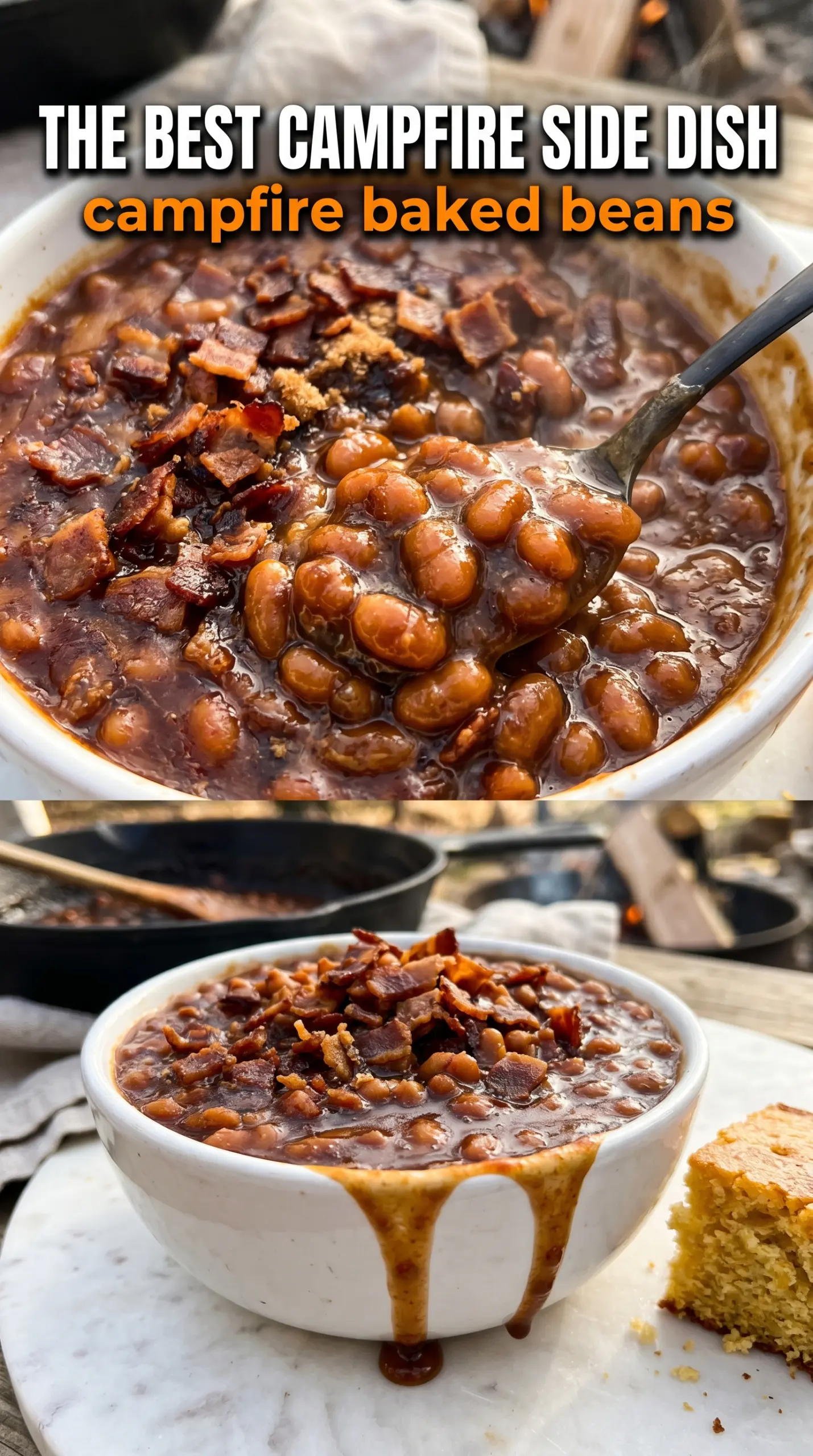
Campfire baked beans turn glossy, smoky, and thick enough to cling to the spoon, with bacon running through every bite and just enough tang to keep the sweetness in check. This is the kind of side dish that disappears before the rest of the grill food has even made it to the table.
The difference here is balance and timing. The canned beans give you a head start on body, but the BBQ sauce, ketchup, mustard, and Worcestershire need enough time over heat to meld into one sauce instead of sitting on top of the beans as separate flavors. The onion softens into the background and the bacon keeps the whole pot tasting savory, not syrupy.
Below, I’ll walk through the one part that matters most: how to simmer these long enough to thicken without scorching the bottom. I’ve also included a few easy swaps for oven baking and make-ahead prep if you’re cooking at home instead of over the fire.
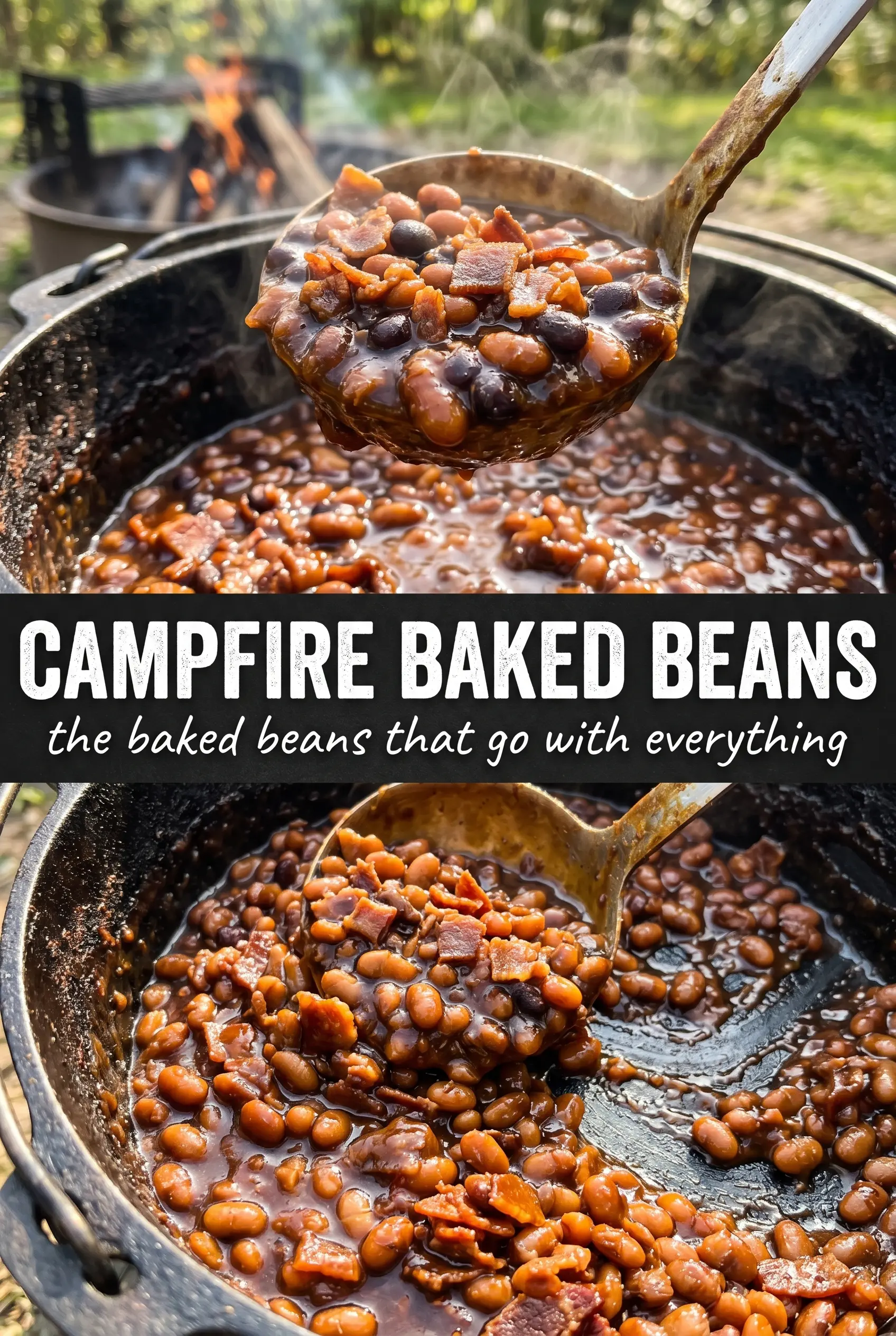
The beans thickened up beautifully over the fire and didn’t turn watery at all. The bacon stayed crisp enough to stand out, and the smoky BBQ sauce made these taste like they cooked all afternoon.
Save these smoky campfire baked beans for your next cookout side — the bacon, BBQ sauce, and slow simmer make them thick and spoonable.
The Part That Keeps Campfire Beans From Turning Watery
Canned baked beans already bring starch and body, but they still need time uncovered so the sauce can tighten up. If you cover the pot, the steam has nowhere to go and you end up with loose beans that taste good but don’t have that sticky, spoon-coating finish people expect from proper campfire beans.
The other mistake is rushing the heat. A hard boil will scorch the sugars in the barbecue sauce and brown sugar before the beans have a chance to thicken evenly. A steady simmer is enough; you want lazy bubbles around the edges and an occasional burp through the center, not a rolling boil.
- Uncovered simmering — This is what reduces the sauce and concentrates the flavor. The liquid needs to evaporate, and the top has to stay exposed for that to happen.
- Brown sugar — It gives the beans that classic barbecue sweetness and helps the sauce glaze as it cooks. Light or dark brown sugar both work; dark brown sugar brings a deeper molasses note.
- Mustard and Worcestershire — These keep the dish from tasting flat. They add tang and savory depth, which is what keeps sweet beans from tasting one-note.
What Each Ingredient Is Actually Doing in the Pot
- Baked beans — The canned beans are the base and the easiest place to start. They already have the right soft texture, so you’re building flavor and thickness instead of cooking dry beans from scratch.
- Bacon — Cook it first so it stays crisp enough to show up in the final dish. If you add raw bacon to the pot, it leaks too much fat and can leave the beans greasy.
- BBQ sauce — This is where the smoky, sticky barbecue flavor comes from. Use a sauce you already like eating; a very sweet sauce will make the beans sweeter, while a tangier one will sharpen the finish.
- Onion — Diced onion softens as the beans simmer and gives the dish a little backbone. Raw onion won’t cook out fast enough in a short simmer, so dice it small.
- Ketchup and mustard — Ketchup adds body and familiar baked bean sweetness, while mustard cuts through that sweetness with acidity. Yellow mustard is classic here, but Dijon works if you want a slightly sharper bite.
- Worcestershire sauce — This is the quiet ingredient that makes the pot taste deeper and more rounded. You don’t need much, but you do want it in the mix.
How to Build the Flavor Over the Fire
Start With the Whole Pot Together
Combine everything in a Dutch oven or heavy pot before it hits the heat. That gives the sauce a chance to distribute evenly from the start, instead of leaving you with pockets of ketchup, sugar, or mustard at the bottom. Stir until the beans are coated and the brown sugar is mostly broken up; a few small bits are fine because they dissolve as the pot warms.
Bring It Up Gently
Set the pot over a steady campfire grate or low heat and let it come to a simmer gradually. If the fire is too hot, the sugars on the bottom can scorch before the beans have time to thicken, especially in cast iron. You’re looking for bubbling around the edges first, then more movement through the center as the sauce loosens and cooks down.
Let the Sauce Reduce Uncovered
Cook uncovered for 25 to 30 minutes, stirring every few minutes and scraping the bottom so nothing sticks. The beans are done when the sauce looks glossy, thick enough to mound on a spoon, and the onions are soft. If the mixture still seems loose, keep it going a few more minutes; if it starts sticking, pull the pot a little farther from the fire and stir more often.
Serve While It’s Still Hot and Glossy
Take the beans off the heat once they’ve thickened and let them sit just long enough to settle. They’ll thicken a touch more as they cool, so don’t cook them until they look dry. Served hot, they have the best texture: saucy around the edges, thick in the center, and smoky from the bacon and fire.
Make Them Meatless Without Losing the Body
Skip the bacon and add a pinch of smoked paprika plus a little extra Worcestershire-style umami if you have it. You’ll lose the crisp savory bits, but the beans will still taste smoky and full, especially if your barbecue sauce already has a hickory note.
Swap in Oven Heat When You’re Not Cooking Over a Fire
Bake the beans uncovered at 350°F for about 30 to 40 minutes in a Dutch oven or covered casserole, stirring once or twice. The oven gives you the same thick finish with less risk of scorching, which is useful if you’re making a big batch for a crowd.
Make Them Ahead for a Cookout
Cook the beans completely, cool them, and refrigerate them for up to 4 days. They reheat well because the sauce is already thickened; in fact, the flavor deepens after a night in the fridge. Warm them slowly over low heat with a splash of water if needed so the bottom doesn’t catch.
Use Turkey Bacon for a Lighter Version
Turkey bacon works, but it won’t render the same rich fat, so the finished beans will taste a little leaner. Cook it until crisp before crumbling it in, and lean harder on the BBQ sauce and Worcestershire for depth.
Storage and Reheating
- Refrigerator: Store in an airtight container for up to 4 days. The sauce will thicken more as it sits.
- Freezer: Freeze for up to 2 months in a freezer-safe container. Thaw overnight in the fridge before reheating for the best texture.
- Reheating: Warm gently over low heat on the stove or in a covered dish in the oven. Add a splash of water if the beans look too tight, and stir often so the sugars don’t stick and burn.
Questions I Get Asked About This Recipe
Campfire Baked Beans
Ingredients
Equipment
Method
- Add the baked beans, crumbled bacon, BBQ sauce, brown sugar, ketchup, diced onion, mustard, and Worcestershire sauce to a Dutch oven or large pot and stir to combine.
- Place the pot over a campfire and bring the mixture to a steady simmer, with active bubbling visible around the edges.
- Cook uncovered for 25-30 minutes, stirring occasionally, until the beans are thickened and visibly bubbly throughout.
- Ladle the campfire baked beans into bowls and serve hot as a side dish with the bubbling texture intact.