Blackstone Philly cheesesteak sandwiches hit the griddle with everything going in the right direction at once: tender ribeye, sweet onions, softened peppers, and provolone melting into the steak before it ever reaches the roll. The best bites have a little crust on the beef, a little silkiness from the cheese, and a toasted hoagie that stays sturdy enough to hold the filling without going soggy.
This version works because the vegetables get their head start. Onions and peppers need the extra time to lose their raw edge and pick up some color, while the steak cooks fast enough to stay juicy. Slicing the ribeye thin matters more than anything else here, because thick pieces won’t chop and mix into that classic cheesesteak texture.
Below, I’m sharing the one griddle habit that keeps the steak from steaming, plus a few smart swaps if you need to work with what’s in the fridge.
The steak got those browned edges I was hoping for, and the onions cooked down into this sweet, almost jammy layer. We ate them straight off the griddle and the rolls stayed crisp instead of getting soggy.
Save these Blackstone Philly Cheesesteak Sandwiches for the nights when you want melted provolone, caramelized onions, and toasted hoagie rolls in one fast griddle meal.
The Griddle Trick That Keeps the Steak Juicy Instead of Gray
The biggest mistake with a cheesesteak on a flat top is crowding the meat before the pan is hot enough. Ribeye has enough fat to brown fast, but only if it hits a properly heated surface in a thin layer. If the steak piles up, it releases moisture, steams, and loses the edges that give the sandwich its best texture.
Let the onions and peppers finish first, then clear a hot spot on the griddle for the steak. That way the beef gets direct contact with the surface, and you can chop it with the spatulas as it cooks. The goal is cooked through with some browned bits, not a dry crumble.
- Ribeye — This cut gives you tenderness and enough marbling to stay juicy while it browns. Thin slicing matters more than grade here, so ask the butcher to slice it or chill it briefly and cut it as thin as you can.
- Onions — They need the full 8 to 10 minutes to turn sweet and soft. If you pull them too early, they taste sharp and the sandwich loses that classic cheesesteak depth.
- Green bell peppers — They add freshness and a little bite against the rich steak and cheese. Slice them evenly so they cook at the same pace as the onions.
- Provolone — It melts smoothly without turning greasy or stringy in the wrong way. American cheese will melt faster if that’s what you keep on hand, but provolone gives a cleaner, more balanced finish.
- Hoagie rolls — A sturdy roll is not optional here. Soft sandwich bread collapses under the filling, while a good hoagie holds up once the cheese and beef go in.
Building the Filling in the Right Order
Caramelizing the Vegetables First
Heat the Blackstone griddle to medium-high and add the oil, then spread the onions and peppers out so they can actually brown instead of puddling in their own moisture. Stir them often enough to keep them moving, but not so often that they never pick up color. You want softened onions with golden edges and peppers that have lost their raw crunch. If the pan seems dry before they finish, add just a little more oil instead of turning up the heat.
Cooking the Steak Fast and Hot
Season the ribeye with salt and pepper, then lay it down in a thin layer on the hot griddle. Let it sit long enough to pick up color before chopping it with the spatulas, because constant stirring turns it pale and watery. Three to four minutes is usually enough. Pull it as soon as the pink is gone and the edges are browned; overcooked ribeye goes chewy fast.
Melting the Cheese and Toasting the Rolls
Divide the steak into four portions, top each pile with the caramelized vegetables, and lay two slices of provolone over each one. Give the cheese a minute to soften and drape over the meat instead of trying to move everything too soon. Butter the hoagie rolls and toast them cut-side down until they’re golden. That toast keeps the sandwich from falling apart once the filling goes in.
Assembling for the Best Bite
Scoop the steak mixture into the rolls while everything is still hot and melty. Add mayo if you like a little extra richness, but keep it light or it will overpower the beef. These sandwiches are at their best right away, when the bread is crisp, the cheese is stretchy, and the vegetables are still warm enough to tie everything together.
What to Change When You Need a Different Version
Make It Without the Peppers
Skip the bell peppers and double the onions if you want a more traditional steak-and-onion profile. You’ll lose a little freshness and color, but the sandwich gets deeper and sweeter, which some people prefer anyway.
Use a Different Cheese
White American melts the fastest and gives you the softest, most classic cheese pull. Mozzarella works in a pinch, but it’s milder and can make the sandwich taste less like a true cheesesteak.
Make It Gluten-Free
Use your favorite sturdy gluten-free rolls and toast them well so they can stand up to the filling. A softer gluten-free bun tends to break once the hot steak and vegetables go in, so extra toasting matters here.
Turn It Into a Lighter Bowl
Serve the steak, peppers, onions, and cheese over rice, roasted potatoes, or shredded lettuce instead of the roll. You keep all the flavor and lose the bread, but the meal shifts from handheld sandwich to fork-and-knife dinner.
Storage and Reheating
- Refrigerator: Store the steak and vegetables separately from the rolls for up to 3 days. The filling holds up well, but the bread gets soft if it sits assembled.
- Freezer: The cooked steak and vegetables freeze for up to 2 months. Cool them completely first, then pack airtight so the meat doesn’t pick up freezer burn.
- Reheating: Warm the filling in a skillet over medium heat until hot, then toast fresh rolls and assemble. The most common mistake is microwaving the sandwich whole, which makes the bread rubbery and the steak lose its texture.
Questions I Get Asked About This Recipe
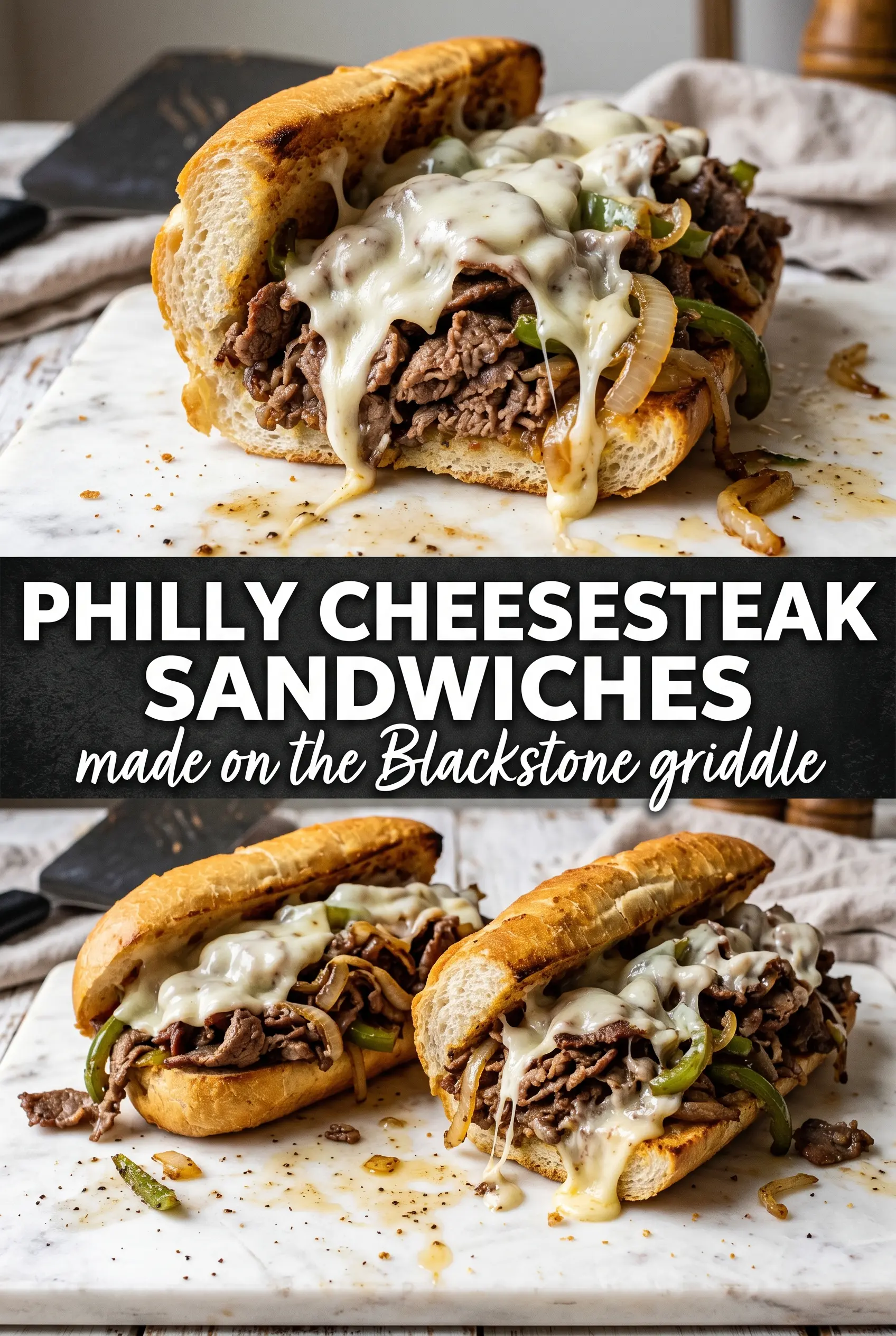
Blackstone Philly Cheesesteak Sandwiches
Ingredients
Equipment
Method
- Heat a Blackstone griddle to medium-high and add the oil, then let it shimmer. Aim for a steady sizzle so the onions and peppers caramelize instead of steaming.
- Cook the sliced onions and bell peppers until caramelized, about 8-10 minutes, stirring occasionally. Transfer them to a tray or plate once they’re browned and softened.
- Season the thinly sliced ribeye with salt and pepper, then spread it out in a single layer on the hot griddle. Keep the griddle at medium-high so the meat browns quickly.
- Cook the steak for 3-4 minutes, chopping with spatulas as it cooks. Stop when it’s browned and no longer pink.
- Divide the cooked steak into 4 portions on the griddle and top each with the caramelized vegetables. Add 2 slices of provolone to each portion so they start melting right away.
- Butter and toast the hoagie rolls on the griddle until golden. Toast just until crisp so the rolls can hold the hot filling without getting soggy.
- Scoop the steak mixture into the toasted rolls and add mayo if desired. Serve immediately so the cheese stays stretchy and the filling is hot.