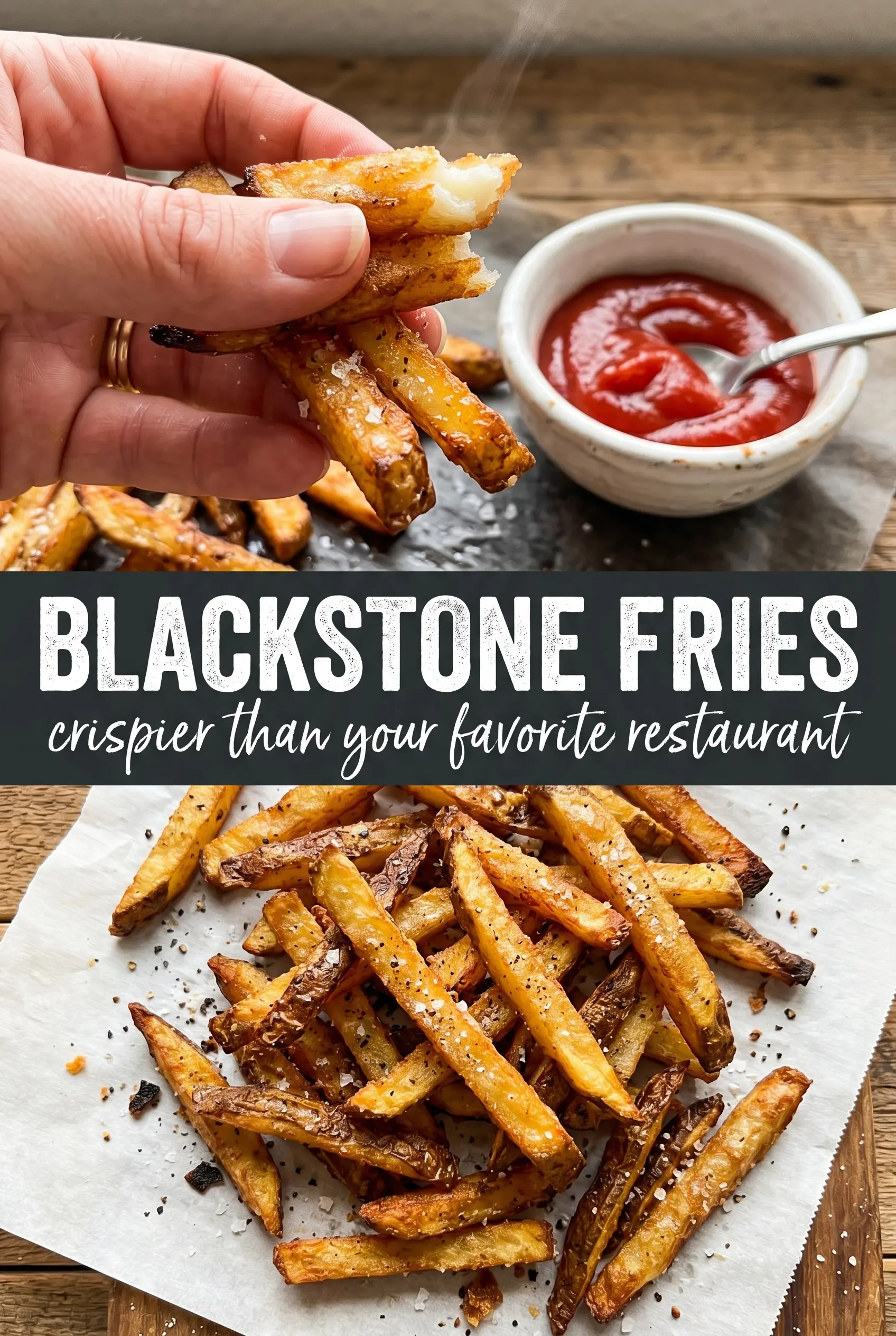
Blackstone fries land with the kind of crackly edges and fluffy centers that keep people hovering around the griddle for “just one more.” The butter browns into the potatoes, the oil keeps the surface from sticking, and the seasoning clings best while the fries are still hot. That means you get fries that taste seasoned all the way through instead of just dusted on the outside.
The real payoff here is patience. If the potatoes are crowded, damp, or moved too soon, they steam and turn soft. A quick soak pulls off extra starch, and drying them completely gives the griddle a chance to do what it does best: build color fast. Once those fries are in a single layer, leave them alone long enough to form a crust before you flip them.
Below, I’ve laid out the little details that matter most, including the best way to season them so the spice mix sticks and the fries stay crisp enough to hold up beside a burger or a basket of dipping sauces.
The fries got that shatteringly crisp edge on the griddle, and the seasoning stuck right after I flipped them. My husband kept sneaking them straight off the tray before I could even get the ketchup out.
Save these Blackstone fries for the nights when you want crispy griddle fries with buttery seasoning and a true golden finish.
The Part Most Fries Miss on a Hot Griddle
The biggest mistake with griddle fries is assuming the heat alone will crisp them. Heat helps, but the real difference comes from moisture control and spacing. Russets have enough starch to give you that fluffy middle, but if they go onto the Blackstone wet, the surface turns gummy before it ever browns.
That’s why the soak matters, even though it’s short. It pulls off some surface starch, which helps the fries cook more evenly and keeps them from sticking together. Then the single-layer setup gives each fry direct contact with the griddle, which is what creates that deep golden side instead of a pale, soft one.
- Russet potatoes — These are the right potato for the job because they crisp up well and stay fluffy inside. Waxy potatoes hold their shape, but they don’t give you the same light interior.
- Vegetable oil — This gives you the high-heat base you need on a griddle. You can swap in canola or avocado oil if that’s what you keep around, but use an oil that won’t smoke too quickly.
- Butter — Butter adds flavor and helps the fries pick up a richer, deeper color. Straight butter alone can burn, which is why it works best paired with oil here.
- Garlic powder, paprika, and onion powder — These season the fries with dry spices that stick well and don’t add moisture. Fresh garlic isn’t a good swap because it can scorch fast on the hot surface.
Getting the Fries Crispy Before the Seasoning Goes On
Cutting and Drying the Potatoes
Slice the potatoes into even 1/4-inch fries so they cook at the same pace. After the cold soak, dry them thoroughly with towels until no surface moisture remains; any water left behind will steam the potatoes instead of searing them. If your fries are sticking to the towel a little, they’re still too wet for the griddle.
Heating the Griddle and Firing Up the Fat
Bring the Blackstone to medium-high before the fries go down so the surface is hot enough to start browning right away. Add the oil and butter together; the oil keeps the butter from scorching too fast, while the butter gives the fries that richer finish. If the butter foams and disappears immediately, the surface is ready.
Leaving the Fries Alone Long Enough to Brown
Spread the fries in a single layer and don’t move them for the first 8 to 10 minutes. That undisturbed contact is what builds the crust, and moving them early tears the soft side before it has time to set. When you flip them, you’re looking for a side that releases easily and shows clear golden color, not pale spots.
Seasoning While They’re Hot
Season the fries right after the second side finishes cooking, while the oil and butter are still clinging to the surface. That’s when the garlic powder, paprika, onion powder, salt, and pepper grab on best. If you wait until they cool, the seasoning falls off instead of coating the fries evenly.
Loaded Griddle Fries
Pile the finished fries with shredded cheese, crumbled bacon, and sliced green onions while they’re still hot. The cheese melts best if you cover the fries for a minute or two after adding it, which gives you a snack-style side with a little extra heft.
Dairy-Free Fries
Use all oil instead of butter and keep the heat steady so the fries still brown well. You lose a little richness, but the crisp texture stays intact and the spices still cling nicely.
Spicy Cajun-Style Fries
Swap the paprika and onion powder for Cajun seasoning, or add it on top of the base spice mix. This pushes the fries toward a bolder, saltier finish with more heat, so keep the seasoning light at first and taste one fry before adding more.
Smaller-Batch Snack Fries
If you’re cooking for two, use just two potatoes and keep them in one layer with extra space between pieces. Crowding a smaller griddle zone still traps steam, so the batch size matters just as much as the heat.
Storage and Reheating
- Refrigerator: Store leftovers in an airtight container for up to 3 days. They’ll soften as they sit, but they still reheat well.
- Freezer: These freeze better after the first cook than after reheating. Freeze in a single layer, then move to a bag; expect a little less crispness after thawing.
- Reheating: Reheat on a hot skillet, griddle, or in an air fryer until the outside crisps again. Don’t microwave them unless you’re fine with soft fries, because the steam turns the crust limp fast.
Questions I Get Asked About This Recipe
Blackstone Fries
Ingredients
Equipment
Method
- Cut russet potatoes into 1/4-inch thick fries and soak in cold water for 10 minutes, so the surfaces release extra starch.
- Drain and pat the fries completely dry to help them crisp on the griddle (visible steam should start once they hit the hot surface).
- Heat a Blackstone griddle to medium-high and add vegetable oil and butter until the butter foams slightly.
- Spread the fries in a single layer and cook for 8-10 minutes without moving, until the bottoms look deep golden.
- Flip the fries and cook another 8-10 minutes until golden and crispy on all sides, with steady steam rising from the hot oil.
- Season immediately with garlic powder, paprika, onion powder, salt, and pepper while the fries are hot so the coating sticks.
- Garnish with fresh parsley and serve with ketchup and other dipping sauces in a basket for dipping.