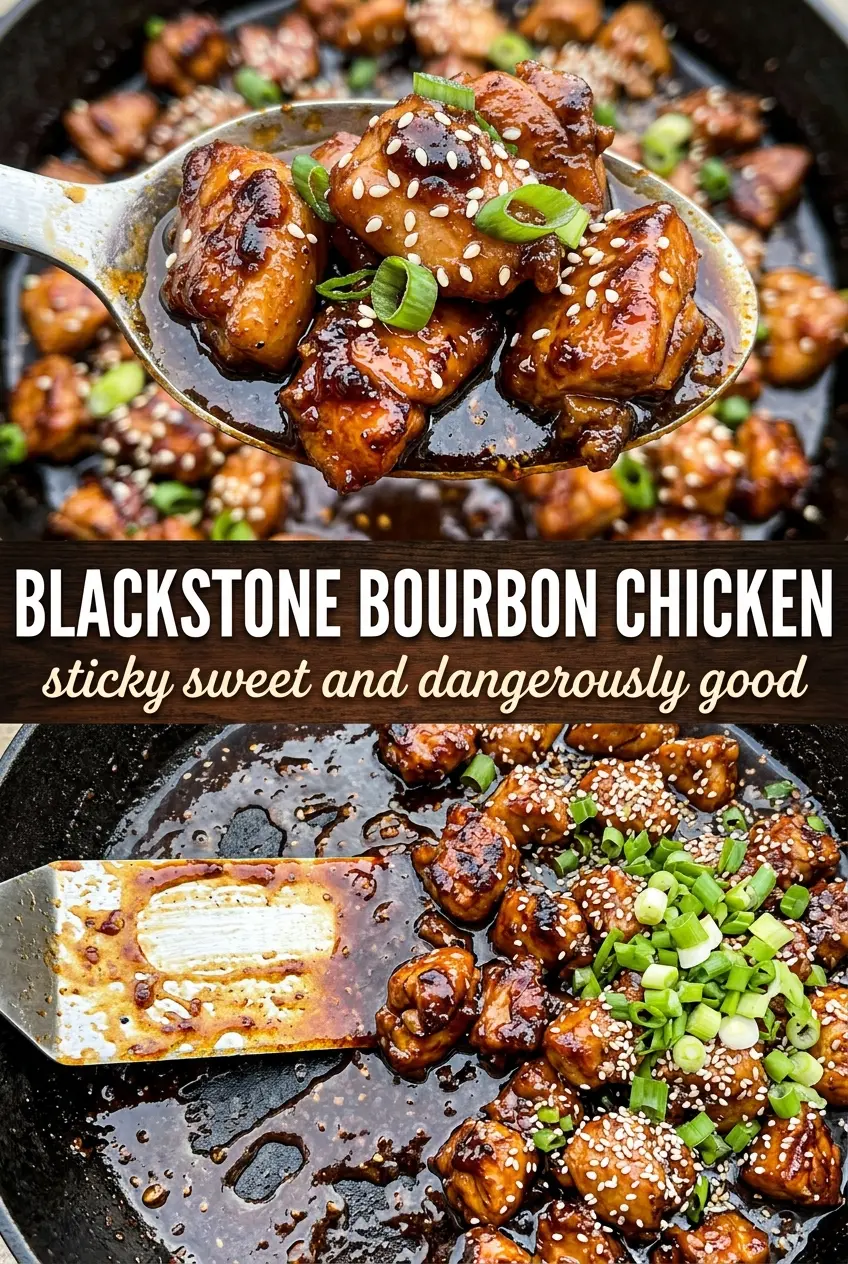
Glossy bourbon chicken belongs on the griddle because the high heat does what a skillet never quite manages: it drives off the extra moisture fast enough to leave the edges sticky, bronzed, and caramelized without turning the chicken dry. The sauce clings in a lacquered layer instead of pooling at the bottom, and every bite gets that sweet-salty hit with a little sharpness from vinegar and garlic.
This version works because the marinade is split before the chicken goes in. That reserved portion stays clean for the finish, so you can thicken it with cornstarch and pour it over fully cooked chicken without worrying about raw-meat contamination. Chicken thighs are the right cut here because they stay tender while the griddle does its job, and the bourbon adds depth without tasting boozy once it cooks down.
Below, I’ll walk through the part that matters most: how to keep the sauce glossy instead of thin or scorched. I’ve also included a few smart swaps and the exact way I store leftovers so the chicken stays saucy, not dull.
The sauce thickened up beautifully on the griddle and coated every piece of chicken instead of running all over the place. My husband kept picking at the leftovers straight from the container.
Save this Blackstone Bourbon Chicken for the nights when you want sticky, caramelized griddle chicken with almost no cleanup.
The Reason the Glaze Stays Thick Instead of Running Off the Griddle
The main mistake with bourbon chicken is pouring all of the marinade back onto the heat and expecting it to turn into sauce. That usually gives you a watery pan, thin flavor, and a glaze that never quite catches. The split-marinade method fixes that: one portion seasons the chicken, and the clean reserved portion gets thickened at the end so it can coat without overcooking.
Chicken thighs matter here. They tolerate the higher heat of a Blackstone better than breast meat, and they keep their texture even after the sauce goes on. If you use chicken breast, cut the pieces a little larger and pull them as soon as they hit 165°F, because the final toss in sauce can push them past tender.
- Bourbon — You don’t need an expensive bottle. A mid-range bourbon gives enough warmth and depth, and the alcohol cooks off as the sauce reduces. Don’t skip it unless you need a non-alcoholic version, because it’s a big part of the dish’s backbone.
- Soy sauce — This gives the savory edge that keeps the glaze from tasting like candy. Use regular soy sauce, not low-sodium if you like a bolder finish, but if yours is very salty, the brown sugar and vinegar will still balance it.
- Brown sugar — This is what helps the sauce caramelize on the griddle. Light brown sugar works fine; dark brown sugar gives a deeper molasses note and a darker glaze.
- Cornstarch slurry — This is the difference between a sticky glaze and a loose marinade. Whisk it with cold water first, then add it to the reserved sauce so it thickens evenly instead of turning lumpy.
Building the Glaze on the Hot Griddle Without Burning the Sugar
Let the chicken marinate long enough to season, not long enough to soften
Thirty minutes is enough for the chicken to pick up the bourbon, soy, garlic, and ginger without making the surface mushy. Drain the chicken from the marinating portion before it hits the griddle so excess liquid doesn’t steam the meat. If the chicken goes onto a wet surface, it’ll pale instead of browning.
Cook in a single layer and let the heat do the work
Spread the chicken out on an oiled griddle over medium-high heat and leave it alone for short stretches between stirs. You want browned edges and little caramelized spots, not boiled chicken in a sauce puddle. If the pieces start to crowd, they’ll throw off moisture and slow everything down, so cook in batches if your griddle is tight.
Thicken the reserved sauce at the end
Once the chicken is cooked through, pour in the cornstarch-thickened reserved marinade and keep everything moving for 2 to 3 minutes. The sauce should go from glossy and loose to shiny and spoon-coating. If it still looks thin, keep it on the heat for another minute; if it starts to look sticky and dull, pull it off right away so it doesn’t over-reduce.
Make it gluten-free with tamari
Swap the soy sauce for tamari in a 1:1 amount. The flavor stays deep and savory, but tamari tends to taste a little rounder and less sharp. Check your bourbon label too if you’re cooking for someone highly sensitive, since not every brand is made the same way.
Turn down the sweetness without losing the glaze
Reduce the brown sugar to 3 tablespoons and add an extra teaspoon of vinegar. You’ll get a less candy-like sauce with a sharper finish, but it will still caramelize properly. Don’t cut the sugar too far or the glaze turns thin and loses that sticky coating.
Use chicken breast if that’s what you have
Chicken breast works, but it needs a little more attention because it dries out faster on the griddle. Cut it into slightly larger pieces and pull it as soon as it’s just cooked through. The result will be leaner and less rich than thighs, but the sauce still carries the dish.
Storage and Reheating
- Refrigerator: Store in an airtight container for up to 4 days. The glaze will tighten as it chills, but the flavor gets even better by day two.
- Freezer: It freezes well for up to 2 months. Freeze in portions, and expect the sauce to look a little looser after thawing; a quick reheat brings it back.
- Reheating: Warm it in a skillet over medium-low heat with a splash of water if needed. The common mistake is blasting it over high heat, which dries out the chicken and makes the sugars in the sauce taste burnt.
Questions I Get Asked About This Recipe
Blackstone Bourbon Chicken
Ingredients
Equipment
Method
- Combine bourbon, soy sauce, brown sugar, apple cider vinegar, garlic, and ginger in a bowl until the sugar dissolves and the mixture looks glossy.
- Reserve 1/3 of the marinade in a separate container, then add the remaining marinade to the chicken thighs and toss to coat.
- Marinate for 30 minutes, turning once if possible, so the chicken takes on flavor and begins to look slightly opaque.
- Heat oil on the Blackstone griddle over medium-high heat until it shimmers and spreads easily.
- Add the chicken in a single layer and cook for 10-12 minutes, stirring frequently, until cooked through and caramelized on the edges.
- Mix cornstarch with water and add it to the reserved marinade, stirring to dissolve.
- Pour the thickened marinade over the chicken and cook for 2-3 minutes, stirring, until the sauce bubbles and coats each piece with a glossy glaze.
- Remove from heat and garnish with sesame seeds and green onions before serving.