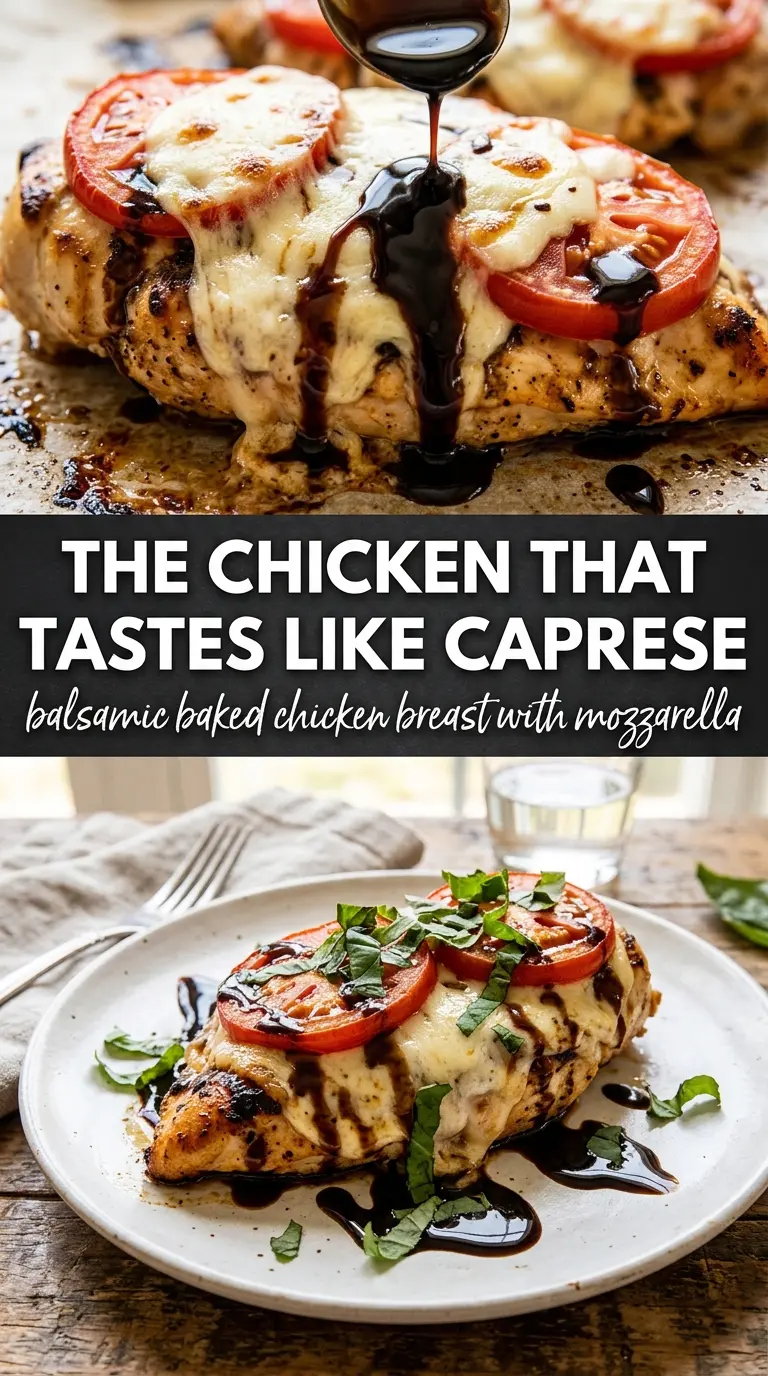
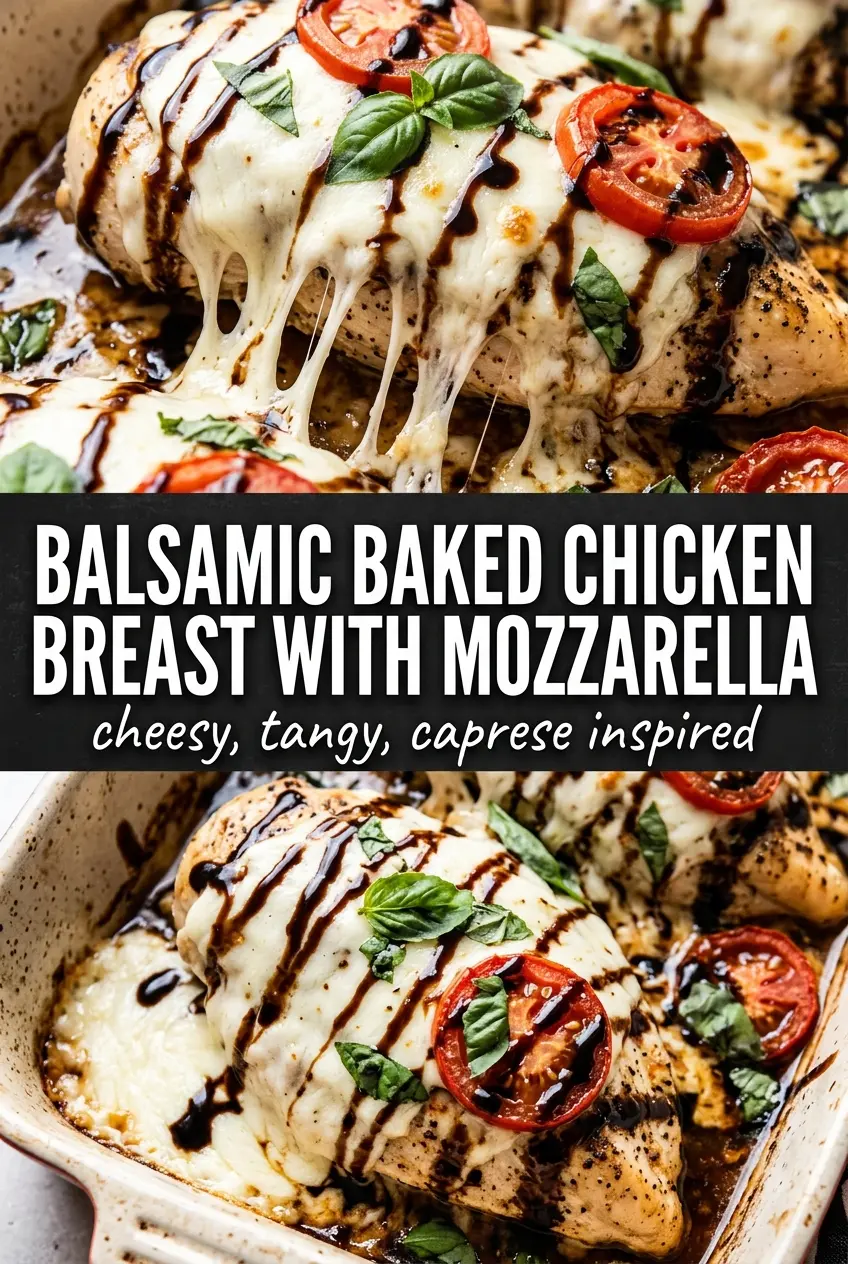
Juicy balsamic baked chicken breast with mozzarella lands on the table with a glossy, tangy-sweet glaze and the kind of melted cheese pull that makes a simple chicken dinner feel a lot more thought through. The chicken stays tender because it gets a short marinade, a quick sear for color, and then a finish in the oven where the balsamic mixture turns syrupy instead of sharp.
The little things matter here. Dijon helps the marinade emulsify, so the oil and vinegar cling to the chicken instead of sliding off, and fresh mozzarella melts into soft pockets rather than turning greasy and rubbery. Cherry tomatoes go on at the end so they warm through and soften without collapsing into the pan, and the basil finishes everything with that caprese-style lift that keeps the dish from tasting heavy.
Below, I’m walking through the one step people tend to rush, the ingredient swap that still keeps the chicken juicy, and the reheating method that brings leftovers back without drying out the edges.
The balsamic glaze thickened up beautifully in the pan, and the mozzarella melted over the chicken without turning oily. I served it with rice, and my husband asked if I could make it again next week.
Save this balsamic baked chicken breast with mozzarella for a caprese-style dinner with a caramelized glaze, juicy chicken, and melted fresh cheese.
The Reason This Chicken Stays Juicy Instead of Turning Dry
The trap with balsamic chicken is pushing too much heat too fast. Balsamic vinegar has sugar in it, and sugar can go from glossy to burnt before the chicken has a chance to cook through. The short sear here is only for color; the oven finishes the job gently, which keeps the breasts from tightening up and going stringy.
Marinating for just 20 minutes is enough to season the surface without changing the texture of the chicken. Any longer and the acid starts to work against you, especially with lean chicken breasts. The reserved marinade also helps create a coating in the pan, but it needs to go into the oven only once the chicken is already on its way to done.
- Balsamic vinegar — Use a decent one here. It doesn’t have to be fancy, but it should taste balanced, not harsh, because it reduces into the glaze and that flavor gets concentrated fast.
- Honey — This softens the vinegar’s edge and helps the surface caramelize in the oven. Maple syrup works in a pinch, but the final glaze tastes a little deeper and less bright.
- Dijon mustard — This is doing more than adding flavor. It helps the marinade cling to the chicken and keeps the oil and vinegar from separating immediately.
- Fresh mozzarella — Slice it, don’t shred it. Slices melt into soft, milky pools on top of the chicken, while shredded mozzarella tends to disappear into the sauce and lose that caprese finish.
What Each Ingredient Is Actually Doing in This Recipe
- Primary ingredient (the star) — Quality matters most. Choose the best you can find.
- Cooking medium (oil, butter, or broth) — This carries flavors and prevents dryness.
- Seasonings (salt, pepper, spices, herbs) — Layer flavors so nothing overpowers. Build depth gradually.
- Aromatics (garlic, onion, herbs) — Cook with fat to bloom flavors. Become the foundation.
- Supporting ingredients — Complement the main ingredient without overpowering it.
- Sauce or liquid (if applicable) — Brings flavors together. Balance richness with acid.
- Acid (lemon, vinegar, wine, or other) — Brightens and prevents flat-tasting results.
- Final finish (garnish, glaze, or sauce) — Prevents one-dimensional taste and adds visual appeal.
Building the Glaze, the Sear, and the Melted Finish
Mix the Marinade First
Whisk the balsamic vinegar, olive oil, honey, garlic, and Dijon until the mixture looks fully blended and glossy. Season the chicken before it goes in so the salt has a chance to pull flavor into the meat instead of sitting on the surface. Twenty minutes is enough; if the chicken sits too long in the acid, the exterior gets a little mealy before it even hits the pan.
Give the Chicken Color Before the Oven
Use an oven-safe skillet and sear the chicken over medium-high heat for about 3 minutes per side, just until the surface turns golden. You’re not cooking it through here. If the pan is crowded or the heat is too low, the chicken steams and the glaze never gets that deep, browned edge that makes the dish taste finished.
Bake Until the Center Is Just Done
Slide the skillet into the oven with the remaining marinade and bake until the thickest part of the chicken reaches 165°F, usually 18 to 20 minutes depending on the size of the breasts. The juices should run clear and the pan juices should look slightly thickened. If the chicken is done early, pull it out; overbaking is the fastest way to lose the tenderness you built in the first two steps.
Add the Cheese and Tomatoes at the End
Top each breast with mozzarella slices and halved cherry tomatoes, then return the pan to the oven for 4 to 5 minutes. You want the cheese soft and melted, not bubbling hard or browning all over. Basil goes on after the chicken comes out, not before, or it wilts into the cheese and loses that fresh, herbal lift.
Dairy-Free Version
Skip the mozzarella and finish with extra cherry tomatoes and basil. You lose the creamy caprese layer, but the balsamic glaze still gives you a rich, satisfying main dish without dairy.
Chicken Thigh Swap
Boneless, skinless thighs work well if you want a juicier result and a little more forgiveness on timing. They usually need a few extra minutes in the oven, and the final flavor is a touch richer because the meat has more fat.
Lower-Sugar Option
Cut the honey down to 1 tablespoon for a sharper, less sweet glaze. The chicken will still brown, but the sauce won’t reduce as deeply or cling quite as thickly, so the finished dish tastes a little brighter.
Make It Gluten-Free Without Changing Anything
This recipe is naturally gluten-free as written, so there’s nothing to replace. Just check your Dijon and balsamic glaze labels if you’re cooking for someone with a strict allergy, since those are the ingredients most likely to hide a surprise additive.
Storage and Reheating
- Refrigerator: Store leftovers in an airtight container for up to 3 days. The mozzarella softens as it chills, but the flavor stays good.
- Freezer: It freezes, but the fresh mozzarella and tomatoes lose some texture after thawing. Freeze the chicken without the basil if you want to save it for later.
- Reheating: Warm it covered in a 325°F oven until heated through, or use short bursts in the microwave at medium power. High heat makes the chicken dry and the cheese turn rubbery before the center is hot.
Questions I Get Asked About This Recipe
Balsamic Baked Chicken Breast with Mozzarella
Ingredients
Equipment
Method
- Whisk together balsamic vinegar, olive oil, honey, garlic, and Dijon mustard in a bowl until smooth. Season the chicken with salt, pepper, garlic powder, and Italian seasoning, then rub it with the mixture.
- Marinate the chicken in the balsamic mixture for 20 minutes, turning once if possible, and reserve some marinade. Cover and keep refrigerated while marinating.
- Preheat the oven to 400°F. Place an oven-safe skillet on the stovetop over medium-high heat.
- Sear the marinated chicken in the skillet for 3 minutes per side until golden. Transfer the skillet to the oven and pour in the reserved marinade.
- Bake at 400°F for 18-20 minutes, until the internal temperature reaches 165°F. The chicken should look cooked through with juices bubbling in the pan.
- Remove the skillet from the oven and top each breast with mozzarella slices and halved cherry tomatoes. Return to the oven for 4-5 minutes until the cheese is melted and lightly golden.
- Remove from the oven and drizzle with balsamic glaze for a glossy finish. Garnish with fresh basil leaves so the tops look fresh and green.