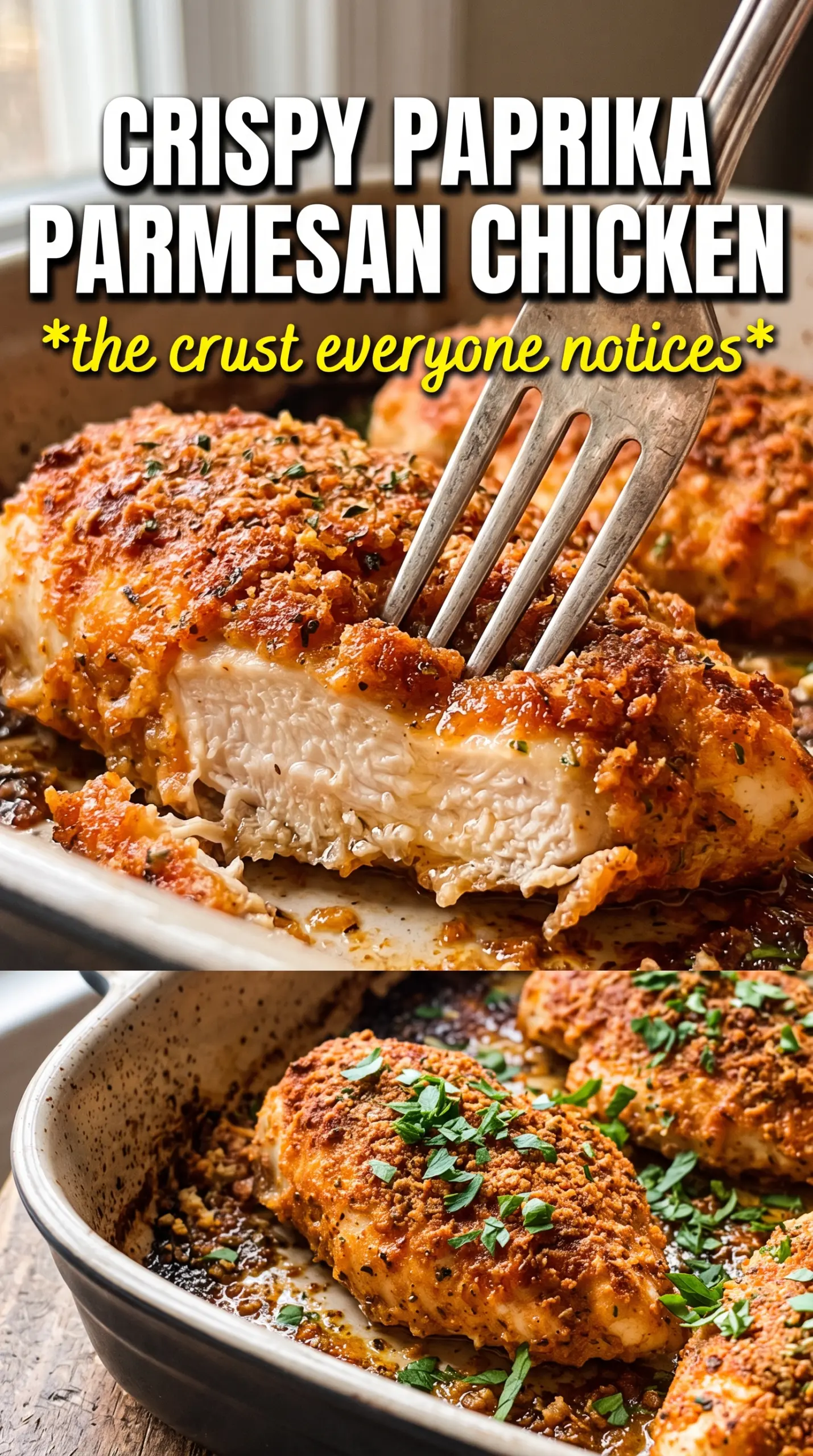
Baked paprika Parmesan chicken lands on the plate with a crackly, deeply seasoned crust and juicy chicken underneath, which is exactly why it ends up back in the dinner rotation. The smoked paprika gives the coating that warm, brick-red color and a little campfire depth, while the Parmesan turns nutty and crisp in the oven instead of melting into a heavy blanket.
The trick is building the flavor into the oil first, then pressing the chicken into a Parmesan-panko layer so the coating bakes up golden instead of dusty. A hot oven does the work fast enough that the crust sets before the chicken has time to dry out, which is the difference between a good chicken bake and one that feels plain by the second bite.
Below you’ll find the timing that keeps the coating crisp, the ingredient swaps that still hold up, and the one texture cue I watch for before pulling the pan out.
The crust came out crisp and stayed on the chicken instead of falling off, and the paprika gave it such a good smoky edge. I baked it for 24 minutes and the breasts were juicy all the way through.
Love the smoky Parmesan crust on this baked paprika chicken? Save it to Pinterest for a crisp, juicy chicken dinner with almost no cleanup.
The Crust Stays Put When You Press, Not Sprinkle
The mistake most people make with breaded chicken is treating the topping like a dusting. That gives you patchy coverage, then the crust falls off the second the chicken gets moved or sliced. Here, the oil-seasoning mix goes on first, and the Parmesan-panko blend gets pressed firmly into that slick surface so it can grab and brown as one layer.
High heat matters here because it sets the coating quickly. If the oven runs too cool, the crumbs soak up oil before they crisp and the cheese never gets that toasted edge. Line the pan with parchment, but don’t crowd the chicken; the steam from pieces touching each other is the fastest way to lose the crackle you’re after.
What Each Ingredient Is Actually Doing in the Crust
- Smoked paprika — This is the backbone of the dish. It gives the chicken that deep red color and a savory, smoky edge that sweet paprika alone can’t match. If you only have regular paprika, the chicken will still work, but it’ll taste flatter and look lighter.
- Sweet paprika — This rounds out the smoke so the crust tastes warm instead of sharp. It also helps build that vivid color without pushing the heat level up. Don’t swap it for hot paprika unless you want more bite.
- Freshly grated Parmesan — Fresh Parmesan melts and browns in a better, cleaner way than the shelf-stable stuff. Pre-grated cheese often contains anti-caking agents that can keep the crust from clinging as well. If you need a shortcut, use a fine microplane-style grate, not the powdery kind from a canister.
- Panko breadcrumbs — Panko keeps the coating light and crisp. Regular breadcrumbs will work, but they bake up denser and don’t give you the same crackly finish. For gluten-free, use a gluten-free panko and press it on the same way.
- Olive oil — This carries the spices and helps the coating turn evenly golden. Butter can brown faster and taste richer, but it also burns more easily at 425°F, so I stick with oil for the most reliable result.
How to Build the Chicken So the Coating Bakes, Not Burns
Season the Oil First
Mix the olive oil with the paprika, garlic powder, onion powder, salt, and pepper before it touches the chicken. That turns the oil into a seasoning paste that spreads evenly instead of leaving dry pockets of spice on the crust. If the mixture looks too thick to brush, it’s not a problem — it should cling.
Coat Both Sides, Then Top With the Crumb Layer
Brush the paprika oil over both sides of each chicken breast so the seasoning starts at the meat, not just on the crust. The Parmesan-panko goes on the top side and gets pressed down firmly with your fingers or the back of a spoon. If the coating looks loose, it will fall off in the oven; pressing it on gives it a chance to melt together as it bakes.
Bake Until the Crust Is Red-Gold and the Center Hits Temperature
Slide the chicken into a 425°F oven and bake until the crust looks deeply golden-red and the thickest part reaches 165°F. The top should look crisp at the edges, and the juices should run clear when you cut into the center. If the chicken breasts are very thick, pound them to an even thickness first so the crust doesn’t overbrown while the middle catches up.
Let It Rest Before Slicing
Give the chicken a few minutes on the pan after it comes out. That short rest keeps the juices in the meat instead of flooding the crust the second you cut it. Slice too early and the coating softens fast.
Ways to Adjust It Without Losing the Crunch
Gluten-Free Crust That Still Gets Crisp
Use a gluten-free panko-style breadcrumb and keep the rest of the method the same. The texture will be slightly more delicate than regular panko, but pressing it firmly onto the chicken and baking on parchment still gives you a crisp top.
Dairy-Free Version
Swap the Parmesan for a dairy-free Parmesan-style shred that melts and browns well. You’ll lose a little nutty richness, so season the crumb layer a touch more generously and keep the paprika bold.
Chicken Thighs Instead of Breasts
Boneless skinless thighs work well and stay juicy, but they usually need a few extra minutes in the oven. The crust will be a little less dramatic because the shape is uneven, so check the temperature at the thickest point before pulling them out.
Storage and Reheating
- Refrigerator: Store leftovers in an airtight container for up to 3 days. The crust softens a bit, but the flavor stays strong.
- Freezer: It freezes, but the crumb topping loses some crunch. Freeze cooled portions on a tray first, then wrap tightly and store for up to 2 months.
- Reheating: Reheat on a sheet pan in a 375°F oven until hot. The microwave will soften the crust and make the cheese soggy, so use the oven if you want any texture left.
Questions I Get Asked About This Recipe
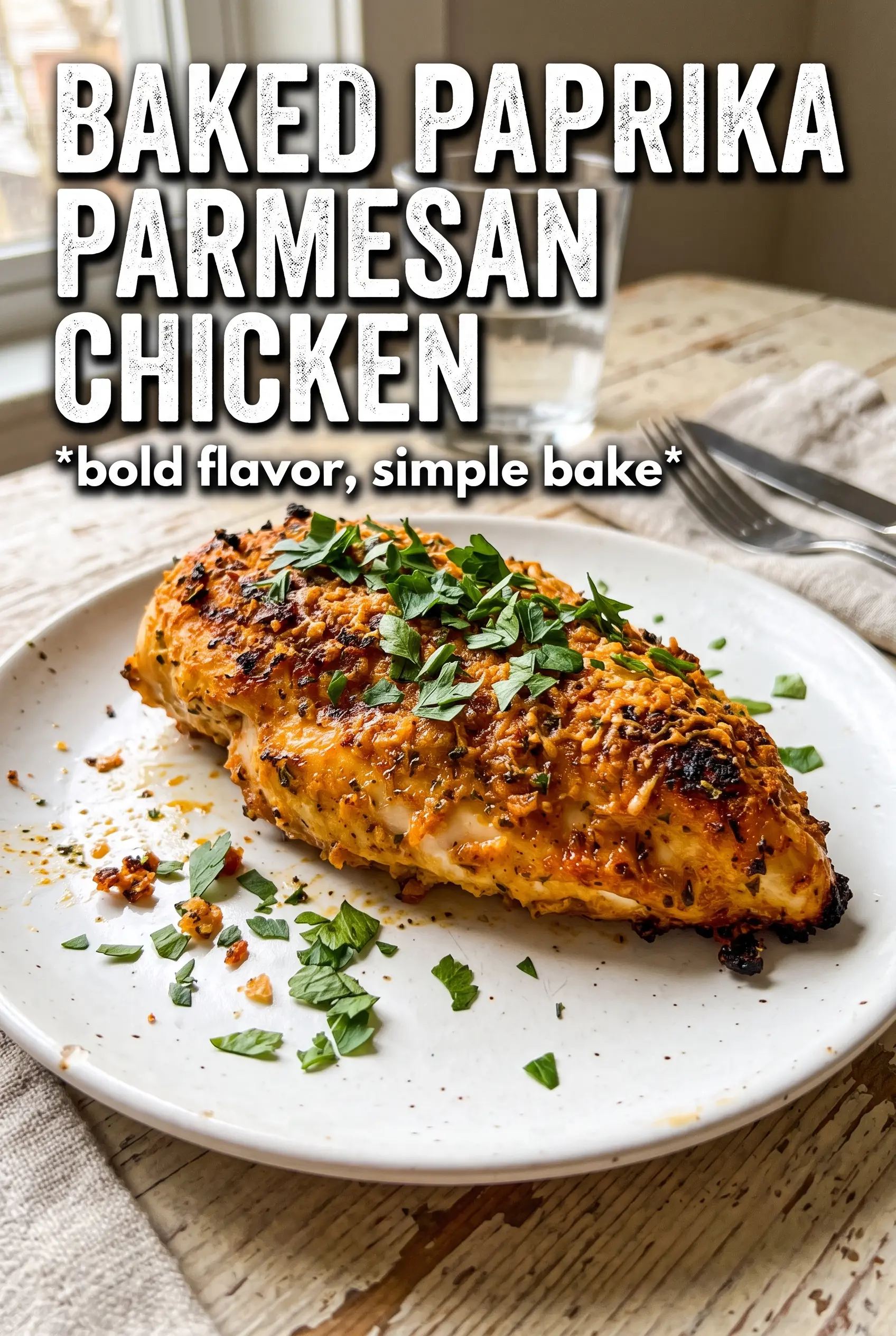
Baked Paprika Parmesan Chicken
Ingredients
Equipment
Method
- Preheat your oven to 425°F and line a sheet pan with parchment for easy release and cleanup.
- Mix olive oil with smoked paprika, sweet paprika, garlic powder, onion powder, salt, and pepper until the oil looks evenly tinted.
- Brush the paprika oil generously over both sides of each chicken breast so the surface is well coated.
- Combine Parmesan and panko, then press firmly onto the oiled chicken tops so the crumbs adhere as a crust.
- Bake at 425°F for 22-25 minutes, until the crust is golden-red and visibly caramelized at the edges.
- Continue baking until the internal temperature reaches 165°F when checked at the thickest part, and let the crust look set and crackled.
- Garnish the baked chicken with fresh parsley and serve with lemon wedges for brightness.