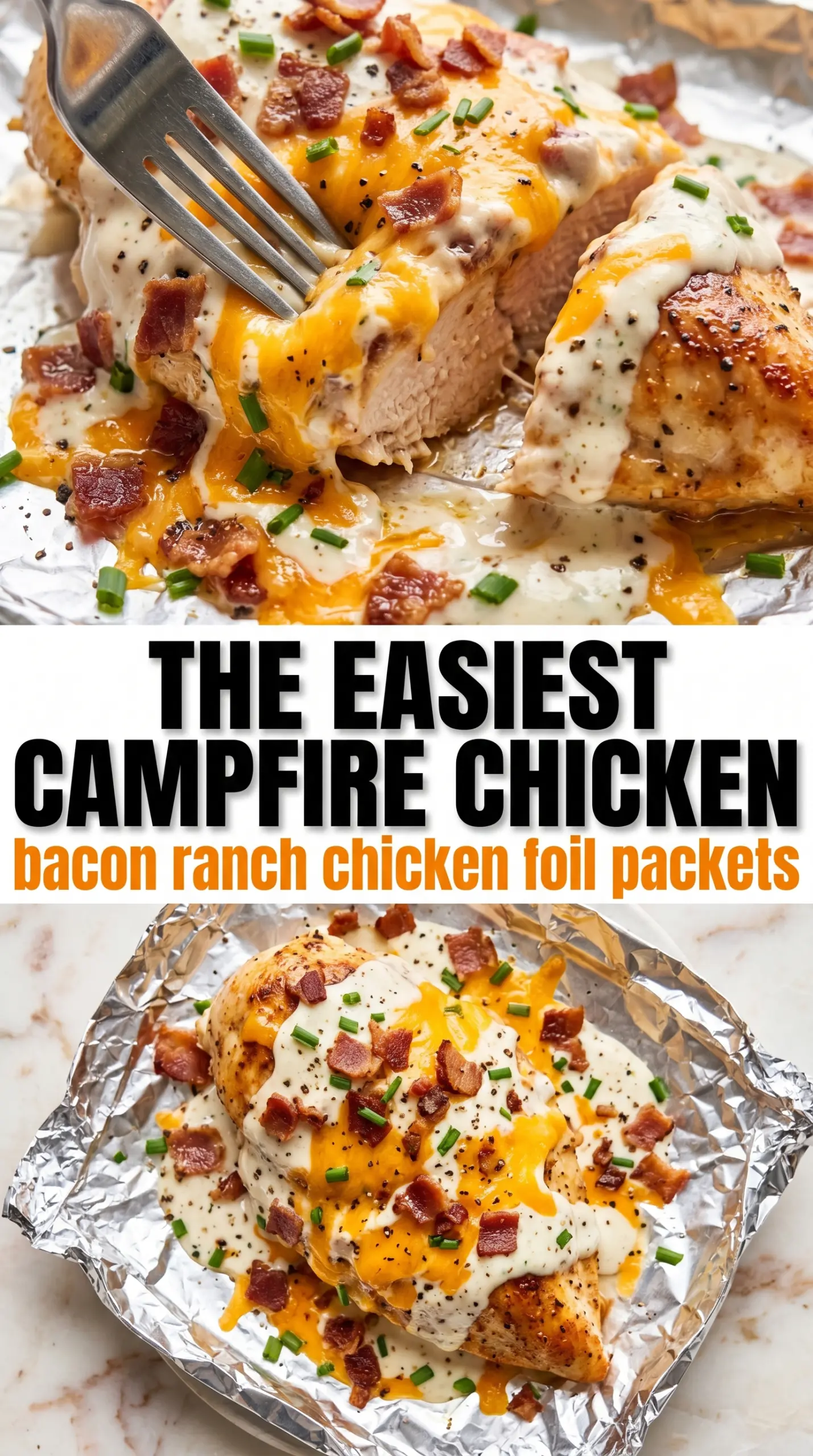
Bacon Ranch Chicken Foil Packets come off the grill with everything you want in an all-in-one dinner: smoky bacon, tender chicken, soft potatoes, and broccoli that keeps just enough bite. The foil does more than make cleanup easy. It traps steam, which helps the potatoes cook through while the chicken stays juicy and the ranch seasoning settles into every layer.
The little details matter here. Heavy-duty foil keeps the packets from tearing when the bacon renders and the vegetables soften. Halving the baby potatoes gives them a fighting chance to finish in the same window as the chicken, and the cheese goes in at the end so it melts on top instead of disappearing into the bottom of the packet.
Below, you’ll find the part that saves this recipe from the usual foil-packet mistakes, plus the swaps that work when you need to cook it indoors or adjust it for what you’ve got on hand.
The potatoes were perfectly tender by the time the chicken hit 165, and the bacon kept the chicken from drying out. We opened the packets at the table and the cheese melted right on top — no leftovers that night.
Save these Bacon Ranch Chicken Foil Packets for a smoky, cheesy dinner that cooks the potatoes and chicken together with almost no cleanup.
The Part That Keeps the Chicken Juicy While the Potatoes Finish
Foil packets fail when everything is packed in too tightly or when the potatoes are left in pieces that are too large. Chicken breast cooks fast; potatoes don’t. The fix is to give the potatoes a head start by cutting them small enough to soften in the same 20 to 25 minute window, and to seal the foil well enough to trap steam without squeezing the ingredients into a dense block.
The other trap is heat. Medium heat gives the potatoes time to tenderize before the chicken overcooks. If the packets are blasted over high flame, the bacon can crisp before the center of the chicken is done, and the vegetables will stay stubbornly firm.
What the Ranch, Bacon, and Cheese Are Each Doing Here
- Ranch seasoning mix — This is the backbone of the dish. It seasons the chicken and vegetables at the same time, and because it’s a dry mix, it clings well before the packet gets sealed. A homemade ranch blend can work, but the packet mix gives the most reliable punch.
- Bacon — The bacon does more than add flavor. As it cooks, it bastes the chicken and gives the potatoes some of that drippings flavor inside the packet. Thin-cut bacon is fine here because it wraps and cooks evenly; thick-cut bacon can stay chewy unless you give the packets extra time.
- Baby potatoes — These hold their shape and cook at a pace that matches the chicken once they’re halved. Regular potatoes work if you cut them small, but don’t leave them in big chunks or they’ll lag behind the rest of the packet.
- Broccoli florets — Broccoli adds freshness and keeps the packet from feeling heavy. Cut the florets on the smaller side so they soften without turning mushy. If your florets are large, tuck them closer to the top where they pick up less direct heat.
- Cheddar cheese — Add it at the end, not at the start. Cheese cooked for the full packet time can tighten up and disappear into the steam. A quick reseal after sprinkling it on gives you the melted top you want.
- Heavy-duty foil — This is worth using. Thin foil tears easily once the bacon renders and the packet gets moved. If you only have standard foil, double-layer it so the juices stay where they belong.
How to Build the Packet So Nothing Overcooks
Season and Wrap the Chicken First
Set each chicken breast on its own sheet of foil and coat it with the ranch seasoning before anything else goes on. That lets the seasoning sit directly on the meat instead of getting diluted by vegetable moisture. Wrap each breast with two slices of bacon, overlapping the ends slightly so they stay put as they cook. If the bacon is loose, it can slip off and leave bare spots that dry out.
Arrange the Vegetables for Even Cooking
Scatter the halved potatoes and broccoli around the chicken instead of piling them directly on top. The potatoes need contact with the hot packet air and steam, and the broccoli cooks best when it isn’t buried under the bacon. If your potatoes are still firm when you test the packet, the cuts were too large or the packet was sealed too loosely.
Seal, Cook, and Watch for the Right Finish
Fold the foil into a tight packet with enough room for steam to circulate. Place the packets over medium heat and cook for 20 to 25 minutes, checking that the chicken reaches 165°F in the thickest part. The packets should puff slightly and smell smoky and savory; if they look dry or scorch quickly, the heat is too hot. Open them carefully because the steam is intense, then add the cheese and reseal just long enough to melt it.
How to Change These Packets Without Losing What Makes Them Work
Make It Dairy-Free
Skip the cheddar or use a dairy-free shredded cheese that melts well. The packets still work because the ranch seasoning and bacon carry the flavor, but you’ll lose the creamy finish that cheese gives at the end.
Use Thighs Instead of Breasts
Boneless skinless thighs stay juicier and are more forgiving if your fire runs a little hot. They may need a few extra minutes depending on size, but the texture turns richer and a little less lean than chicken breast.
Swap the Vegetables for What You Have
Cauliflower, green beans, or sliced zucchini all work, but they don’t all cook at the same pace. Green beans hold their shape best, while zucchini softens fast and should be cut thick so it doesn’t vanish into the packet.
Oven Method for Rainy Nights
Bake the sealed packets on a sheet pan at 400°F until the chicken reaches temperature. The foil still traps steam, so the same basic timing works, and you get a close result when grilling or camping isn’t an option.
Storage and Reheating
- Refrigerator: Store leftovers in an airtight container for up to 3 days. The broccoli softens a bit after chilling, but the flavor holds up well.
- Freezer: Freeze cooked chicken and potatoes together if you need to, but the vegetables will be softer after thawing. Cheese is best added fresh after reheating.
- Reheating: Reheat covered in a 325°F oven until hot, or warm gently in a skillet with a splash of water. Don’t blast it in the microwave for too long or the chicken can dry out while the potatoes still feel cold in the center.
Answers to the Questions Worth Asking
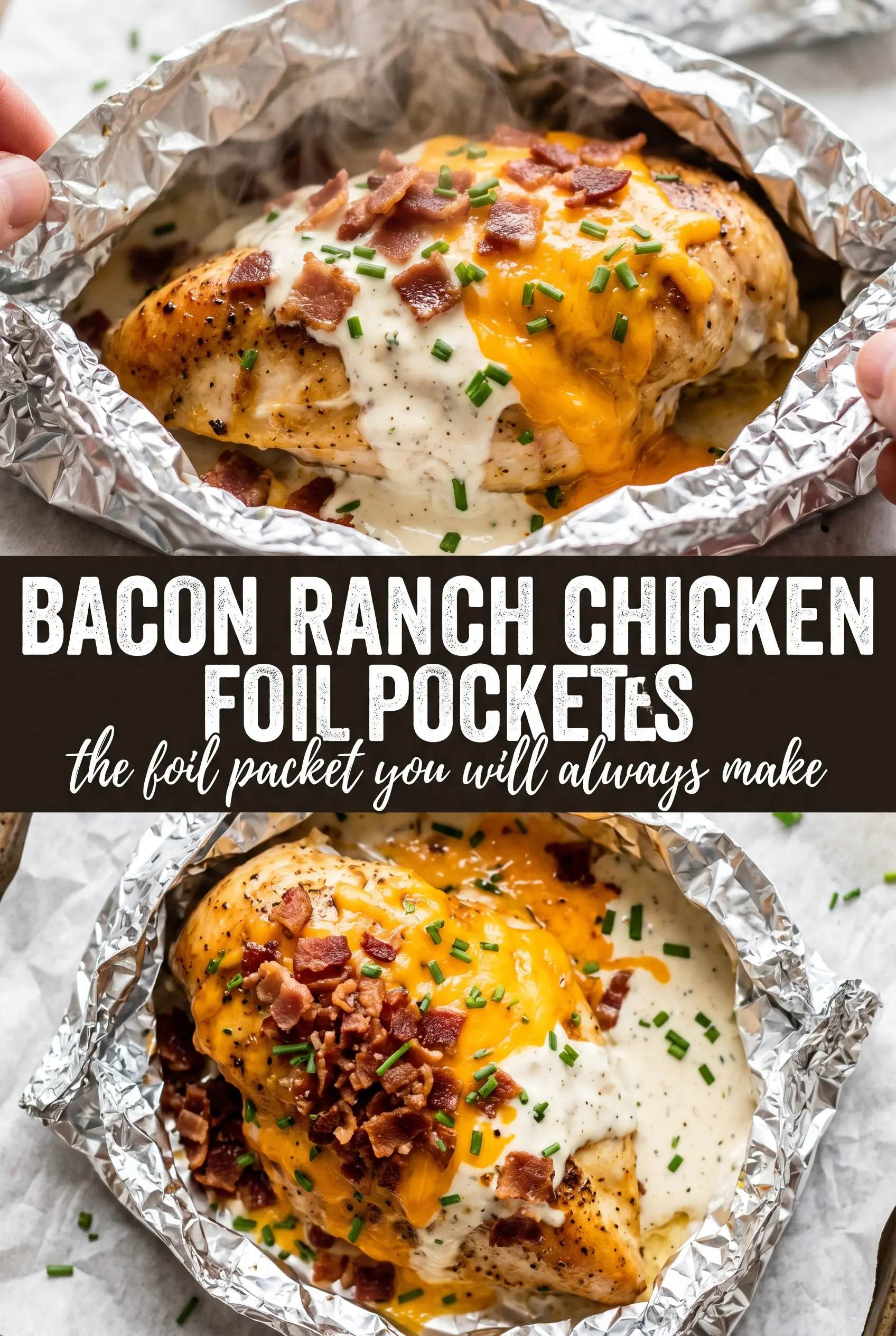
Bacon Ranch Chicken Foil Packets
Ingredients
Equipment
Method
- Place each boneless chicken breast on a sheet of heavy-duty aluminum foil and sprinkle with ranch seasoning mix. Make sure the seasoning coats the top of the chicken.
- Wrap each chicken breast with 2 slices of bacon. Press lightly so the bacon stays attached to the chicken during cooking.
- Surround the chicken with baby potatoes, halved and broccoli florets on the foil. Arrange vegetables so they sit close to the chicken for even steaming.
- Fold the foil into sealed packets. Crimp the edges tightly to keep steam inside.
- Place packets on a campfire grate over medium heat for 20-25 minutes. Cook until the chicken reaches 165°F, with steam visibly building inside the foil.
- Open the packets and sprinkle with shredded cheddar cheese. Let the cheese melt as the steam rises from the packet.
- Reseal the packets briefly to melt the cheese, then serve. The cheese should look fully softened and glossy over the chicken.