Brothy chicken noodle soup doesn’t need all afternoon to taste like it simmered for hours. When the broth is clean and savory, the vegetables are softened just enough to give sweetness, and the noodles are cooked right in the pot, you get a bowl that tastes focused and comforting instead of thin or tired. The lemon at the end keeps everything bright, which is what separates a good quick soup from one that tastes flat.
This version leans on rotisserie chicken and a good chicken broth, so the flavor starts with actual depth instead of trying to build it from scratch in twenty minutes. A short sauté on the onion, carrots, and celery gives the broth a better base, and the chicken goes in at the end so it stays juicy instead of turning stringy. The noodles cook directly in the soup, which thickens the broth just enough and gives the whole pot that classic homemade feel.
Below, you’ll find the one timing detail that keeps the noodles from going mushy, plus a few swaps that help if you’re working with leftover chicken or need to stretch the soup a little further.
The broth tasted like it had been simmering all day, and the noodles stayed tender instead of blowing out. I used leftover rotisserie chicken and the lemon at the end made the whole pot taste brighter.
Save this 30-minute chicken noodle soup for the nights when you want a fast bowl with a rich broth, tender noodles, and that classic lemony finish.
The Step That Keeps Quick Chicken Noodle Soup from Tasting Thin
Fast soup can go bland in a hurry if the vegetables go straight into broth without getting any color or if the chicken gets added too early and overcooks. The first few minutes in the pot matter more than the rest of the recipe because that’s where the sweetness from the onion, carrot, and celery gets coaxed out and starts building the base of the broth. That little bit of butter helps carry the aromatics and gives the finished soup a rounder taste.
The other thing that makes or breaks this soup is the noodle timing. Egg noodles keep cooking after the burner goes off, so if they simmer too long, they turn soft and cloud the broth. Add the chicken only after the noodles are just tender, then give the soup a brief finish so everything warms through without losing texture.
What Each Ingredient Is Actually Doing in This Soup
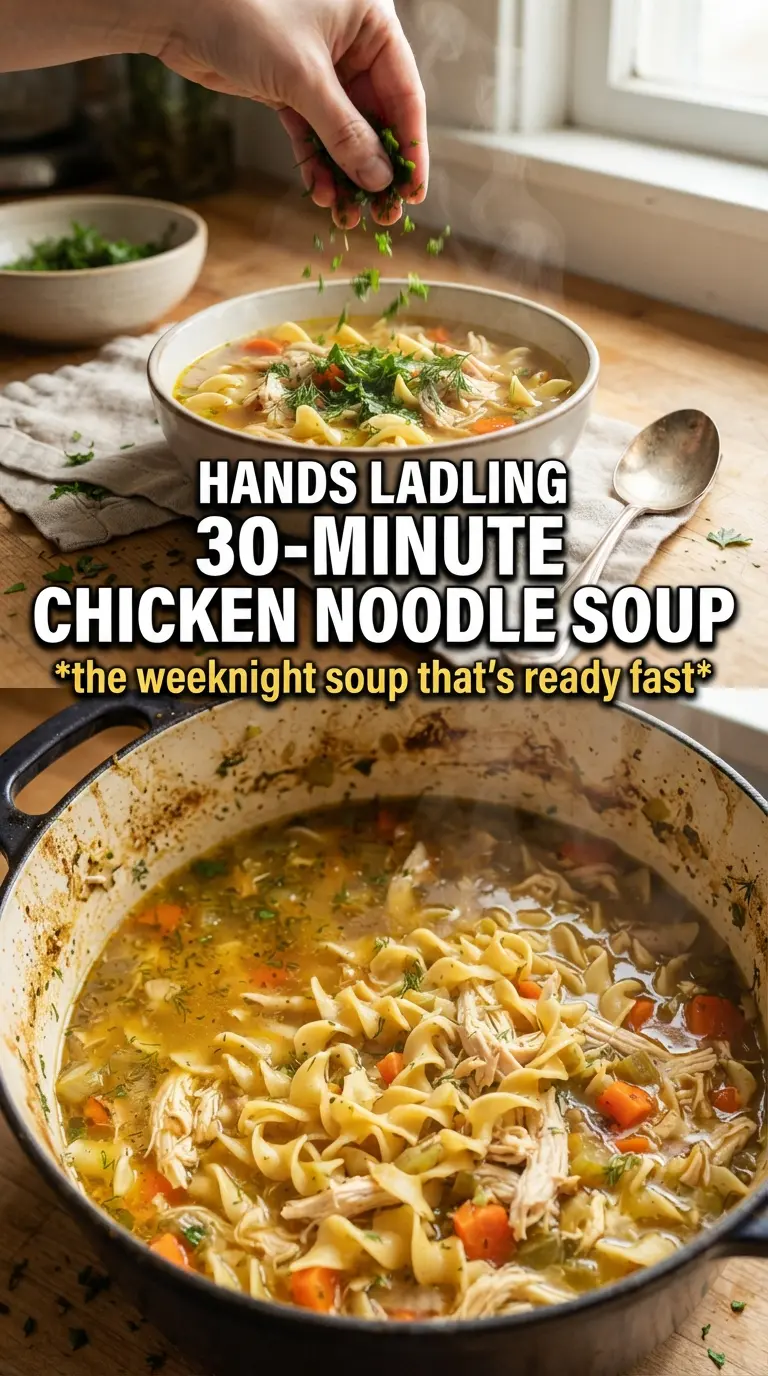
- Rotisserie or leftover chicken — This is the shortcut that makes the recipe work in 30 minutes. Shred it into bite-size pieces so it warms quickly and stays tender. If your chicken is already well-seasoned, hold back a little salt until the end.
- Chicken broth — Use the best broth you can get because it carries the whole soup. A weak broth stays weak, no matter how much thyme you add. If yours is low-sodium, that gives you the most control over the final seasoning.
- Carrots, celery, and onion — This trio is the backbone of the soup. Sautéing them first softens their edges and gives the broth a sweeter, deeper base than dumping them in raw. Slice the carrots and celery thin enough that they cook in the short simmer time.
- Egg noodles — These give the soup its classic body, but they absorb broth fast. Cook them just until tender and stop there, or the soup turns heavy and the noodles go pasty. If you’re planning leftovers, undercook them by a minute.
- Lemon juice — This is the finishing move that wakes everything up. Without it, quick chicken noodle soup can taste a little flat after the noodles go in. Fresh lemon matters here more than bottled because the flavor stays bright instead of sharp.
Building the Soup in the Right Order
Softening the Vegetables First
Melt the butter in a large pot and cook the onion, carrots, and celery over medium-high heat until the onion turns translucent and the carrots start to look slightly glossy, about 4 minutes. You don’t want deep browning here; you want the vegetables to lose their raw edge and start smelling sweet. If the pot looks dry before the vegetables are ready, add a small splash of broth to keep them from sticking.
Adding the Garlic and Broth
Stir in the garlic and cook for about 1 minute, just until it smells fragrant. Garlic burns fast, especially after the pot has heated up, and burnt garlic will make the whole soup taste bitter. Pour in the broth right away, scrape the bottom of the pot, and add the thyme, dried parsley, and garlic powder so the seasonings have time to bloom in the liquid.
Cooking the Noodles Without Overdoing Them
Bring the soup to a boil, then add the egg noodles and cook until they are just tender, usually 6 to 8 minutes depending on the brand. Stir a couple of times so the noodles don’t clump at the bottom, but don’t keep the soup at a hard rolling boil the whole time or the broth will get cloudy and the noodles will split. The texture you’re after is tender with a little bite, not swollen or soggy.
Finishing with Chicken and Lemon
Add the shredded chicken after the noodles are cooked, then simmer for 2 to 3 minutes until the chicken is hot. Turn off the heat and squeeze in the lemon juice, then taste and season generously with salt and pepper. The lemon goes in last so it stays fresh and bright; if you cook it too long, it fades and the soup loses that clean finish.
How to Adapt This Soup for Different Kitchens and Leftovers
Gluten-Free Version
Swap the egg noodles for a gluten-free noodle that holds up in broth, or use rice noodles and add them near the very end. Gluten-free pasta can break down faster than wheat noodles, so watch it closely and pull the pot as soon as the noodles are tender.
Using Raw Chicken Instead of Cooked
If you don’t have cooked chicken, simmer small pieces of boneless chicken breast or thighs in the broth until cooked through, then shred or dice them. The soup will take a little longer, but the broth will pick up more chicken flavor. Remove the chicken before adding the noodles if it’s already done early, or it can turn dry.
Making It More Filling
Add an extra cup of broth and a handful more noodles if you want a heartier pot, but keep the seasoning balanced. More noodles absorb more liquid as the soup sits, so leftovers will thicken faster. If that happens, loosen each bowl with a splash of broth or water when reheating.
Storage and Reheating
- Refrigerator: Store in an airtight container for up to 4 days. The noodles will keep soaking up broth, so expect the soup to thicken.
- Freezer: It freezes best without noodles. If you want to freeze it, cook the soup base and chicken, then add fresh noodles after thawing and reheating.
- Reheating: Warm it gently over medium-low heat with a splash of broth or water. A hard boil can overcook the noodles and turn the chicken dry.
Questions I Get Asked About This Recipe

30-Minute Homemade Chicken Noodle Soup
Ingredients
Equipment
Method
- Melt the butter in a large pot over medium-high heat, then add the onion, carrots, and celery. Sauté until softened, about 4 minutes, stirring often so they start to smell fragrant.
- Add the garlic and cook for 1 minute until fragrant, not browned. Pour in the chicken broth and add the thyme, dried parsley, and garlic powder.
- Bring the pot to a boil, so the broth is actively bubbling across the surface. Keep it at a steady boil before adding the noodles.
- Add the egg noodles to the boiling broth and cook for 6-8 minutes until tender. Stir occasionally so the noodles don’t stick.
- Add the shredded chicken and simmer for 2-3 minutes until heated through. Watch for gentle bubbling rather than a hard boil.
- Squeeze in the lemon juice, then season generously with salt and pepper to taste. Taste and adjust so the flavor pops bright and balanced.
- Turn off the heat and garnish with fresh parsley. Serve right away while the noodles are at their best texture.